

Easily DIY An Adorable Colorful Wreath That Screams Spring Fun
We may receive a commission on purchases made from links.
Because of all of the brilliant blooms that dot the landscape during the early part of the year, it's natural that many crafters gravitate toward using blossoms in their spring-inspired wreaths. However, when it comes time to DIY your own ringed bouquet, it's worth considering other seasonal items, like plastic Easter eggs, as decorations instead of flowers. The colorful plastic eggs are synonymous with whimsy and laughing children hunting for oval-shaped, chocolate-filled treasures. These associations make the handcrafted wreath all the more adorable.
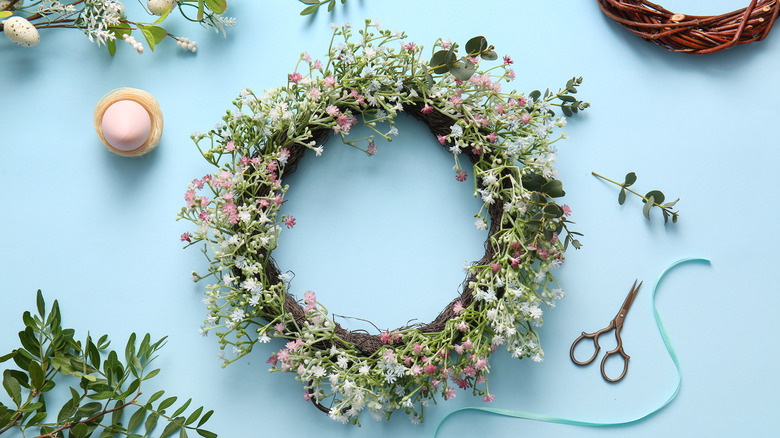
There are a couple of different wreath forms to consider for this project. For example, this FloraCraft Straw Wreath Form looks like the straw that lines the bottom of Easter baskets. Using this kind to build your craft gives a subtle nod to those grass-filled baskets. On the other hand, if you're inclined to swap out the traditional wreath form for something else, why not go with a SuperMoss Natural Orchard Grapevine Wreath instead? Since the look of the vines is so much more pronounced with this style of ring form, there's potential for the wreath to be a little edgier and more fun.
You'll also need a variety of plastic eggs to make this adorable, budget-friendly Easter wreath. You'll use them to make plastic flowers, with each bloom consisting of half an eggshell in the middle of the flower and five or six eggs "petals." How many flowers you'll need depends on the size of the wreath form you're using. The project additionally calls for a glue gun, some heavy-duty ribbon that would fit the season, some silk floral greenery, and a pair of scissors.
How to put the Easter egg wreath together
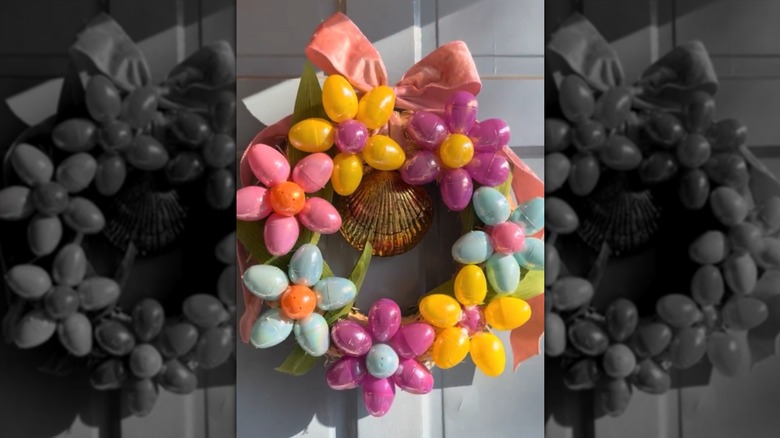
It's wise to begin this project by assembling the egg flowers first. Aside from the fact that they'll need time to dry, tackling this step at the beginning of the DIY gives you an idea of how big the flowers will be. This, in turn, allows you to estimate how many flowers you'll need to cover the wreath. This is a balancing act: You want to have enough room to place the egg flowers all over the wreath evenly. On the other hand, you don't want the eggs to look crowded.
To make the egg flowers, open up one egg so that its two halves are separated. Glue five or six whole eggs around one of the halves — the configuration will look like a flower. Now, glue the second half of the center egg on top. This makes the flower's center protrude, creating a more balanced appearance.
Once the adhesive on the eggs dries, use the glue gun to attach them to the wreath. Allow the glue to dry. You'll add visual contrast to your DIY if you attach some silk leaves near the egg flowers; this touch gives the egg blossoms bursts of green. If you can't find silk leaves that you like, cut some out from a long green ribbon. Finally, cut a long ribbon and wrap it around the top of the wreath. Make a loop at the top: You'll use it to hang the wreath on your door or over your mantel as you decorate your home for Easter.
Ways to customize the wreath adornments
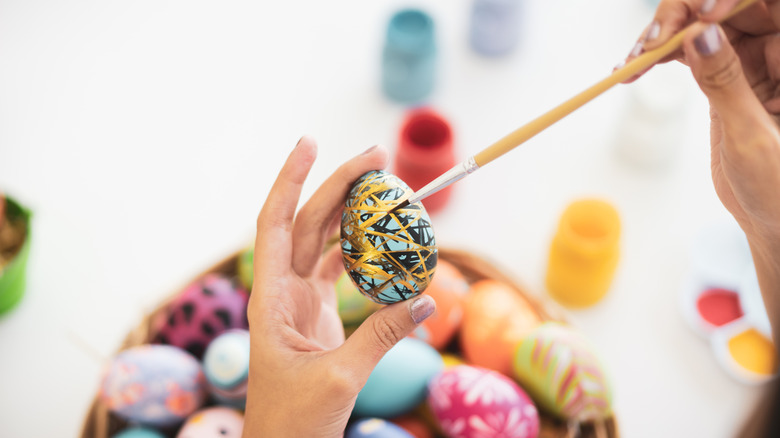
If you'd like the Easter wreath to have more visual interest, consider embellishing parts of it to add some pizzazz. For example, if you're starting with plain plastic eggs, paint them as if they were regular Easter eggs. To ensure that the paint sticks to them, prime the plastic surface with a coat of gesso. Next, use acrylic craft paint and a small brush to create delicate designs on the eggs. Finish the painted eggs off with a coat or two of varnish to protect them from the elements. If you're a fan of quirky holiday decor, this is a delightful way to upgrade this DIY.
You can also use eggs of different sizes to decorate the wreath. Many of the plastic eggs you'll find in the store are about 2 inches tall; look for more miniature ones to create a few smaller flowers as well. You also have the option of placing one or two larger CJYGEGE 3-Inch Plastic Easter Eggs somewhere at the top of the wreath. Those you wouldn't make into flowers: Leaving the large eggs as is creates visual tension in the design, and their non-flower form encourages the eye to stop and look, potentially turning them into the focal point on the wreath. Since the large eggs repeat the form of the petals, they won't look out of place.