

28 Types Of Hydrangeas That Will Thrive In Your Full-Sun Garden
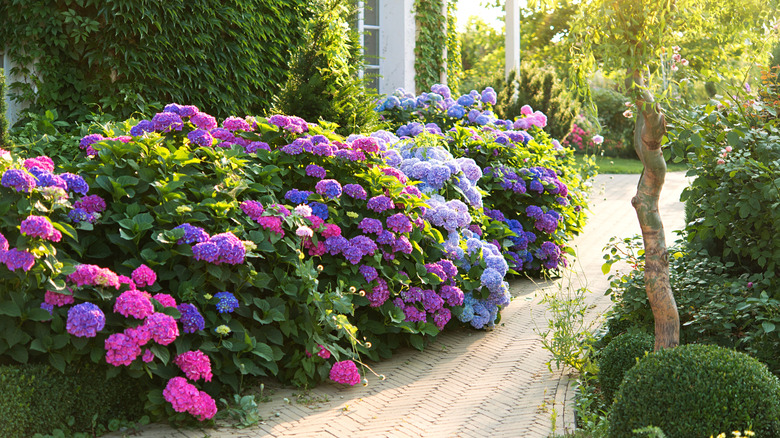
Hydrangeas are incredible shrubs. Available in many shapes, sizes, and colors, they can transform the design of your landscape. Make a bold statement with mophead flowers or large oak-leaved foliage. Alternatively, you can infuse a delicate texture with lacecaps. Whatever your choice, hydrangeas remain a standout feature in many gardens that receive little sunlight. But what if you want these stunners in a full-sun yard? Panicle hydrangeas and their cultivars, such as 'Quick Fire Fab', 'Pinky Winky Prime', and 'Limelight Prime,' can handle direct sun exposure. There are also other stunning hydrangeas from sun-tolerant series like 'Let's Dance', 'Incrediball', and 'Gatsby'.
A full-sun garden receives at least six hours of direct sun exposure each day. Despite the full sun-tolerant label, it is ideal to offer morning sun exposure with a little afternoon shade, especially in warmer regions. Regardless of where you live, if the area receives full sun, you may need to water the plants more frequently and keep the beds mulched to improve moisture retention and maintain your hydrangeas beauty.
'Alice' hydrangea
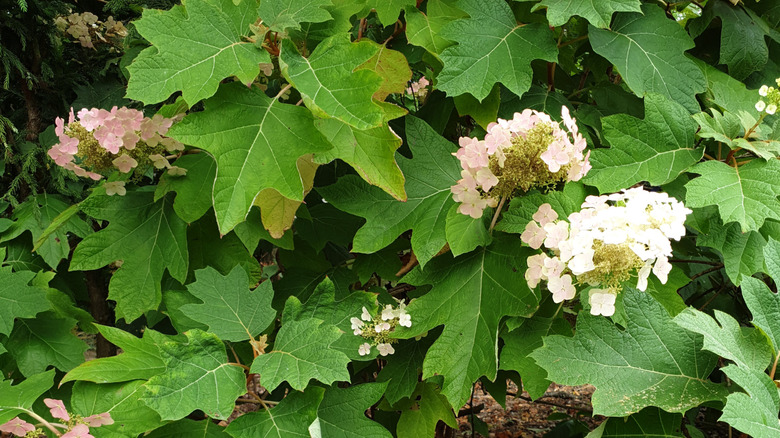
'Alice' hydrangea (Hydrangea quercifolia 'Alice') could be the star of your sunny garden, kicking off summer with large white blooms that turn pink and later brown over their eight-week-long blooming period. By the time fall rolls in, the oak-shaped green leaves feature a range of colors, including gold, purple, and maroon. After the foliage drops, this tall shrub continues to garner interest with its exfoliating bark. Given ample room to grow, 'Alice' is typically 8 feet tall and similarly wide at full maturity, thriving in USDA Hardiness Zones 5 through 9.
Ashy hydrangea
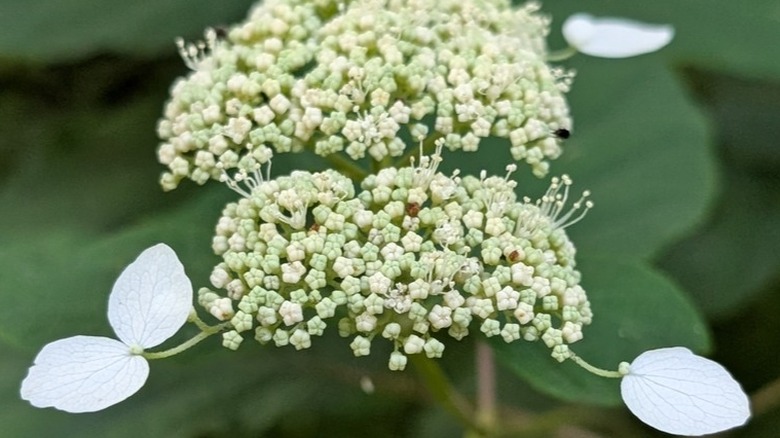
Indigenous to the rocky forests and ravines of the central and southeastern U.S., ashy hydrangea (Hydrangea cinerea) is a native beauty for full-sun gardens. It can tolerate some heat and drought but performs best when soils remain consistently moist and well-draining. It grows about 6 feet tall and half as wide and is so named for the gray hairs punctuating the undersides of its foliage. In zones 5 through 9, give it a home in pollinator gardens, where the white blooms will attract the pollen movers in spring and summer.
'Flirty Girl' Japanese hydrangea vine
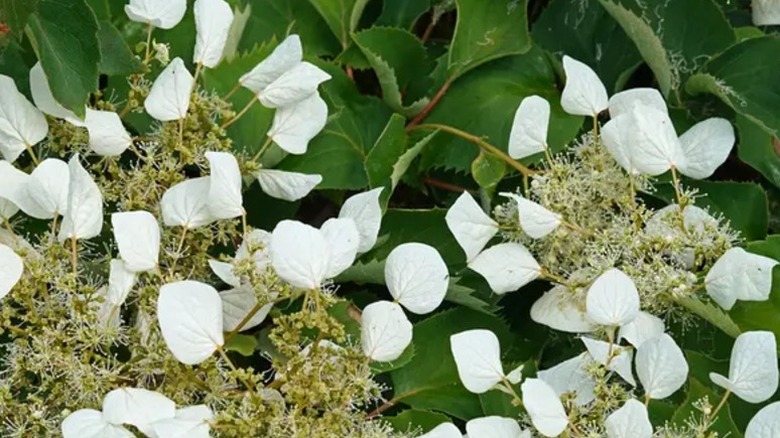
If you've got a fence, a tree, or any free-standing structure in your garden, consider draping it with 'Flirty Girl' Japanese hydrangea vine (Hydrangea hydrangeoides FLIRTY GIRL). This fast-growing beauty will cover structures in gorgeous white blooms, enthralling you all summer long with its sweet fragrance while bringing in a variety of pollinators. Better yet, these beautiful plants thrive even in clay soil! Since they're highly heat-tolerant, they perform spectacularly in full-sun gardens located in zones 5 through 9. They grow to be about 4 to 7 feet wide by maturity.
'Glowing Embers' hydrangea
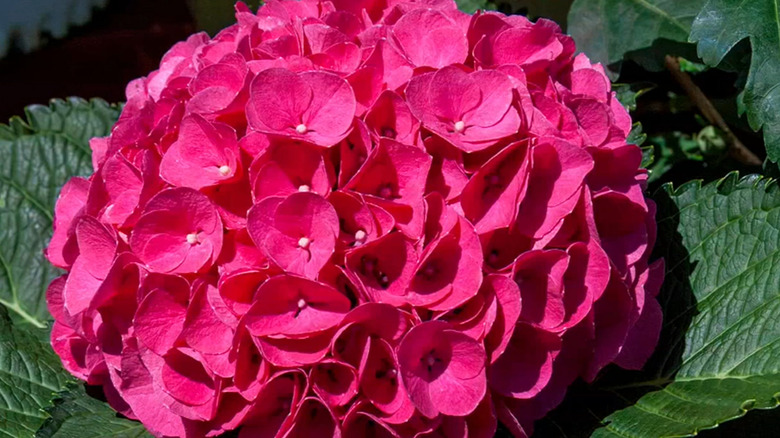
Limited space is not an issue when it comes to 'Glowing Embers' hydrangea (Hydrangea macrophylla 'Glowing Embers'). At 3 to 5 feet tall, this pink-to-purple flowering shrub can fit into the tightest spaces in zones 6 through 9. For the brightest pink color, plant it in alkaline soils. 'Glowing Embers' is a real trooper in full sun conditions, provided the soil remains moist throughout the season — it will wilt the moment the soil goes dry. A 2-inch-thick layer of mulch spread on the soil in the summer before it blooms will help to maintain moisture.
'Quick Fire Fab' hydrangea
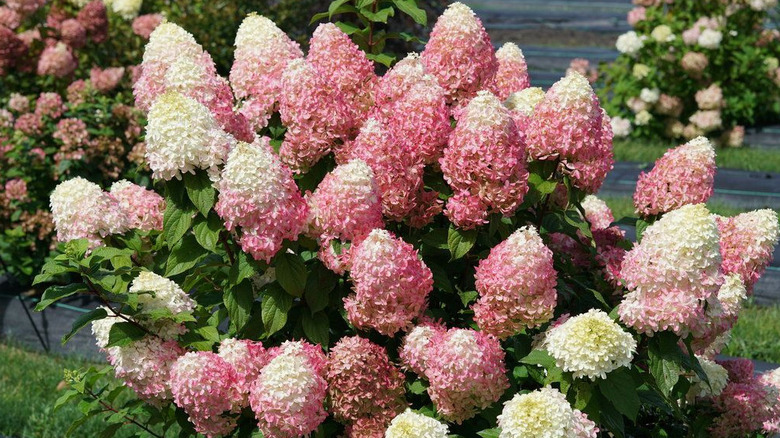
For a truly low-maintenance hydrangea that offers a long blooming season, look no further than the 'Quick Fire Fab' panicle hydrangea. For over three months, its foliage is smothered in cone-shaped blooms, which start as white, blush into varying shades of pink, and finally turn red by summer's end, weaving a multicolored display. They thrive well in most soils, provided they have excellent drainage. Plant them in full sun in zones 3 through 9. Since they can grow about 8 feet tall, you may utilize them as living screens or flowering hedges.
'Little Honey' hydrangea
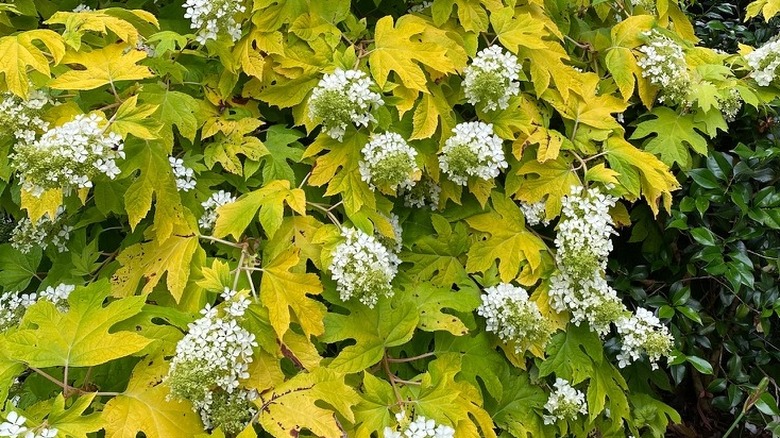
Break away from the trend of green foliage with the 'Little Honey' hydrangea (Hydrangea quercifolia 'Little Honey'). Its spring leaves are golden-yellow, which changes into a vivid chartreuse in tandem with summer's arrival. For fall, it bleeds in reds, adding excellent interest, while peeling bark earmarks winter. Pink-blushed, conical white flowers appear in June and July, which must be duly deadheaded and pruned right after so the shrub can produce new buds for next season. 'Little Honey' thrives in full sun in zones 5 through 9, provided the soil is rich in organic matter and moisture.
'Invincibelle Ruby' hydrangea
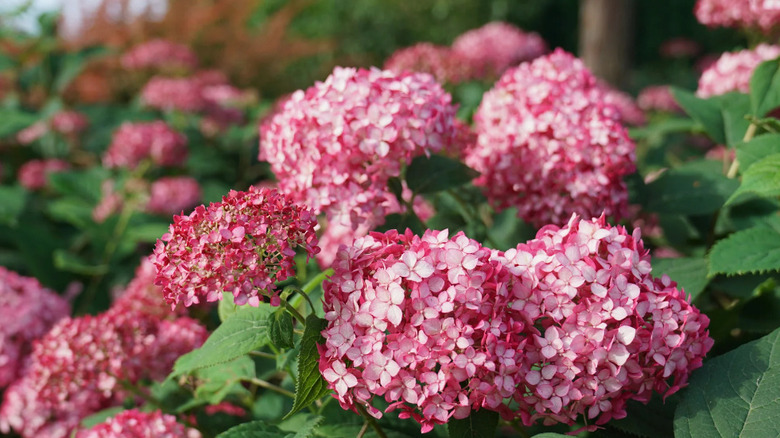
'Invincibelle Ruby' hydrangea (Hydrangea arborescens Invincibelle Ruby 'NCHA3') is a showstopper in foundation beds and mixed borders, thanks to its giant burgundy red and silvery pink blooms. As it buds on new wood, you can expect a constant wave of flowers from summer to fall. Hardy in zones 3 through 8, 'Invincibelle Ruby' thrives in organically rich, moist soils exposed to full sun. Where the afternoon sun is too intense, it requires some shade protection. Be sure to mulch the roots to conserve moisture.
'Pinky Winky Prime' hydrangea
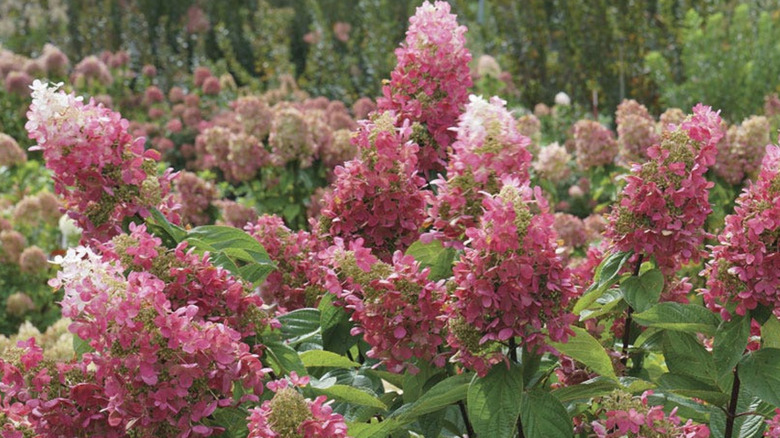
Considered one of the most sun-tolerant varieties, 'Pinky Winky Prime' hydrangea (Hydrangea paniculata 'ILVOHPPRM') is a spectacular addition in full-sun gardens in zones 3 through 9. It packs a massive punch both through its form and flowers. Atop this 6-foot-tall shrub, you'll find white blooms in the summer, which slowly evolve into pink from the bottom up, creating a breathtaking two-toned contrast that's hard to ignore. It tolerates salt, alkalinity, and clay soils with good drainage. If you water these shrubs well, blooms mature to a deep pink in the fall.
'Tiny Quick Fire' hydrangea
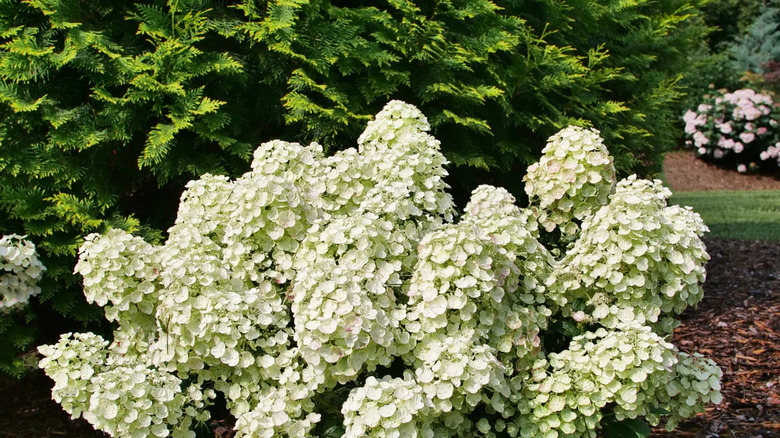
When fully mature, 'Tiny Quick Fire' hydrangea (Hydrangea paniculata 'SMNHPSB') grows up to 3 feet tall and wide, making it the perfect contender to fill gaps in sunny garden beds or define borders. Alternatively, you can plant it in drifts for maximum impact. It can bloom as early as May and attracts bees and butterflies with its white flowers, which eventually redden by the end of summer. While it's easy to grow, you should prune the stems in early spring and remove spent blooms to maintain vigor. You can grow it successfully throughout zones 3 through 9.
'Let's Dance Rhythmic Blue' reblooming hydrangea
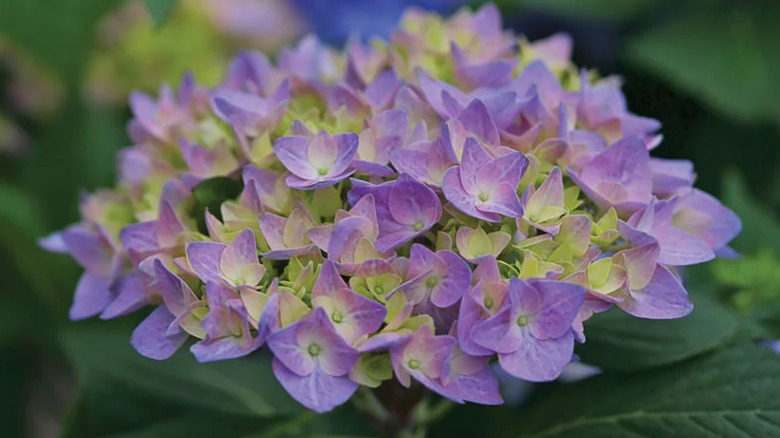
For a reliable bloomer, look no further than 'Let's Dance Rhythmic Blue' reblooming hydrangea (Hydrangea macrophylla 'SMHMES14'). Since it produces buds both on old and new wood, you're sure to enjoy the pretty flowers even if the plant was damaged in the winter. It breaks away from the typical bright summer tones to produce deep blue or purple flowers through fall when grown in acidic soils. In neutral or alkaline soils, expect pink blooms. Grow it in full sun or partial sun in zones 5 through 9.
'Invincibelle Wee White' smooth hydrangea
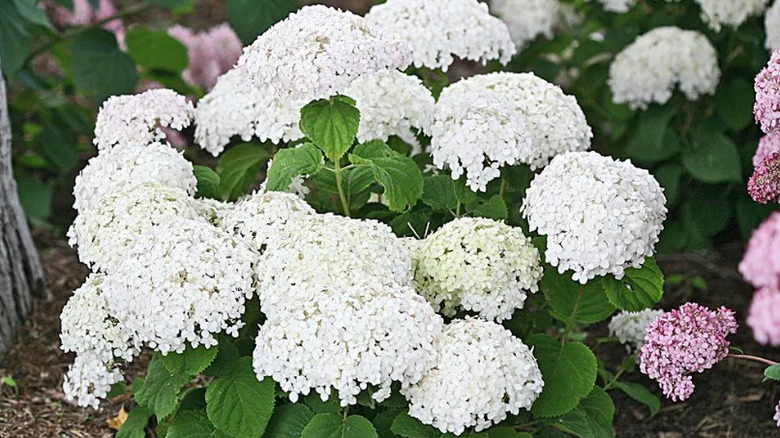
Love 'Annabelle' hydrangea, but can't grow it in your full-sun garden? Use 'Invincibelle Wee White' smooth hydrangea (Hydrangea arborescens 'NCHA5') instead. It churns out breathtaking snow-like white blooms all summer long, but improves upon 'Annabelle' by flowering more abundantly, without letting go of its dense shape. It stays under 2 ½ feet and can fit in compact spaces, from border edges to containers. Although heat-tolerant and cold-hardy to zones 3 through 8, it tolerates full sun only in northern ranges, requiring morning sun exposure with afternoon shade in southern regions.
'Wee Bit Grumpy' bigleaf hydrangea
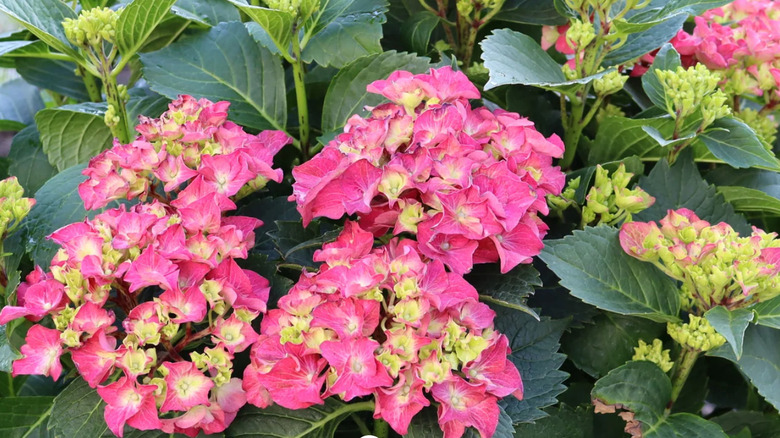
If you haven't had much luck growing hydrangeas, 'Wee Bit Grumpy' (Hydrangea macrophylla 'Stragrum') might change your fortunes. It thrives in most soils, including alkaline, salty, and clay soils. It can withstand heavy disease pressure, and you don't ever have to worry about pruning these beautiful garden plants. It's compact enough to fit in tight spaces and gorgeous enough for mass planting. Depending on pH, expect summer blooms that range from violet to magenta. It tolerates full sun exposure in zones 5 through 7, but will need afternoon shade in zones 8 and 9.
'Let's Dance ¡Arriba!' reblooming hydrangea
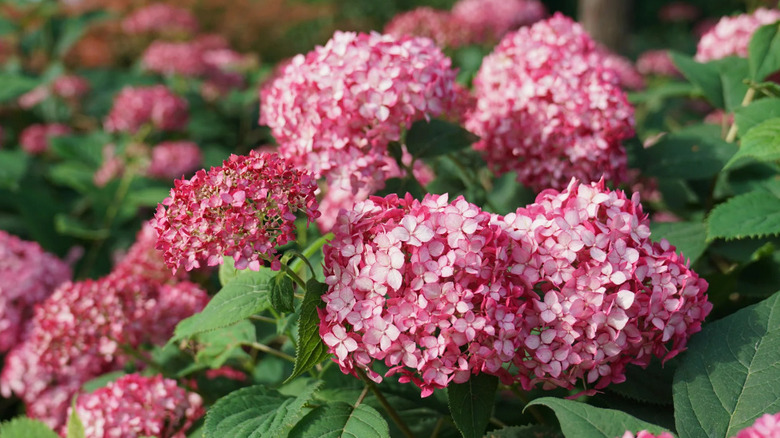
Crossbred from macrophylla and serrata varieties, 'Let's Dance ¡Arriba!' (Hydrangea x 'SMNHSC') is a reblooming hydrangea type that can thrive in cold winter temperatures down to zone 4. It has a rounded form and works well as a garden bed's focal point. Depending on the soil's pH and nutrient levels, it'll produce large, mophead blooms on the pink-purple spectrum. By fall, all flowers fade into lovely mauve. It grows to about 3 feet wide and tall and has disease-resistant foliage. In southern regions, plant in a spot that gets afternoon sun to prevent scorching.
'Let's Dance Sky View' hydrangea
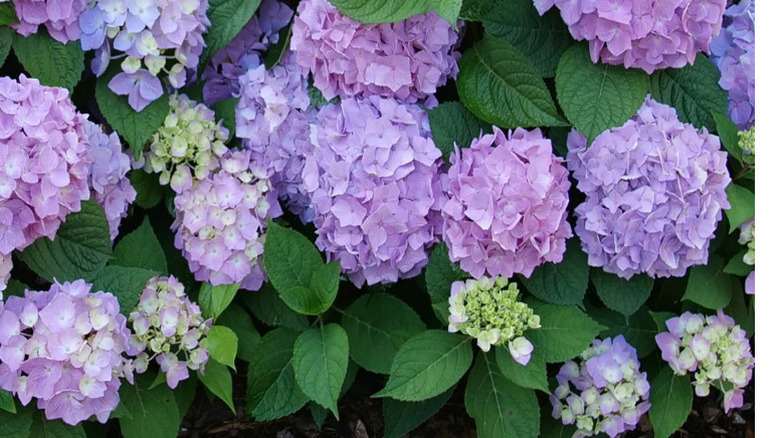
'Let's Dance Sky View' hydrangea (Hydrangea macrophylla × serrata 'SMNHSME') produces a continuous wave of blooms instead of seasonal flushes, so you can enjoy pink or purple blooms (depending on acidity and aluminum levels) throughout summer, without interruption. It produces buds all along the branch rather than just the tip, making for an extremely floriferous shrub. Do note that it has high water requirements and cannot tolerate drought, so spread shredded bark or pine straw on the sunny beds. It handles full sun through zones 4 to 7 or morning sun in zones 8 and 9.
'Tuff Stuff Ah-Ha' hydrangea
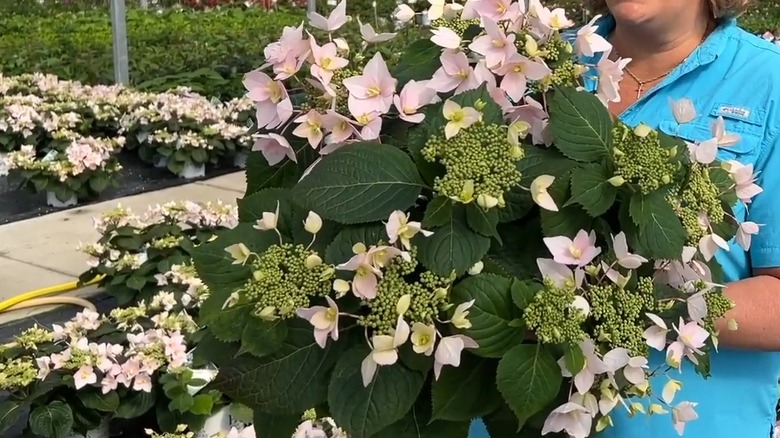
Despite claims of cold hardiness, many reblooming hydrangea varieties fizzle out after a single flush, as their buds take cold damage. But with 'Tuff Stuff Ah-Ha' hydrangea (Hydrangea serrata 'SMNHSDD'), you're in for a surprise. This cold-hardy plant will continue to rebloom year on year, even down to zones 5 and 6. It grows in zones 5 through 9 but will need some afternoon shade and additional water in warmer climates. Flowers may be pastel pink or blue, depending on the soil's pH. The best part, though? Flowers look like water lilies, which softens the landscape.
'Let's Dance Can Do!' hydrangea
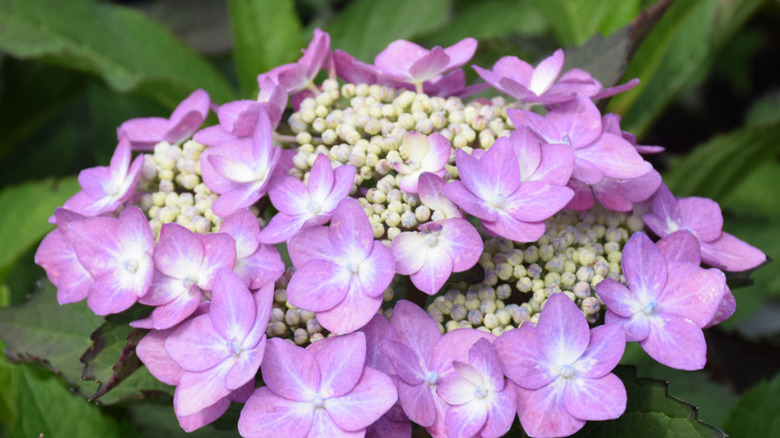
Like other plants in the 'Let's Dance' series, 'Can Do!' hydrangea (Hydrangea macrophylla x serrata 'SMNHSI') produces buds on the entire stem. For this reason, it's a dependable choice in cold climates where spring freezes or temperature dips damage stem tips. Planted in full sun in zones 4 through 9, you can expect a second flush of lacecap pink or blue blooms (depending on acidity levels) in the fall. You may want to resist the temptation to harvest flowers for floral arrangements, as it can negatively impact the continuing display. Save for removing dead or diseased wood, you shouldn't prune it.
'Gatsby Gal' hydrangea
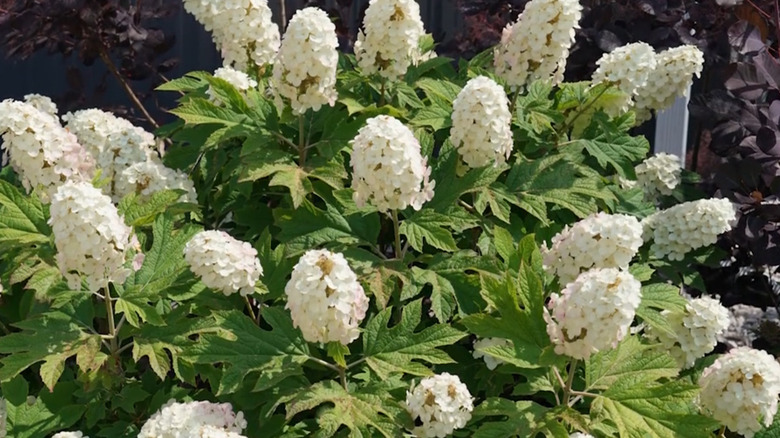
With a mature height and width of around 6 feet, 'Gatsby Gal' (Hydrangea quercifolia 'Brenhill') can work in most foundation beds, hedges, and woodland lots. Apart from the conical white blooms that burst out from the foliage like firecrackers, you will enjoy these shrubs for their fall color. Avoid pruning this plant, as poorly timed cuts can deprive you of blooms. Although adaptive to zones 5 and 6, they handle full sun exposure only in the upper ranges of zones 7 to 9.
'Limelight Prime' hydrangea
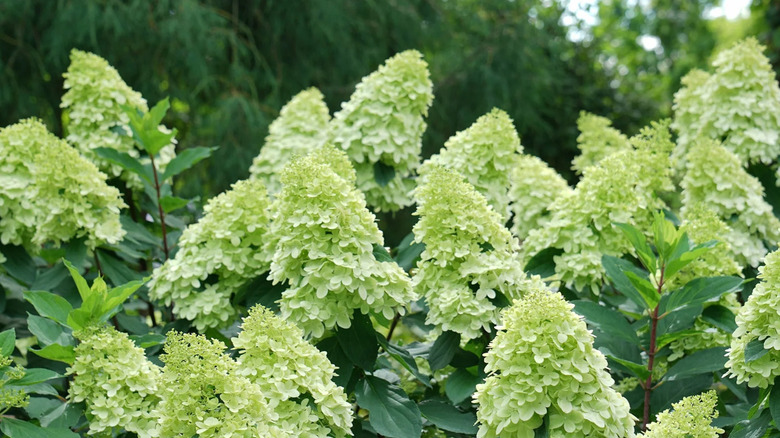
Like its namesake 'Limelight' variety, the 'Limelight Prime' hydrangea (Hydrangea paniculata 'SMNHPPH') promises gorgeous lime green summer blooms that transform into pink for fall. What makes it a massive improvement, however, are the stems, which are sturdier and hold themselves up through rain and shine. 'Limelight Prime' matures to about 5 feet tall and wide, enabling even small garden owners to enjoy its beauty. It thrives in full sun in zones 3 through 9 but may need some shade on particularly hot days in southern climes. Prune it every year in the spring for optimal performance.
'Tiny Tuff Stuff' hydrangea
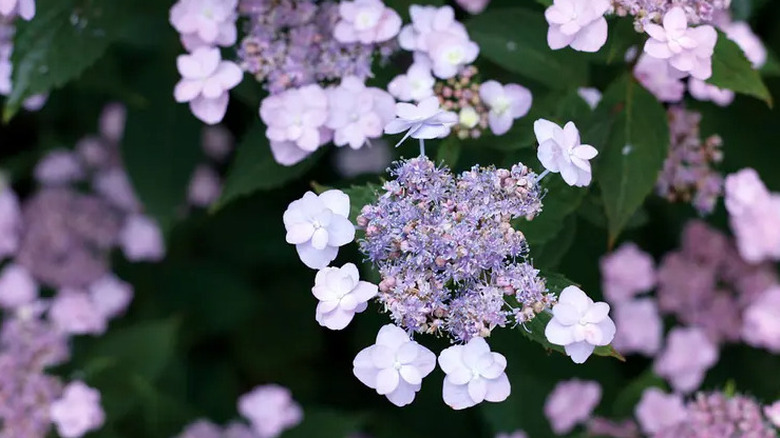
'Tiny Tuff Stuff' hydrangea (Hydrangea serrata 'MAKD') brings a unique touch to this genus. Papery petals loosely surround the fluffy centers, giving the blooms an open appearance. These small shrubs can take six hours of direct sun exposure with consistent watering, but keep in mind that the foliage wilts if it's too dry. Since they're bud-hardy down to zone 4, they're a brilliant choice in cold regions, and can be grown up to zone 9. Expect two flower flushes at the beginning and end of summer.
'Incrediball Storm Proof' hydrangea
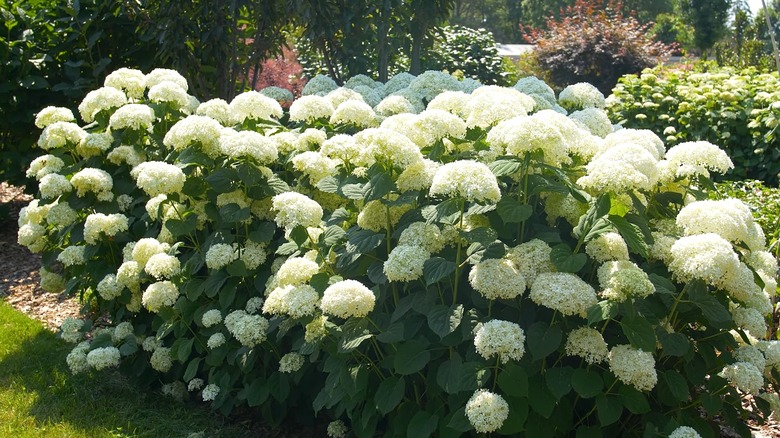
With 'Incrediball Storm Proof' hydrangea (Hydrangea arborescens 'SMNHAGOV'), you don't have to worry about planting groundcovers or small plants to cover the shrub's bare legs. That's because small white blooms pepper the branches in their entirety, leaving no space exposed. 'Incrediball Storm Proof' requires at least six hours of direct sun exposure, with shredded mulch for moisture retention. It's right at home in zones 3 through 8.
'Candy Apple' hydrangea
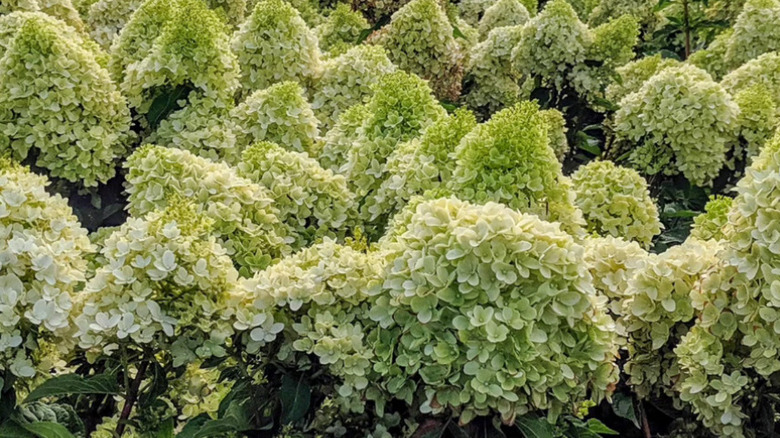
For a fast-growing variety that doesn't grow higher than 5 feet, consider 'Candy Apple' hydrangea (Hydrangea paniculata 'SMHPMWMH'). Atop robust stems, it produces lime green flowers, much like 'Limelight' hydrangeas. As the season cools into fall, their blooms and foliage turn rosy red after exposure to full sun. Dried flowerheads offer winter interest. Don't forget to apply mulch to protect shallow roots from cold damage. This plant is hardy in zones 4 to 8 and is somewhat salt-tolerant.
'Razzleberri' hydrangea
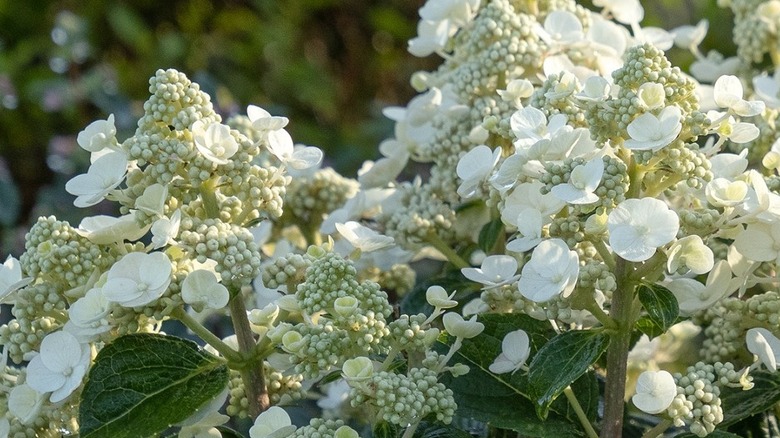
'Razzleberri' hydrangea (Hydrangea paniculata 'SMHPS') is another beautiful addition in zones 4 through 9. All summer long, huge white blooms make an appearance, which finish off as pretty pinks in the fall. The stems are highly durable, ensuring the shrub doesn't flop down. It tops out at 4 feet and wide. Use it as a shrubby backdrop in your full-sun perennial borders.
'Gatsby Glow Ball' hydrangea
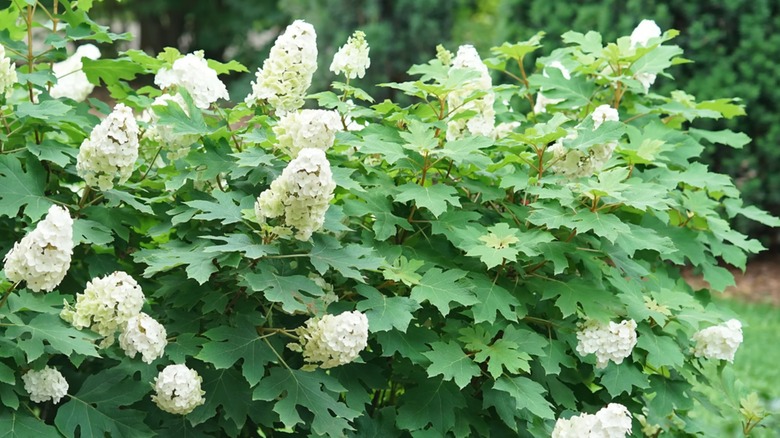
'Gatsby Glow Ball' hydrangea (Hydrangea quercifolia 'NCHQ1') packs a massive punch despite its small stature. This native cultivar develops huge leaves and flowerheads, but only grows about 4 feet high and wide. Flowers start as white but finish as green and create a gorgeous contrast with the burgundy-red leaves in the fall. Plant in mixed beds or containers to attract butterflies and bees. It can tolerate heat and salt in zones 5 through 9. It benefits from mulch both in summer, when planted in full sun, and in winter to stave off cold damage.
'Fire Light' hydrangea
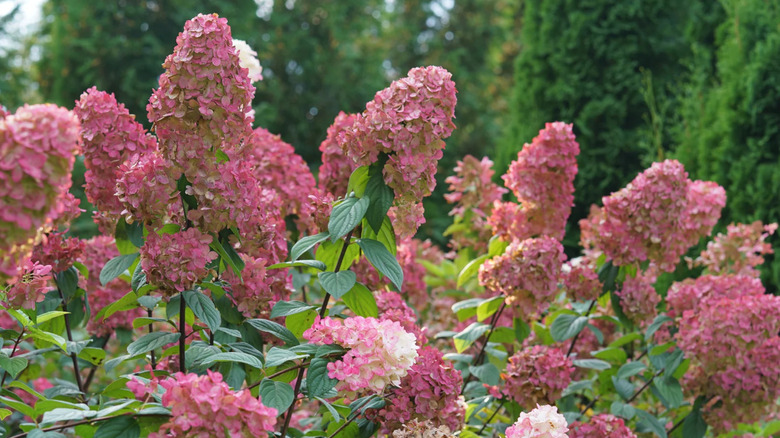
If you're trying to naturalize a landscape or establish a living hedge, consider 'Fire Light' hydrangea (Hydrangea paniculata 'SMHPFL'). This full-sun lover produces massive blooms that its branches are well-suited to support. From summer through fall, green leaves are adorned with creamy white blooms that later take on pomegranate tones. It thrives in zones 3 through 9 and requires consistent watering, or the blooms will turn brown. It does require some maintenance, in the form of spring pruning, to ensure vigorous growth.
'Let's Dance Blue Jangles' hydrangea
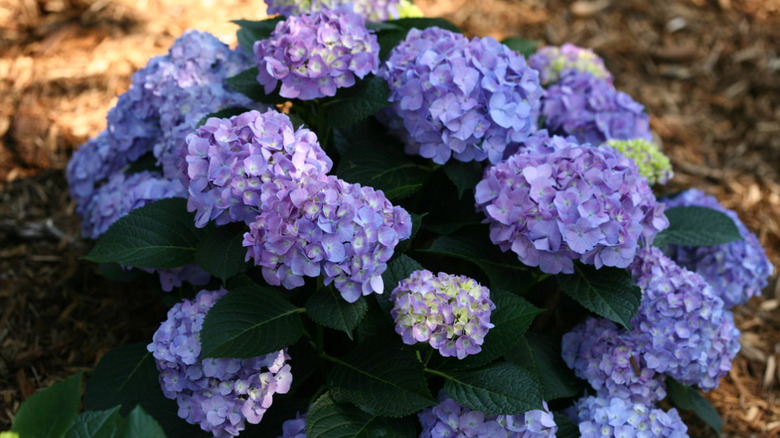
Gardeners with acidic soils and a thing for the color blue should consider giving 'Let's Dance Blue Jangles' hydrangea (Hydrangea macrophylla 'SMHMTAU') a go. They produce a blaze of mophead blooms in early summer and another flush toward the end of the growing season. In case a late frost damages the buds, you can still depend on this shrub to offer color later in the season. It can handle about six hours of direct sunlight in zones 5 and 6, but further south, it will need to be planted where there is afternoon shade.
'Flemygea' hydrangea
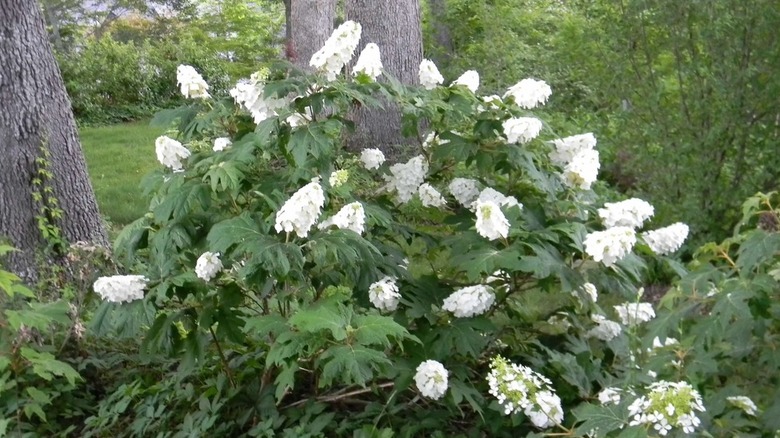
'Flemygea' hydrangea (Hydrangea quercifolia 'Flemygea') is an award-winning variety prized for its ability to withstand common hydrangea diseases and to maintain its upright form through a heavy downpour. Its white blooms are valuable in gardens requiring spring color, though its presence is just as gratifying in summer and fall when flowers turn pink and foliage assumes red or bronze overcoats. It grows best in organically rich, moist, well-draining soils and can handle full sun exposure in zones 5 through 9. Due to their size, they look best as a single specimen or in small groups.
'Pee Wee' hydrangea
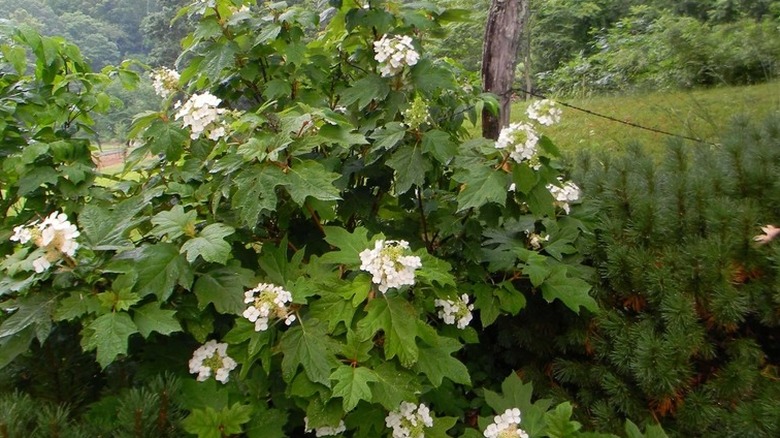
'Pee Wee' hydrangea (Hydrangea quercifolia 'Pee Wee') provides splendid color for over six weeks in the summer when its conical white flowers bloom. These blooms eventually fade, first turning pink and then brown, which can be retained for winter texture along with the exfoliating bark. By November, their green leaves turn a vivid mix of bronze, maroon, purple, and orange, providing a beautiful backdrop for fall-blooming perennials. 'Pee Wee' can grow up to 4 feet tall, tolerates full sun exposure with summer mulch, and is hardy to zones 5 through 9.
'Omacha Variegated' hydrangea
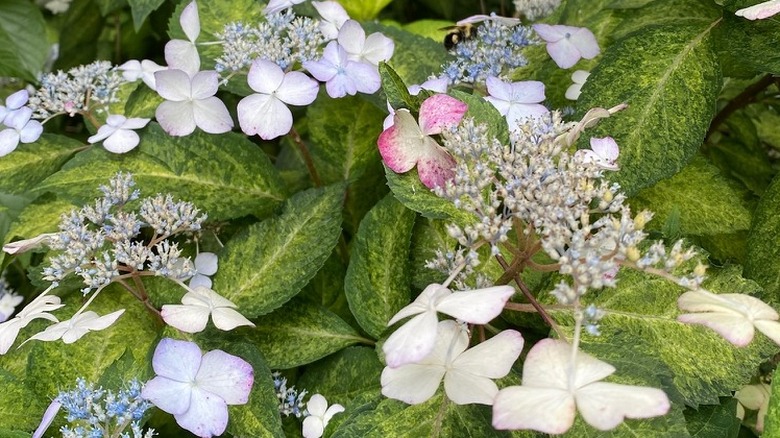
The 'Omacha Variegated' hydrangea (Hydrangea serrata 'Omacha Variegata') is another pollinator-friendly variety you can plant in gardens in zones 6 through 9. They perform best in morning sun with some afternoon shade during the hottest part of the day. Unlike other serrata varieties, these are late to bloom in spring but strike up a gorgeous display through fall. Buds open to reveal white blooms, which, depending on the soil chemistry, turn blue or pink in summer. These grow to about 4 feet tall and wide and can be massed for a hedge or added as a foundation specimen.