

Add Rice Water To This Popular Leafy Green For A Big & Delicious Harvest
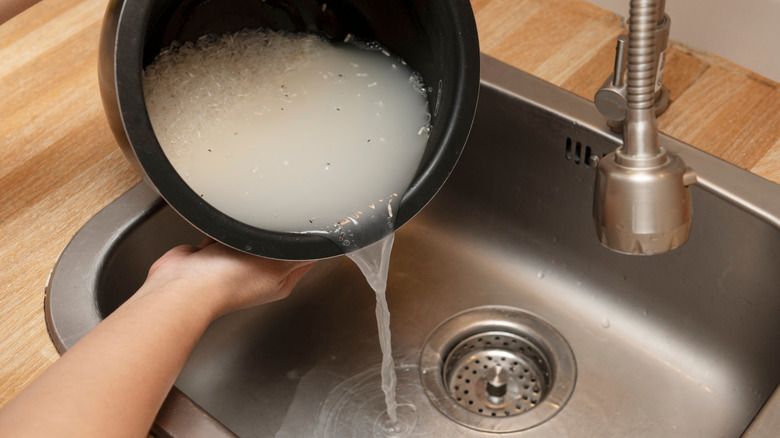
Among the many sustainable options for reusing kitchen waste, there's actually an interesting way rice can serve as fertilizer in your garden. If you save your rice water, you can use it as a weekly boost for your plants. Rice water is proven to contain healthy nutrients that benefit the growth of plants, such as nitrogen, phosphorus, and potassium (NPK). It is especially helpful for plants with large green leaves like lettuce.
Lettuce (Lactuca sativa) thrives in full sun and neutral or slightly acidic soil. Rice water has been known to adjust the pH of soil slightly, in some cases making it more acidic, which is beneficial for lettuce. A study published Heliyon showed that fermented rice water can decrease soil pH; however, the results aren't always consistent, which is why regular soil testing is recommended.
In addition, lettuce feeds on the nutrients and proteins found in rice water. While rice water alone does not completely replace fertilizer, it can improve the health, root establishment, and leaf growth of your lettuce plants when applied properly.
The benefits of using rice water on lettuce (& how to do it)
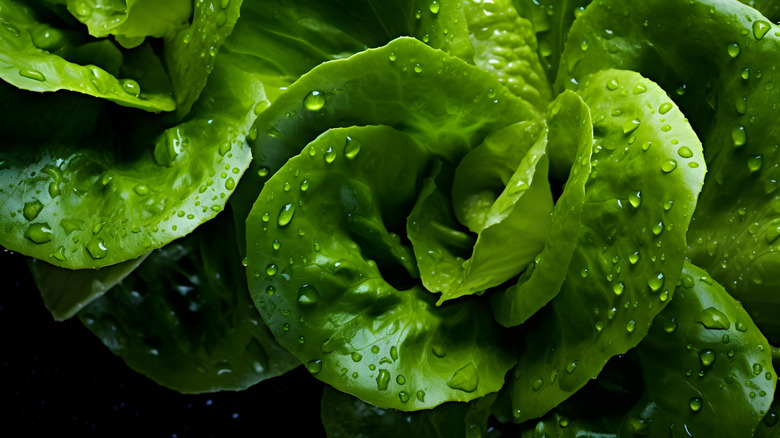
Rice water is filled with healthy nutrients that are highly beneficial to leafy green plants, but you'll still want to keep a few things in mind. First, it's important to conduct a soil test to determine if you even need an NPK fertilizer. Second, you'll want to consider the additional properties of rice water. The specific beneficial additives may depend on the type of rice used to make the rice water. A study in the Pertanika Journal of Tropical Agricultural Science found that white rice water had more nutrients than brown rice water overall, even though brown rice itself has higher concentrations of proteins, lipids, minerals, and vitamins than white rice.
All these nutrients combined can help lettuce plants in a few different ways. One of the acids found in rice water helps to stimulate root growth. And one study (via Heliyon) found that a continuous application of rice water resulted in leaves that were up to 50% heavier and 30% larger than leafy green vegetables fertilized with store-bought fertilizers.
Most people think that you can simply replace your watering routine with rice water, but that isn't the case. Because it acts like a fertilizer, you will need to treat it like one. If you're using unfermented rice water, be sure to dilute it with one part rice water to five parts fresh water. For fermented rice water, dilute it with one part rice water to 10 parts fresh water. Generally, it's recommended to use rice water once every week or two. Apply it directly to the soil, or mist it over the leaves.
There are different types of rice water
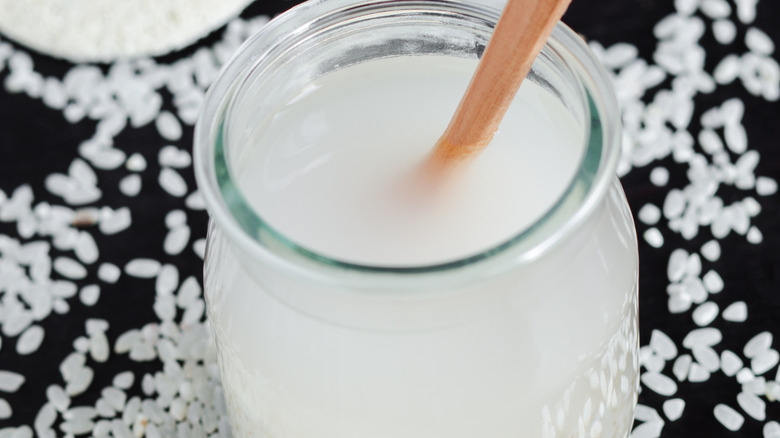
You may be thinking that the term "rice water" is self-explanatory. It's just the water left over after rinsing off your rice before cooking, right? While that is one kind (washed rice water), there are actually three different types of rice water you can use on your plants, and which one you should use can vary depending on your soil conditions and planting goals. Another type of rice water is boiled rice water. It is similar to washed rice water, but the rice is boiled in the water first. It is slightly stronger than washed rice water.
On its own, washed rice water will provide benefits for your lettuce plants, but fermenting is a simple tip that will boost the fertilizing power of rice water even more. Fermenting your rice water isn't complicated, but it loses effectiveness if stored, so you should only start the process when you plan to use it. Let your washed rice water sit at room temperature for three days. It will need to be diluted before being applied to your lettuce plants, but fermented rice water is proven to help vegetables like lettuce produce heavier, healthier leaves.