

8 Tree Stump Materials To Use For Durable Garden Paths That Really Last
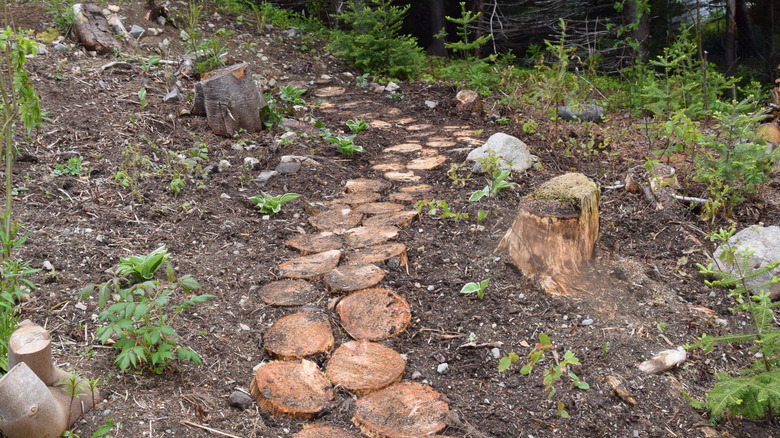
Natural garden paths add a subtle charm to a yard. They weave through garden beds, providing a practical yet pretty way to get you wherever you need to go. To create a stylish pathway, many gardeners turn fallen trees and old tree stumps into round slices with a chainsaw or similar tool. They lay the slices like stepping stones, arranging them in rows to form a rustic walkway before partially burying them in the soil. It's an excellent way to repurpose ugly stumps into long-lasting, functional, and natural outdoor décor. There are many tree species in the U.S. that would work well for a timber path, and there's sure to be a viable option near you. You need rot-resistant trees, such as black locust, oak, and juniper, among a few other species.
The type of wood you use is crucial to the project's long-term success. Some timber is naturally resistant to decomposition, so the wood lasts a long time after the tree is cut down. It's perfect for pathways. If you use a less rot-resistant type of wood, you'll need to replace the rounds after just a few years. For example, it's best to stay away from softwoods like pine and spruce. If your yard lacks felled trees or stumps, consider sourcing pre-cut timber rounds from a local landscape supply store or lumber yard. These businesses often repurpose wood into products for home use. Plus, they're likely to source from local timber regions, making it a sustainable option.
Black locust
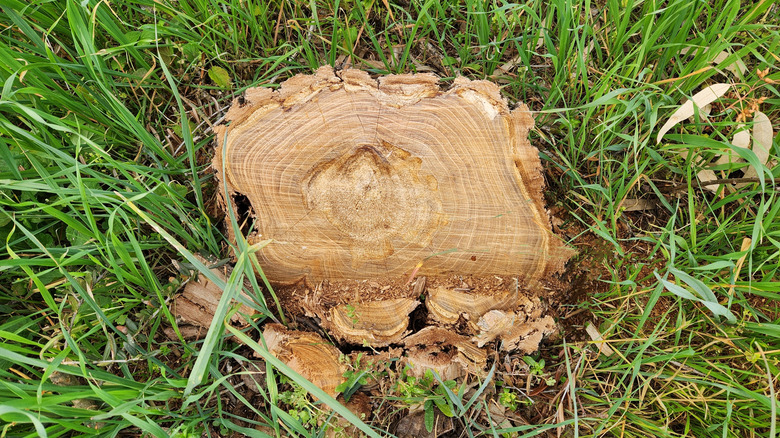
The black locust (Robinia pseudoacacia) is one of the most rot-resistant trees in North America, making its wood ideal for cutting into rounds for use as path-holders. While it's native to the southeastern U.S., you may want to think twice before planting this beautiful tree in your yard, as it's considered invasive in much of the Northeast and Midwest. Cutting it down can also encourage new sprouts, so if you fell this tree on your property, ensure you kill the stump to prevent regrowth.
Western red cedar
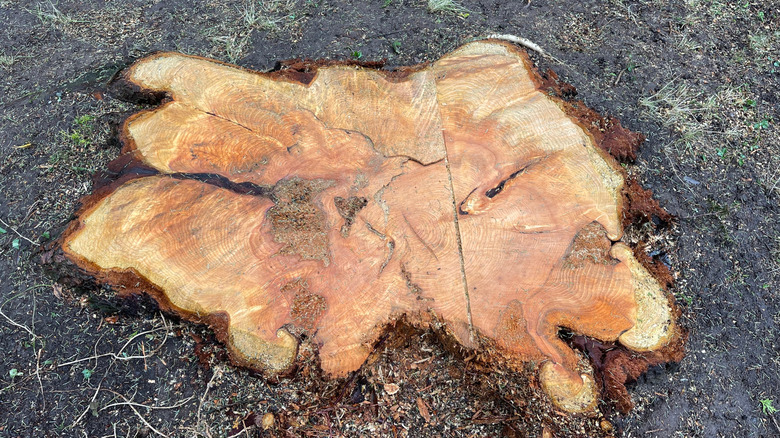
Trees often use their rot-resistant properties to withstand challenges in the landscape, as is the case with the western red cedar (Thuja plicata). This evergreen species thrives in moisture-prone environments of the West, where regular rainfall and sea spray create perpetually moist conditions. The wood resists decay, allowing a western red cedar tree to reach over 1000 years old. Your path may not survive for 1000 years, but it'll outperform stepping circles made from pines, hemlocks, and similar conifers. It'll also look picturesque, as the red tint of the wood matches well with earth tones.
White oak
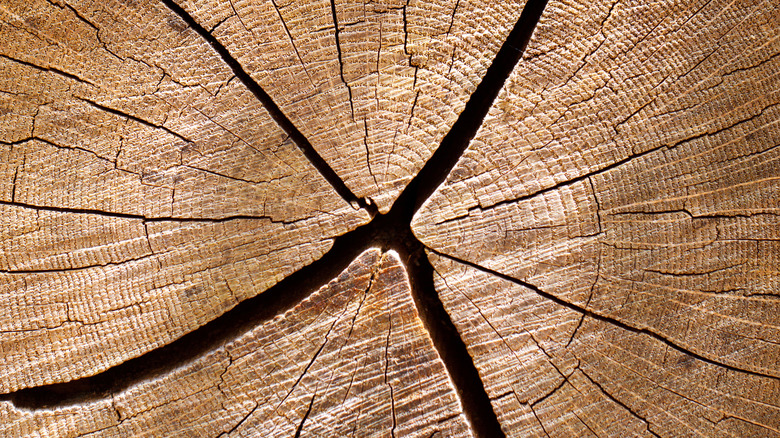
Homeowners with white oak (Quercus alba) tree stumps are in luck. Oaks are among the longest-lasting hardwoods available. They're comparable to black locusts, as they burn for a long time and resist decay in nature. The wood is a pale yellow-white, making it perfect for color-matching with bright flowers. This tree is native to the eastern states, from Texas north through Nebraska, and eastward to the coast. You'll see it growing in the wild, though it takes the species many years to reach maturity. If you have a stump, chances are it's from a really old oak tree!
Coastal redwood
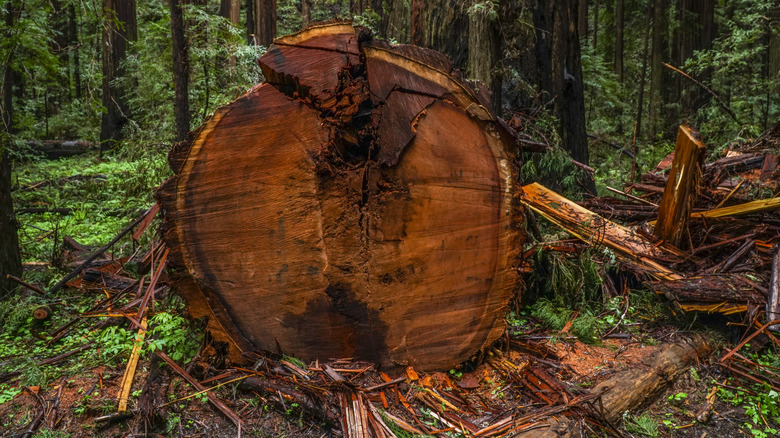
Redwoods might be more susceptible to rot than oaks and black locust trees, but their water-resistant wood is still suitable for long-lasting garden paths. This is especially true if you choose the coastal redwood (Sequoia sempervirens). The protected and iconic species of the West Coast reaches immense heights of over 200 feet, soaring into the skyline with needle-like green leaves and rich, red-brown bark. That said, it's a popular species that you probably shouldn't plant in your yard because of its massive size.
Tamarack
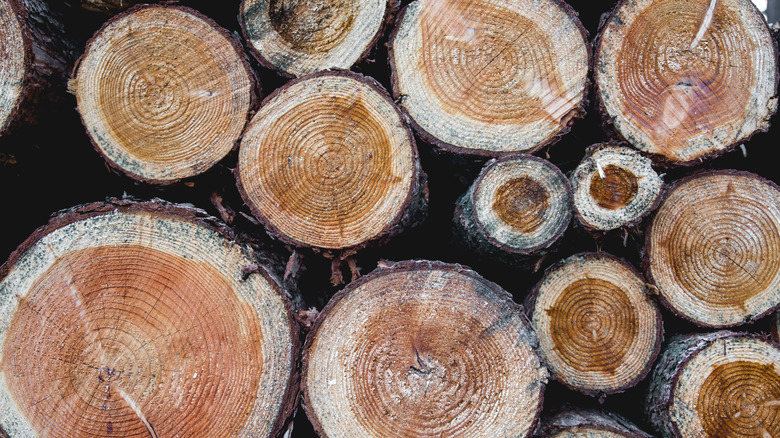
Did you know some conifers lose their needles in the winter? The tamarack (Larix laricina) is a conifer that sheds its needles every fall. It's a fast-growing tree that thrives in cold climates, with moisture-resistant wood, making it perfect for stepping rounds. The species was a popular choice for shipbuilding — its roots diverge sharply from the main trunk, and this structure was highly desirable for certain parts of the ship. Before that, American Indian nations used the wood for making shoes and fish traps.
Western juniper
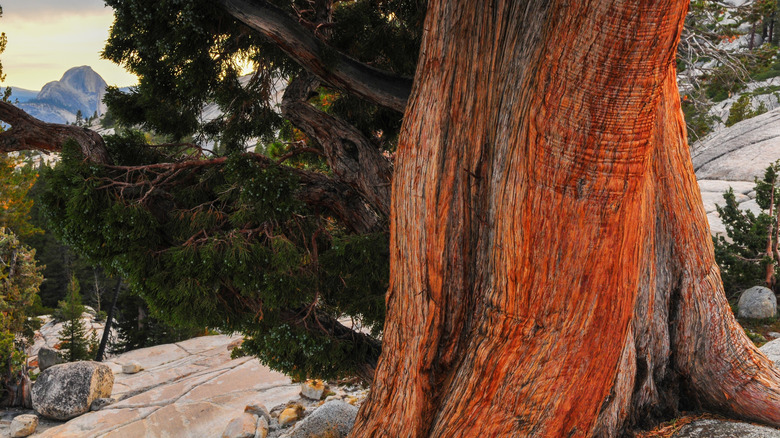
Junipers are another group of hardy conifers with attractive qualities. They feature scaly or needle-like green-blue leaves. They're incredibly hardy, both as living trees and as cut wood in the landscape. The western juniper (Juniperus occidentalis) is one of the hardiest. It thrives in its native range of the western U.S., growing well in dry regions with cold winter temperatures. Cut its trunk into rounds, and they'll last for multiple seasons without rotting. Note that the trunk will not likely regrow after cutting, meaning that a stump will stay a stump.
Eastern red cedar
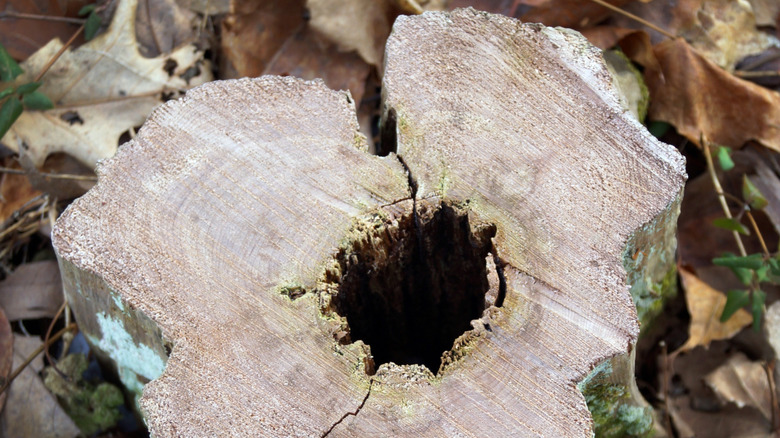
The eastern red cedar is, in fact, a juniper! Its common name is the eastern red cedar (Juniperus virginiana) because it resembles cedar trees. A tough tree with decay-resistant wood, this specimen is a common sight in the eastern states, from Canada south through Florida and Mexico. It thrives in both wet and dry sites, making it common in backyards, wild landscapes, and natural areas. The internal wood is light brown and appealing in outdoor settings and pathways. Blend it in by adding mulch chips around the rounds to make a pleasing scene in your garden paths.
Pacific yew
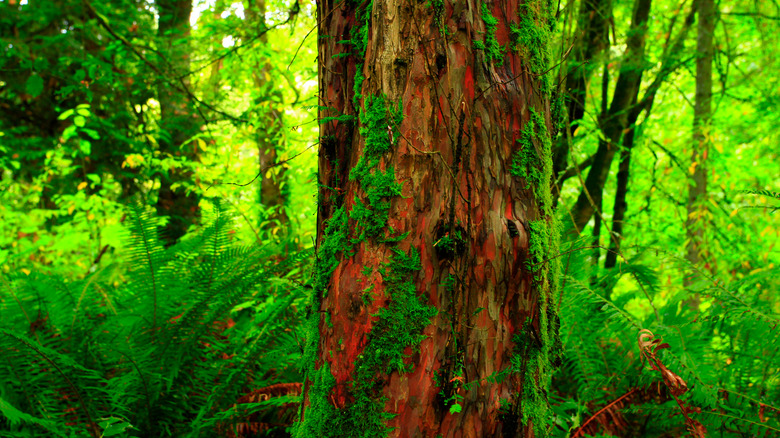
Yew wood has lovely hues inside it. If you're hoping for a gorgeous garden, then you'll want to choose a stunning wood like that from the stumps of Pacific yews (Taxus brevifolia), the famous trees of the West. Cut pieces from these stumps will retain rich browns, yellows, and reds. Consider staining the pieces before laying them down to help them last even longer than they already would. You'll find Pacific yew stumps throughout the West Coast, as they are common understory trees in forests near the ocean.