

Stop Planting Invasive Mint In The Garden. Here's A Better Way
You might love the idea of plucking some fresh mint leaves for a refreshing mojito, but planting mint directly into your garden beds is a rookie mistake you'll regret by the next season. Mint is not a polite neighbor; it's an aggressive and opportunistic conqueror. It uses underground runners called rhizomes to spread through the soil. These thick, white structures travel horizontally just beneath the surface, popping up feet away from the original plant and choking out your boutique roses. Before you know it, your diverse, thriving herb garden has become a monument of mint that's nearly impossible to eradicate. And even tiny fragments of rhizome left behind during a cleanup are enough to become a brand-new plant, making mint the zombie of the gardening world. So what's the alternative if you still want mint in your garden? Plant it in a pot.
To keep your landscape from being overrun, you need to understand that mint doesn't play by the same rules as other herbs. Most gardeners underestimate how fast these runners can move. While the plant looks pretty and smells divine, its biological mission is total domination. And this aggressive evolution is why you should never let it touch your soil. If you've already made that mistake, you've got an uphill battle ahead of you to reclaim your space. The goal of a beautiful garden is balance and peace, and mint (more than rabbits or deer) is the ultimate disruptor of that. Unless you want your yard to become a mint-covered wilderness, pot planting is the most effective way to contain this devious, delicious herb.
How to use pots to plant mint in your garden safely
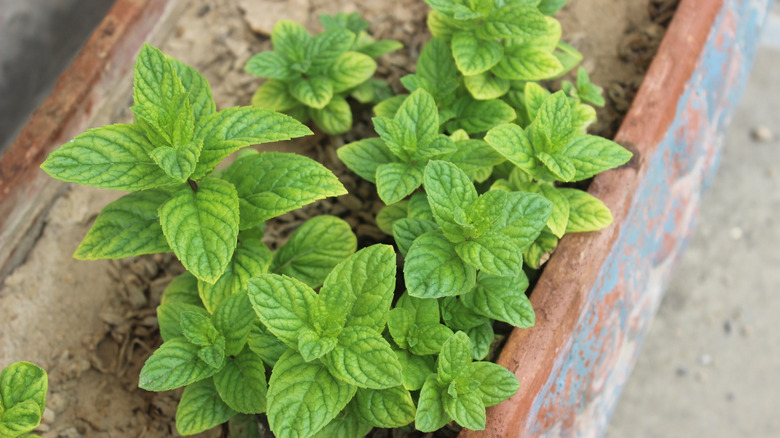
The best way to enjoy fresh mint without the headache is to use a thick-walled pot (like terracotta) as a permanent barrier, regardless of whether you want to grow mint indoors or keep it outside. A clay or plastic pot provides a sturdy boundary that'll contain those runners.
The smartest option is to keep that pot away from other plants entirely. But if you want the traditional herb garden look (we totally get it), you can actually sink the pot into the soil, but keep the lip 2 inches above the surrounding soil level. However, you must be strategic about the drainage hole at the bottom. To prevent a prison break, put a flat paving stone or a large, smooth rock at the bottom of the planting hole before you nestle the pot inside the dirt. This trick allows water to flow through but blocks sneaky roots from tunneling down into your garden beds.
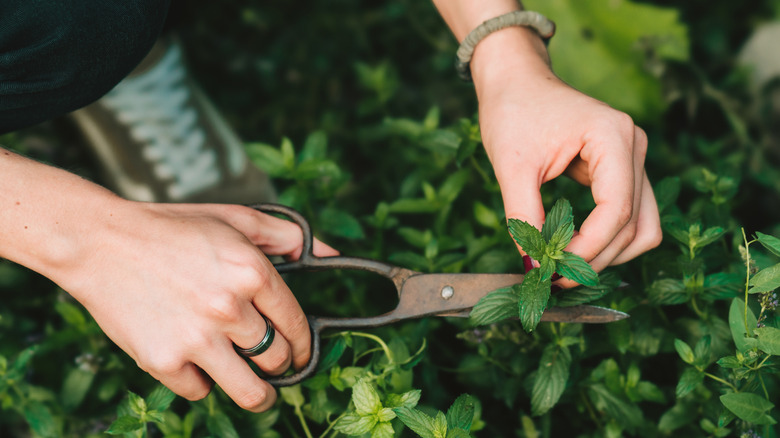
Beyond the roots, you also need to manage mint from the top down to stop it from spreading through the air. As soon as you see purple or white flower spikes start to form, it is time to grab your garden shears. Even though the flowers are pretty, they're a signal that the mint is about to go to seed. We recommend pruning it frequently before it blooms so it stays a reasonable size, which also prevents seeds from blowing all across your yard. With a little planning, a good terracotta planter, and some pruning, you can keep your mint exactly where it belongs.