

The Deer-Resistant Evergreen Shrub That Makes The Perfect Border Plant
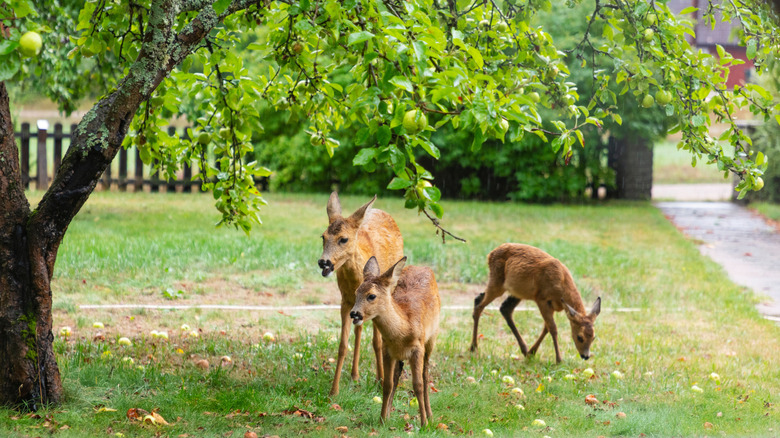
Gardening in deer territory presents unique challenges that frustrate gardeners. If you aren't careful, you could be growing expensive meals for the local herd. I know because I once fed them a little over $100 in sunflower plants in a single night. If you are looking for deer-resistant shrubs to landscape your yard, Suntastic™ 'Radiance' Abelia (Abelia × grandiflora 'Radiance') is an evergreen shrub that makes the perfect border plant.
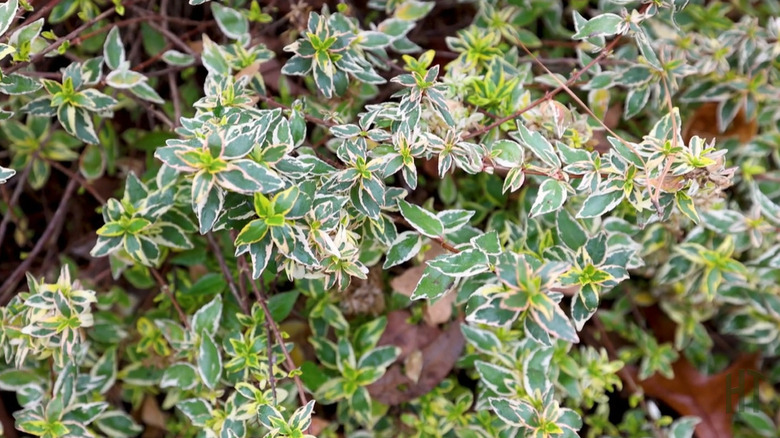
The 'Radiance' Abelia is part of the Southern Living plant collection. This is a flowering evergreen shrub that resists deer, pests, and drought, while bringing year-round color to your garden. The variegated leaves are green in the center with creamy white edges and contrasting red stems. The shrub has a long flowering period from summer through fall, giving your garden fragrant white blooms that also benefit pollinators.
The size and hardiness of this dwarf variegated abelia make it a perfect choice for border plants. The plant grows to between 2 and 3 feet tall and up to 4 feet wide with time. If desired, the shrub can be pruned to control the width. The plants grow in a perfect small dome that can be used in a variety of spaces and conditions because it is hardy and requires little maintenance.
Caring for Suntastic™ 'Radiance' Abelia
Suntastic™ 'Radiance' Abelia grows best zones 6 to 10. If you don't know your USDA growing zone, you can view maps or search by zip code on the US Department of Agriculture website. In the optimal growing zones, this shrub will be evergreen throughout the year. However, it can grow a bit thinner in the winter months in zone 6.
When you want deer-resistant plants that save your garden and grow easily in partial shade to full sun, the 'Radiance' Abelia is an excellent choice. While this shrub thrives in both partial shade and sun, it blooms best in full sun. This Abelia can be planted in a variety of soil types, including sand, loam, or clay, as long as the soil has good drainage. To plant the shrub, dig a hole the depth and width of the container and water both the plant and the hole, allowing the water to drain before planting. Fill the hole around the plant with soil and tamp it down.
Another benefit of using this shrub as a border plant is the low maintenance requirements. Once it is established, the plant doesn't require a lot of pruning or watering, due to its drought tolerance. In normal conditions, watering may not be needed beyond the rain. However, in dry weather conditions, it will need to be watered. Adding 1 to 2 inches of mulch around the root zone will help the plants conserve moisture.