

The Telltale Signs That Your Indoor Peace Lily Plant Is Infested With Pests
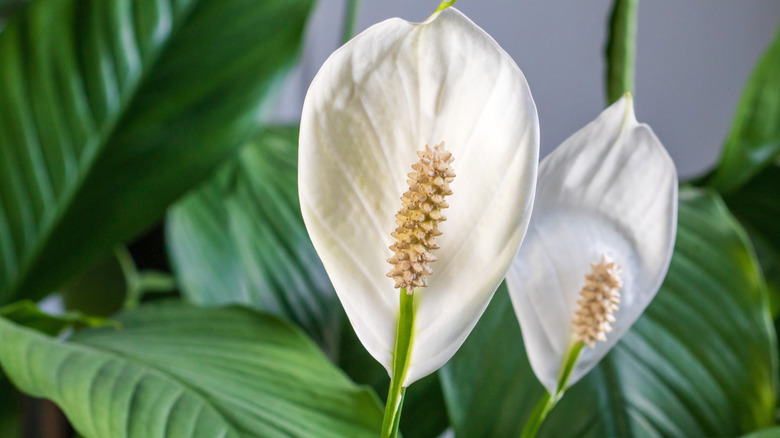
Peace lilies (Spathiphyllum spp.) are beautiful indoor plants that offer diligent gardeners a stunning display of foliage and white blossoms. Even though they are generally considered easy to care for, they still need regular care. You'll want to give it indirect light, consistent moisture, and occasional feeding to help it thrive. But what happens when you know you've done everything you can to avoid common mistakes that are sure to kill your peace lily plants, and you're still seeing damage? It can be especially disheartening when you put in the research, time, and effort to create the perfect environment for your peace lily and you still see stripped leaves, drooping foliage, or unexplained discoloration. The good news is: it may not be your fault. These are all telltale signs that your peace lily may be hosting unwanted pests.
If you've made sure that your moisture, light, temperature, and soil conditions are all within the ideal parameters for a peace lily, check for these common pest symptoms. Fine bronzing or speckling across the leaves, which is sometimes paired with delicate webbing between the stems, is a sign that you have sap-sucking insects feeding on your plant. On the other hand, clusters of white, cotton-like material along the leaf joints or small brown bumps lining the stem are indicators of other pests. You may also spot tiny flying insects hovering near the soil.
Common pests for indoor peace lilies and how to identify the damage they cause
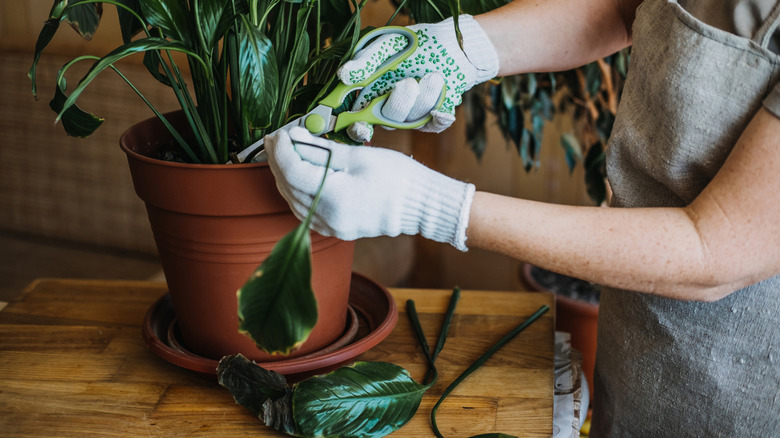
Even if your peace lily thrives in certain areas of your home where beetles, slugs, or other large pests can't reach, it isn't totally protected from pests. If you've noticed damage that clearly isn't from improper care, you may be facing symptoms from spider mites, mealybugs, scale insects, or fungus gnats, all of which commonly prey on indoor plants. If you've noticed bronzing on the leaves or faint webbing, you may have an issue with spider mites. These tiny arachnids feed by piercing plant cells and extracting their contents, which leaves stippling on the leaves. If left untreated, the leaves will eventually turn yellow or drop. Heavy infestation of spider mites leads to a fine silk webbing, especially on the underside of the leaves.
Brown, shell-like bumps attached firmly to the stem or leaves are an indication of scale insects. These pests anchor themselves in place and feed on sap, weakening the plant and sometimes causing yellowing or premature leaf fall. Many species also excrete honeydew, which is a sticky substance that encourages sooty mold growth. White, cottony clusters along leaf axils, on the other hand, are usually a sign of mealybugs, which also feed on sap and produce honeydew. A peace lily infested with either of these sap-sucking pest may exhibit stunted growth, wilting, and leaf drop.
Finally, if you see small, mosquito-like insects flying up when you water your peace lily, you probably have fungus gnats breeding in the potting mix. While adults are more of an annoyance than anything, larvae feed on organic matter and, in some cases, the roots.
How to save your indoor peace lily from common pests
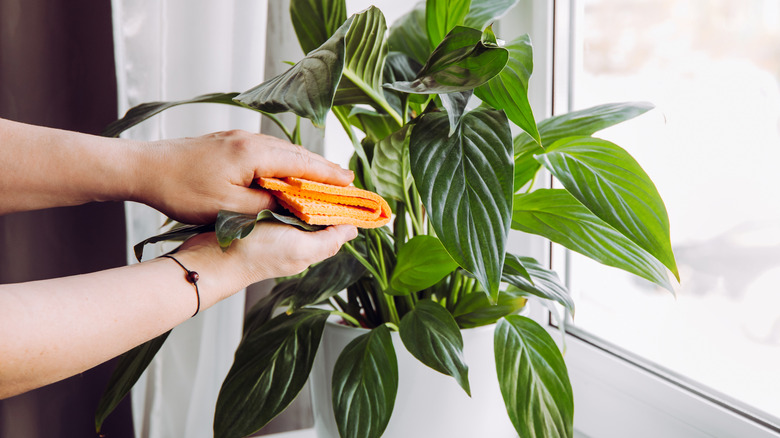
The good news is that many peace lily pest problems can be managed with natural, low-toxicity methods. For spider mites, start by increasing humidity and regularly rinsing leaves with a steady stream of lukewarm water to remove the mites and webbing. Insecticidal soaps and horticultural oils, like neem oil, have been shown to effectively reduce mite populations when applied thoroughly to the undersides of the leaves. In fact, you can make your own simple DIY neem oil spray that keeps pests off plants without killing the good living organisms that are helping your peace lily.
Scale insects can be removed manually by gently wiping them off with a soft cloth or a cotton swab dipped in alcohol. Follow up with an oil application to smother remaining insects and newly hatched crawlers. Mealybugs respond well to similar spot treatments with alcohol-soaked cotton swabs as long as it is a small infestation. For larger outbreaks, you may want to try an insecticidal soap to break down their protective coatings.
To manage fungus gnats, allow the top inch of soil to dry between waterings. Larvae thrive in consistently moist soil, so by letting the soil dry, you will dehydrate the pests before the reach adulthood, preventing future breeding. Sticky traps can help reduce adult populations.