

Grow This Beautiful Ground Cover To Blanket The Citrus Tree In Your Yard
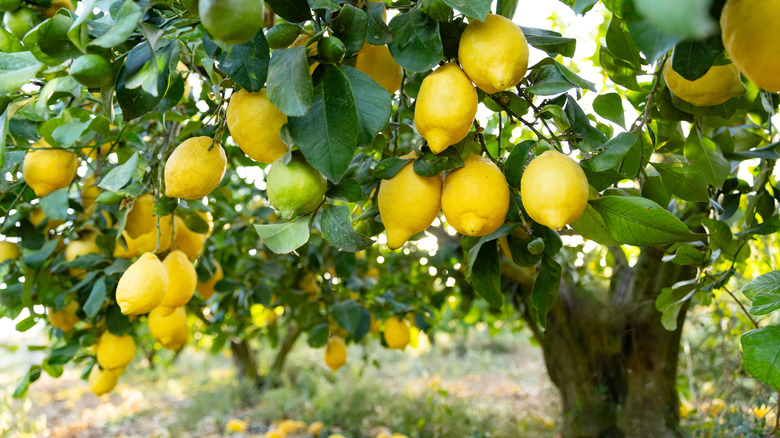
Citrus trees provide myriad benefits for your yard beyond fresh, delicious fruit. They offer fragrant foliage, natural shade, and even improved air quality according to a 2010 study. Not to mention, citrus trees are great for attracting pollinators like bees and butterflies. But what about plants that can benefit your citrus trees? If your citrus tree looks a little bare at the base, you might be missing out on one of the easiest ways to elevate both its health and its appearance. Companion planting isn't just for vegetable gardens; fruit trees can benefit just as much from the right plants. The right ground cover plant can help to suppress weeds, attract more pollinators, and even improve the soil over time. Among the many herbs and flowers you should grow alongside citrus trees in the garden, mountain clematis (Clematis montana) is the perfect pairing.
Mountain clematis is a woody perennial that grows in USDA hardiness zones 6 through 9. This elegant vining plant provides both beauty and function. As it spreads generously around the base of the tree, it creates a lush, inviting carpet that suppresses weeds and brings hummingbirds to your yard. It can grow in partial shade and alkaline or neutral soil with good drainage. Plus, it can grow well in containers, which means you can add mountain clematis to citrus tree containers for indoor growing. While this makes it a great companion for citrus trees, it is poisonous to dogs, cats, horses, and humans, and can cause contact dermatitis, so only plant it in orchards or yards not frequented by children or pets. It can also be a vigorous spreader, so be cautious when planting it in areas where it may outcompete native plant species.
Benefits of planting mountain clematis with citrus trees
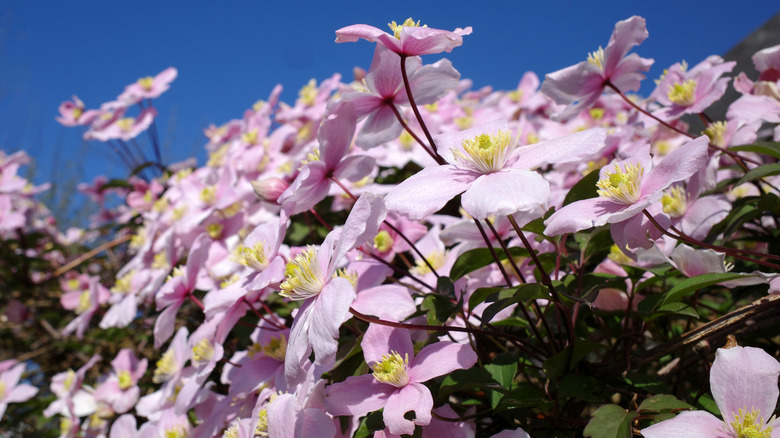
Mountain clematis produces pink, purple, red, or white flowers that grow to between 3 and 6 inches in the spring and summer. The vines grow rapidly and can climb or spread up to 24 feet, but luckily don't pose a threat to the tree itself. The fragrant blossoms attract bees, butterflies, and hummingbirds, which can help improve fruit set and encourage a healthier, more productive tree. This is especially great for citrus varieties that need cross-pollination; however, even self-pollinating varieties benefit from additional pollinators. Pollination is one of the most important things you should know before growing a citrus tree indoors. If you are growing your citrus trees with mountain clematis indoors, you will need to manually pollinate. In this case, self-pollinating varieties will not benefit from the pollen from the mountain clematis plant directly.
Outdoors, mountain clematis also works as a natural weed suppressor. The dense mat of foliage leaves little room for opportunistic weeds to take hold, which reduces maintenance for gardeners. Not to mention, it reduces the competition for nutrients, which is essential for healthy fruit trees. Once the mountain clematis is established, you're left with a stunning display of tidy blossoms that looks intentional and polished, rather than a mess of wild weeds.
Visually, the pairing is hard to beat, which works both indoors and out. The colorful blossoms of the mountain clematis create a striking contrast against the bright colors of citrus leaves and fruit. When in bloom, it transforms the base of your tree into a showpiece. Together, the two plants create layers of interest, resulting in a garden or indoor feature that feels lush and thoughtfully designed.
How to care for a mountain clematis with your citrus trees

One of the best parts of pairing your mountain clematis with your citrus trees is that planting and maintenance are pretty straightforward. However, a little planning goes a long way to ensure both plants thrive, so consider everything you should know about clematis before planting. First, clematis can climb, so you will probably want to plant it under a tree that is already well established. Consider the spread when putting the initial vines in. For blanket cover, it is best to plant it outside the tree's drip line. If you want it to climb the tree, you can plant it as close as 2 feet away from the base of the tree. In containers, you will need a pot at least 18 inches wide.
While mountain clematis creates a blanket of protection around the base of your tree, it grows best when the roots stay cooler than the vines. To help maintain a healthy temperature, you can add pebbles or gravel around the base of the plants. Before planting, enrich the soil with compost or well-rotted organic matter. Both citrus and clematis prefer fertile, well-draining soil. When establishing, water consistently. This will help the clematis roots take hold and provide benefits to the citrus trees as long as you align the watering schedules.
Pruning is important to consider if you want your mountain clematis to act strictly as ground cover. You will want to gently trim wandering shoots that attempt to climb the tree. This shouldn't need to happen frequently. Light pruning after flowering should keep your things tidy and encourage healthy growth. That's it! With minimal care, this pairing becomes a long-lasting, low-maintenance feature that enhances both the beauty and productivity of your citrus tree year after year.