

The Beautiful Garden Flower Beginners Shouldn't Grow From Seed
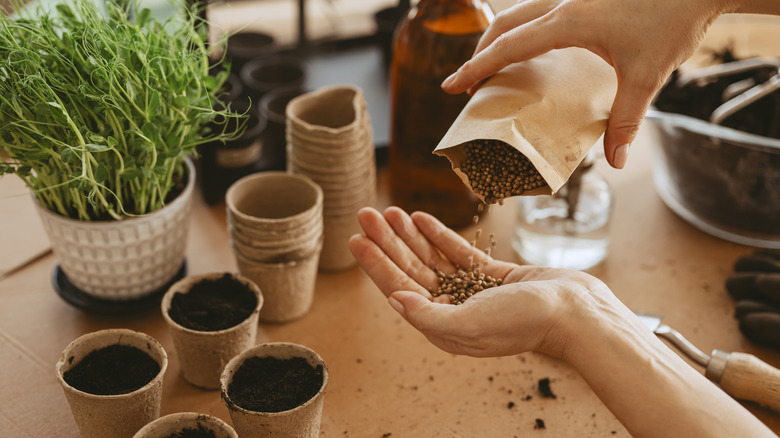
New gardeners often want to try every pretty flower they see in a gardening catalog. However, sometimes this itch of trying everything new can end in a disaster. For instance, a beginner gardener decides to grow something that requires a lot of care, as well as the right technique. A classic example is trying to grow tuberous begonias (Begonia tuberhybrida) from seeds. There is no denying the fact that begonias are incredibly beautiful flowers that can really uplift the look of a garden. But new gardeners should only grow them from cuttings instead of the seeds. That is because the seeds of tuberous begonias are hard to handle and require a really tightly controlled set of conditions to germinate and grow. Take, for instance, their size. Tuberous begonia seeds are exceptionally tiny.
A light breeze is often more than enough to scatter them across the room. On top of that, you cannot even bury them in the soil as they need light to germinate. And even if you somehow manage to sow them right, there is the aftercare. Tuberous begonia seeds need a lot of humidity, sterilized potting soil, and a carefully controlled ambient temperature as well. If they don't get it, they will just refuse to sprout. Put simply, you need to stay away from growing tuberous begonias from seeds. However, if growing flowers from seeds is something you are dead set on as a beginner gardener, then try chamomile. It is a beginner-friendly flower you can easily grow from seed without much hassle.
The beginner-friendly method of growing tuberous begonias
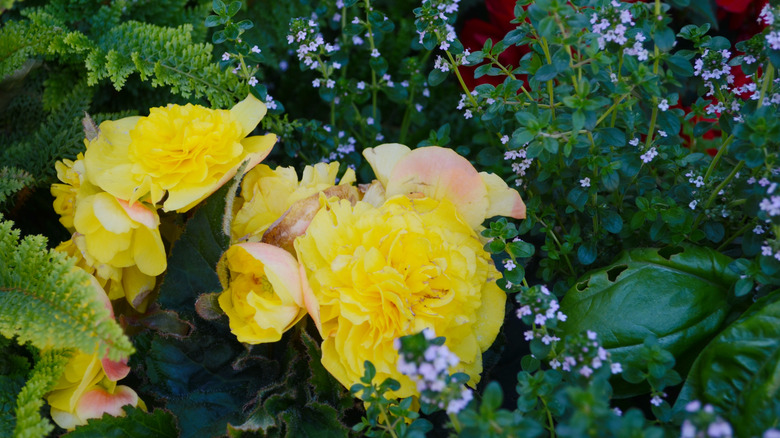
When it comes to growing tuberous begonias, beginners mainly have two options: cuttings and tubers. However, homeowners need to stay away from propagating tuberous begonias from tubers. Just like growing flowers from seeds, it is a somewhat tricky process. For instance, you need to divide the tubers when the plant is actively growing. Plus, the tuber pieces often start rotting or catch a disease, and this can make the whole process a significant headache. So, the better option for a beginner is to just stick with cuttings.
For propagating with cuttings, start by choosing a healthy leaf stem to take the cutting from. You must avoid those stems that are old and have become fibrous. Ideally, you want something that is about four to six inches long, and from new growth. Then, once you have the right cutting, simply remove the leaves from the bottom part and put them in four-inch pots. Also, if you want to give your tuberous begonia cuttings the best chance of success, try to root them in a forsythe pot.
Don't worry: It is easy to make. All you have to do is take a 3-inch unglazed clay pot and close its drainage holes. Then, just put it in a larger 10-inch pot filled with vermiculite and fill the clay pot with water. Next, put your cutting around the clay pot in the vermiculite and cover the whole thing with a plastic bag to maintain humidity and place it somewhere bright but with indirect sunlight. Within two to four weeks, the cuttings will take root and will be ready to plant in pots.