

Tree Stump Removal Cost: What To Know Before Hiring A Professional
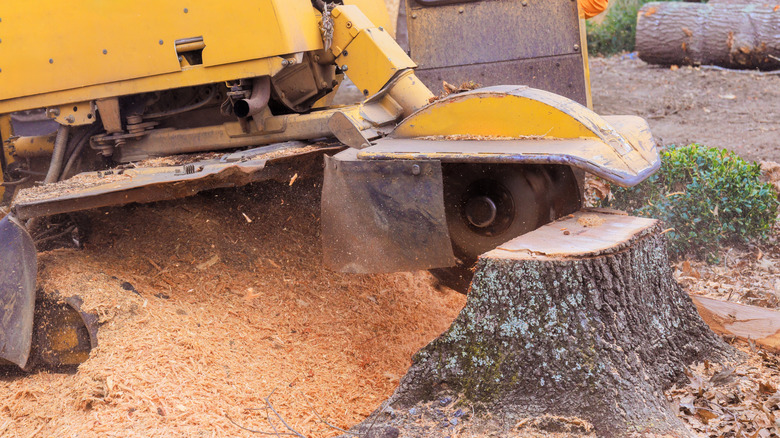
There are several signs that prove tree removal is the right decision for your yard, including having invasive species on site, a mature one interfering with the utility lines, and them getting diseased. However, what of the stump after you have the stems and the bark removed? Should you just leave it as is and ignore its presence? While you can do that if it's not within your direct line of sight, you should still have it removed if you aren't too keen to share your yard with pesky insects, like ants and termites. Moreover, if its roots continue growing below ground, they may ruin your plumbing or sewage lines. Under extreme circumstances, they might even impact your property's base. Considering these cons, it's best if you hire a professional to have the stump removed.
However, before hiring a professional you should know about the pocket pinch: Be prepared to shell out at least $195 for the removal. In case the stump is huge, there's little clearance around it, or the soil is packed in too tight or has too many rocks within, you might have to pay about $609 (or higher in some cases). The overall cost will also depend on the type of removal method you opt for and the kind of tree the leftover stump belongs to. Whether you reside in an urban or rural location will affect the cost as well. Further, the season will have an impact. For instance, if you have it removed during winter days when there's less demand for tree trimming, you might save a few bucks as compared to early spring or summer.
Factors directly affecting your tree stump removal cost
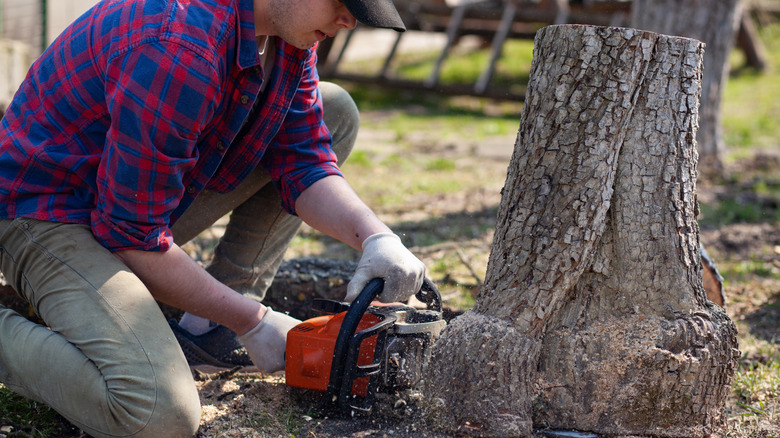
The stump's diameter is one of the most important factors affecting the removal cost. On average, you'll have to pay between $2 and $5 per diameter inch. So, the bigger its size, the higher the associated costs. Your choice of removal method will also affect the cost directly. You can go for a manual process, wherein experienced professionals use chainsaws, axes, and shovels to divide a stump into smaller portions and dig it out, along with its roots. Since this process is both energy- and time-draining, it's the most expensive and you can receive a bill for $200 to $700. And given the risk of accidents, conduct your due diligence before hiring someone. Stump grinding is another popular method. Here, experts use dedicated grinders to break down a solid stump into small chips within two hours. As this method doesn't pluck roots out from deep within the soil (it only goes 4 to 6 inches deep), it's less expensive than manual removal and costs between $150 and $500.
Drilling holes in the stump and pouring in chemicals like nitric acid, sulphuric acid, or potassium nitrate is another method. Although it costs $60 to $200 only, chemical rotting requires four to six weeks. You can even have the stump burned. Here, pros drill holes and fill them with nitrogen before igniting them. It takes a few hours and will rack a bill of $100 to $200. But before you go this route, check the local ordinances in your region. Otherwise, you'll end up committing a mistake everyone makes when removing a tree stump from their yard.
Others factors that may influence the stump removal cost
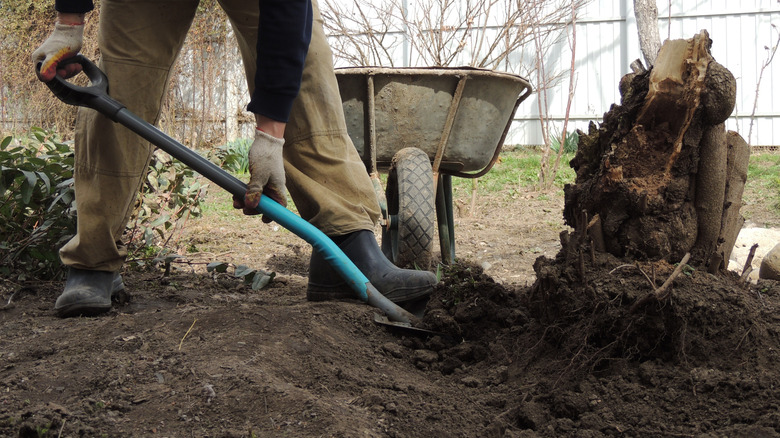
The quantity of stumps you have removed will affect your bill, but not in the way you think. The more stumps you have removed, the lower the cost for each. To put this into perspective, getting rid of a single piece will cost a minimum of $100 to $150. However, if you have two or more plucked out, the price goes down significantly and you'll have to pay $40 to $75 per unit. In case you don't have more than one stump in your yard, reach out to your immediate neighbors to take advantage of this.
The species of your tree will influence the overall cost, too. To elaborate, dense hardwoods, like oak, apple, maple, willow, and elm, are more difficult to remove than their softer counterparts and demand a higher price. And if your stump is rotten, moldy, or pest-infested, you'll have to pay a lower amount than if it's fresh and young. Basically, more time and effort equates to more money. Whether you have the root removed or not (you won't have to pay extra if you go for a manual removal) will also influence the bill. In case you have it removed, keep in mind you'll have to bear an hourly charge of $100 to $200. Getting permits is necessary, too, and will cost you about $100 to $500. If the company you have hired doesn't offer cleanup as part of its services, you'll have to fork over between $1 and $4 per diameter inch to have the root fragments, sawdust, and loose chips cleared from your yard.