

Closet Shelves Keep Falling? Here's What You Can Do To Fix It
We may receive a commission on purchases made from links.
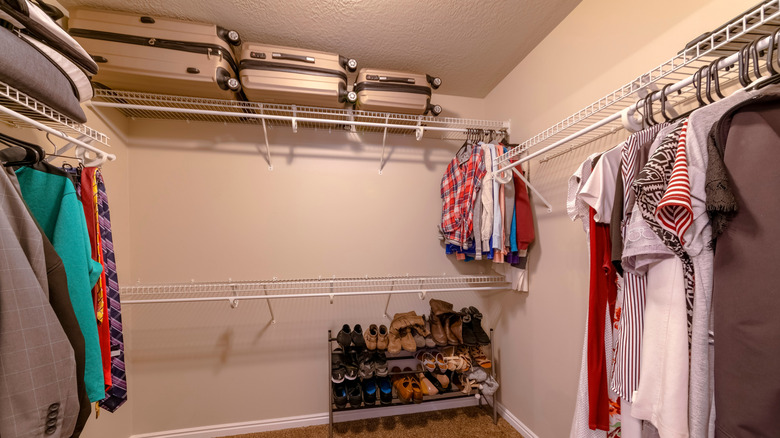
A closet can provide valuable extra storage. It's not difficult to DIY shelves to make the most of the storage space, but if woodworking is not your thing, there are all kinds of store-bought solutions that will do the job. Or rather, they ought to. Unfortunately, the problem a lot of people experience is that their closet shelves keep falling. In my 20-odd years as a carpenter and remodeler, I've seen this happen a lot. I'm going to tell you why and show you how to fix it, once and for all.
The problem can happen with any kind of closet shelves but is probably most common with wire shelving, which are often supplied with nails for installation. That's a big no-no. You should never use nails to hold up shelves. In fact, never use nails in drywall, full stop. They just don't give enough grip, even when you hit into the wooden stud. Instead, use screws, as they're stronger and able to handle more weight.
That brings me to the second problem: If your closet shelves keep falling, I'll bet that either the screws didn't hit the studs, or they weren't long enough. So, fix number one is to find the studs and use long screws. Occasionally, that isn't possible, so fix number two is to use toggle bolts through the drywall, not wall anchors.
Fit closet shelves so they stay up
If the shelf fixings have pulled right out of the wall, taking chunks of drywall with them, you need to patch the wall with filler. If only some of the fixings have come away, it's still best to demount the shelf completely. If nails were used and some are still holding on, grip the sides of the fixing brackets with pliers and pull them out. Don't be tempted to do half a job and leave them.
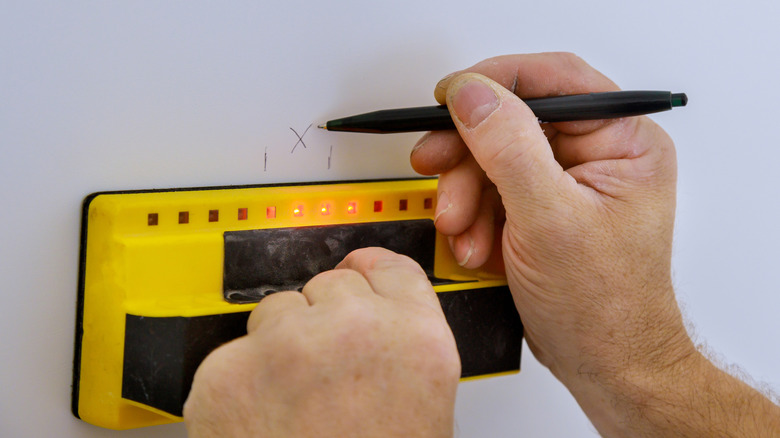
Before you try to put the shelf back, check you know where the studs are. There are some simple tips to find studs without a stud finder, but these devices cost only around $20, so if you're doing a few jobs around the home, they are well worth the investment. Personally, I'd spend another $10 or so and get something like the Zircon StudSensor, which will also warn you if live wires are hiding behind the drywall.
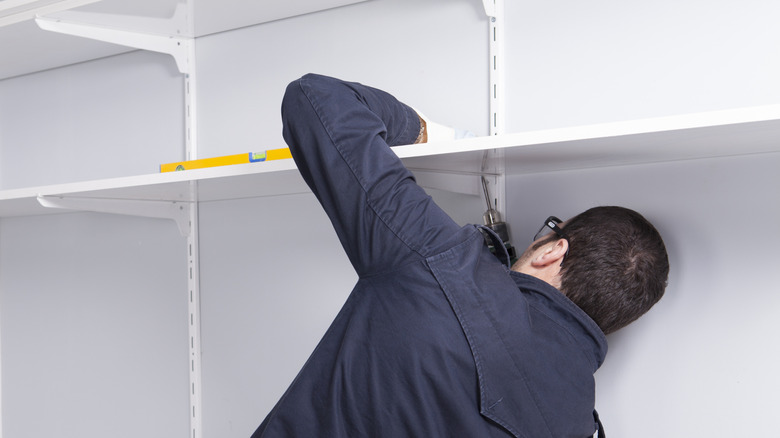
Locate your studs. If the original fixing holes were in studs but have pulled out, you just need longer screws. Drywall is usually ½ inch thick, with 1½-inch studs behind it, so a 1¾-inch or 2-inch wood screw will give lots of thread running through the stud and provide tremendous grip strength. Using a cordless drill driver, carefully drive the screws in through the existing nail holes. If any of the clips are damaged, replacements are widely available. Get the plain ones, not those with wall anchors molded on.
Use toggle bolts instead of wall anchors
Driving long screws into studs solves most of the shelf problems I've come across. However, sometimes the studs just aren't where you want them to be. In that case, people often use plastic wall anchors in the drywall. I have used them for small shelves that display lightweight items, but closet shelves often get overloaded, or stuff gets tugged at and wall anchors can pull out.
So I use toggle bolts instead. Basically, they are a bolt with two wings. You drill a hole in the drywall, push the bolt and wings through, and they spring open on the other side. When you tighten them, the wings pull up against the inside of the drywall and spread the shelf load over a wide area. I've fitted kitchen wall cabinets using them, which gives you an idea of how strong toggle bolts are. Just remember to pull on them a little when screwing them up so that the wings are held snug up against the drywall. Otherwise, the bolt will just spin round and round without actually tightening.
Whether you're repairing a closet shelf that keeps falling or you're ditching a basic closet shelf for an alternative that gives more storage, the secret to making them strong and secure is actually straightforward and inexpensive.