

8 Tips That Will Keep Your Vintage Porcelain In Tip-Top Shape For Years To Come
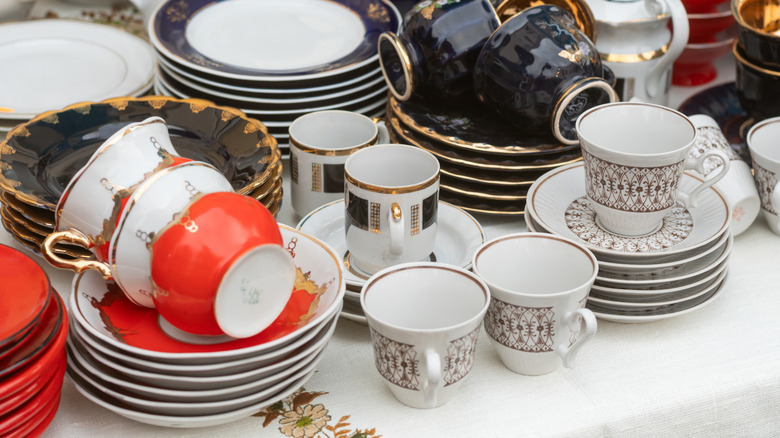
Whether you have a vintage teacup from your grandmother or a miniature figurine you scored from your local thrift store, your favorite porcelain items require a specific type of care. No one wants to see these precious items cracking, breaking, or getting damaged in any way. In order to keep these pieces in tip-top shape, there are a few tips and tricks you can start implementing in their regular care routine, including properly dusting them, storing them in glass cabinets, and removing your jewelry when you do so. If you're unsure if you have vintage porcelain in your care or not, here are 11 valuable brands of vintage porcelain that are worth looking out for. You may have one at home you aren't even aware you own.
Porcelain is a type of ceramic, mostly made from a white clay called kaolin. Most porcelain also contains other organic materials like china stone, feldspar, or quartz. Unlike other types of ceramics, like pottery or semi-porcelain, porcelain tends to be less porous, thin, and durable, which makes it an ideal material for items you may own, like teacups, figurines, and more. Due to its thin nature, porcelain can be prone to cracking, chipping, and scratching. These defections can come from blunt force like falls, abrasive cleaning tools, or thermal shock. If you still don't know what type of item you have, we know a few easy ways to tell porcelain from pottery.
Keep in a cabinet
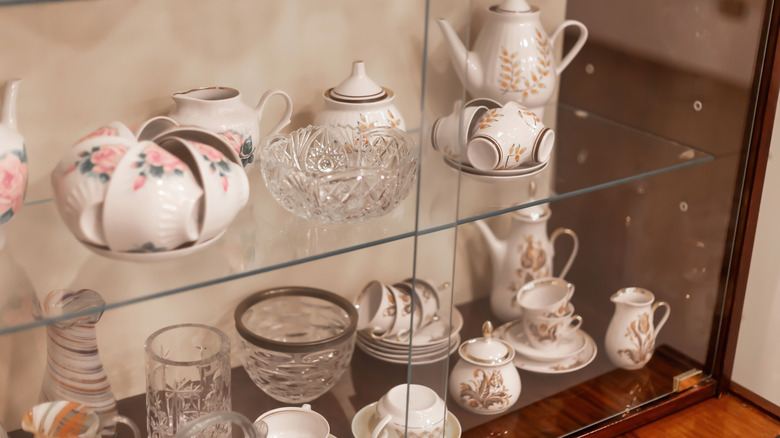
One of the easiest ways to keep your porcelain objects safe from falling, scratching, or chipping is to store them in a display cabinet. This will also help keep them from accumulating a large amount of dust. Make sure that this cabinet is in an area of your home that is cool, dry, and away from direct sunlight, as the latter can fade the details of your porcelain. If you don't want to display your items, then you can wrap them in paper and store them in a low-traffic area like a basement or attic.
Remove jewelry before handling
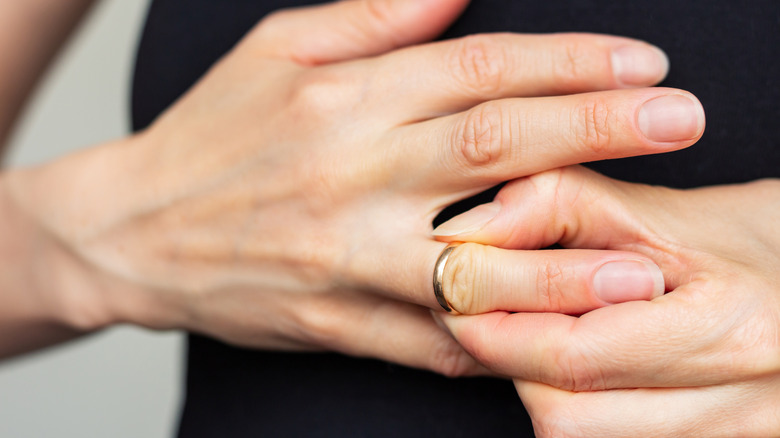
Despite its durability, porcelain is not immune to scratches, especially lower-quality porcelain. High-quality porcelain, or fine china, is less likely to scratch. In order to avoid accidentally leaving marks and dings on your delicate items, it's typically recommended to remove any jewelry from your hands and wrists before handling these objects. Rings and bracelets can accidentally bump against the material and leave hard-to-erase marks. If you do find a few scratches on your items, try using Bar Keeper's Friend as a method of removal.
Avoid using abrasive cleaners or tools
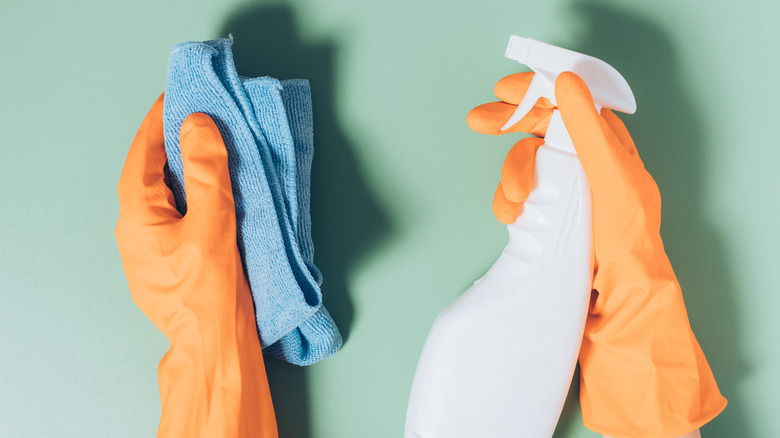
When caring for a material like porcelain, you will want to avoid using any harsh or abrasive cleaners or tools. Harsh cleaning products can damage the glaze and finish on the porcelain, while tools like rough sponges or scrubbers can leave marks and scratches. If you do want to gently wash your porcelain, it's recommended to use a few drops of a gentle soap and warm water. You should opt to hand-wash these items and dry with a super soft cloth. Use common household ingredient baking soda to remove tough porcelain stains.
Keep your items stored apart
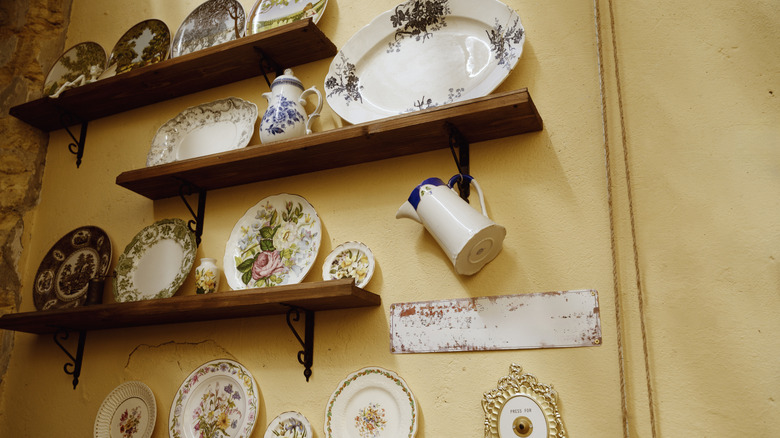
Since porcelain items are not scratch-proof, it's recommended to store these types of items, whether they be plates or figurines, away from each other. This could be as little as a finger's width between the items, just as long as a little movement won't make them crash into each other. Whether you're displaying plates on a floating shelf or hanging mugs on the wall, ensure these items keep a good distance apart. Some experts recommend storing porcelain on chamois leather, which can keep the items from moving.
Avoid using tape as a means of repair
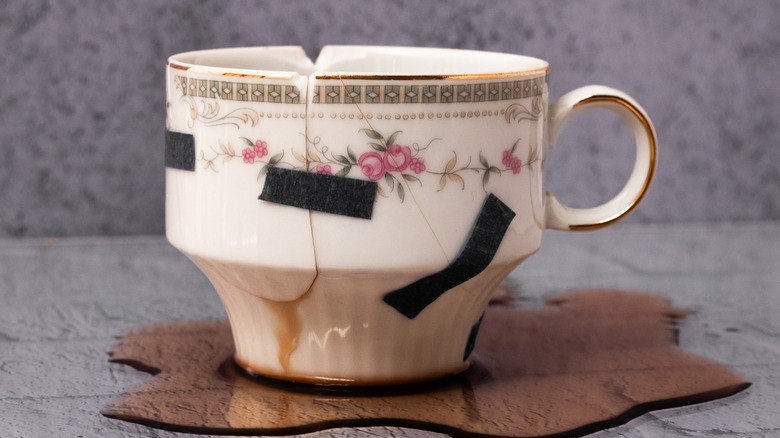
Imagine one of your porcelain pieces has taken a fall and broken into a few pieces. As tempting as it may be to just toss on a piece of clear sticky tape and put it back on display, this is not the recommended option. Not only will the tape be noticeable, but the stickiness can actually damage the finish and enamel on your porcelain items. Instead of tape, experts at The British Antique Dealer's Association recommend using putty, which will also be less prominent on your item than tape.
Dust with soft cloths and brushes

As aforementioned, porcelain objects should be dusted and cleaned only with super soft, non-abrasive tools. Whether you want to complete a regular dusting or prep your items for a wash, you should always use soft cloths, like microfiber or cotton, on your porcelain. For super delicate items, you can also use a soft-bristled painting or makeup brush, or even a Q-tip, to remove small pieces of dust on the surface. Avoid the popular touch-free method of using a hair dryer, as the heat can damage your porcelain.
Check the inside before adding flowers and water
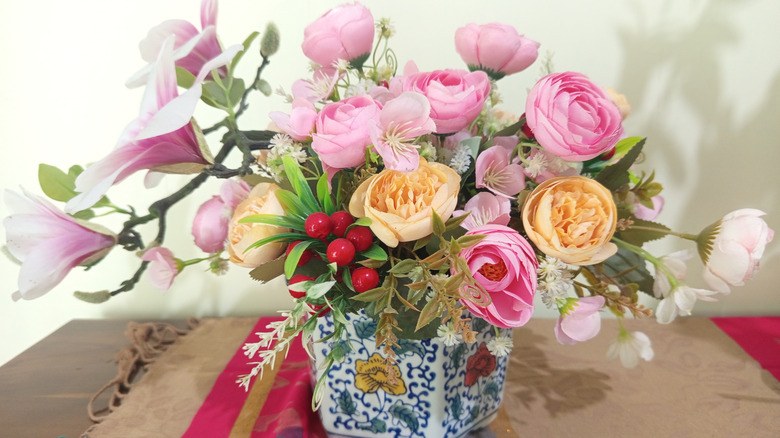
It's recommended to always check if your a porcelain item has a glazed or unglazed interior before adding your flowers. Porcelain items with unglazed interiors are likely to be damaged by water, so you should store your flowers dry. You should also insert a liner into the container first before your pretty petals, which will help keep the porcelain from scratching or staining. If you do have a glazed vase, always ensure there are no cracks before filling it with water and flowers.
Use plate stands
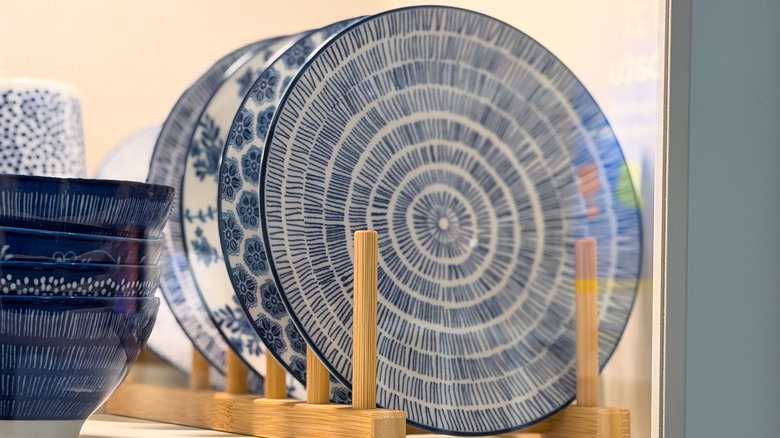
If you plan on displaying your collection of porcelain plates, you should avoid stacking them in a haphazard pile, as this can cause them to scratch or chip. Stacking can also cause pressure cracks in the bottom plates due to the stack weight. You can find affordable plate stands online, like IKEA's OSTBIT plate holder. If you don't have the room for a plate stand and stacking is your only option, make sure they are placed on top of each other evenly and that you use cloth or plate separators between each one.