

The Cabinet Choice That Is Making Your Kitchen Feel Smaller
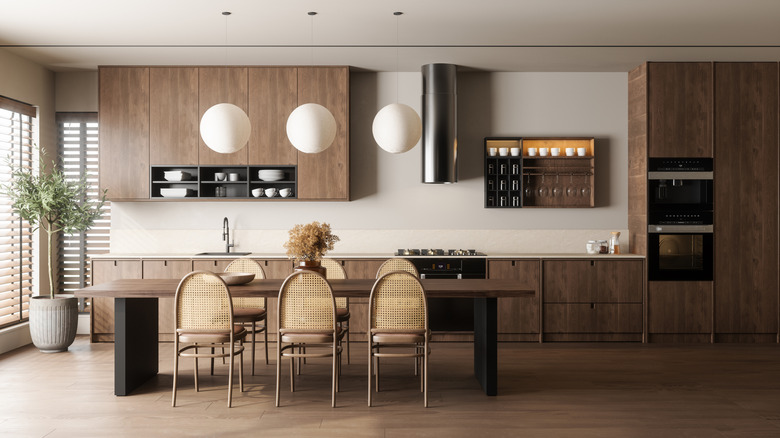
If you're planning a kitchen refresh or redesign, you know that your cabinets are one of the most prominent visual elements in your kitchen. Their color and finish do more than just define a certain style or make a bold statement. This is especially true if you have less kitchen space to begin with, where certain choices can make it look even more crowded. Using dark cabinet colors and finishes is a dramatic and stylish choice. However, without thoughtful balance using more reflective finishes, intentional color choices, and two-tone cabinetry, incorporating dark cabinets can make your kitchen feel much smaller.
Color can create a visual perception in a room when it interacts with light. Dark colors absorb light, rather than reflect it. In small or medium-sized kitchens that don't have ample light to begin with, dark cabinetry makes the walls and cabinets seem closer than they actually are. Matte finishes, in particular, don't help bounce brightness around the room, reducing the feeling of openness and making it feel more enclosed, heavy, and visually smaller. Many designers agree that using darker colors in kitchen cabinetry can be problematic, which is why some have moved away from dark wood kitchen cabinets. It's necessary to create and maintain balance in the kitchen for a more open and welcoming space.
How dark cabinets shrink your kitchen, and fixes for it
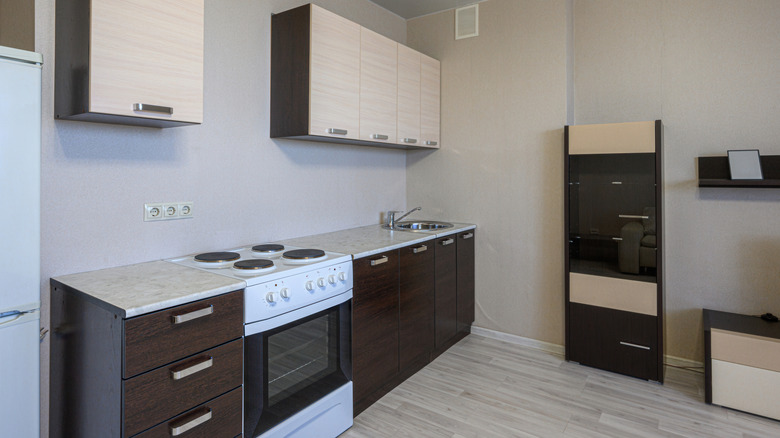
It's important to consider positioning when choosing cabinet color. Placing the darker colors at eye level creates a heavy look. Your eye doesn't move easily around the room because it's interrupted by the darkness, which gives the impression that your kitchen is shrinking. Although lighter cabinet colors are one of the small kitchen ideas to make your space seem bigger, you actually don't have to avoid dark colors. Darker cabinets and finishes aren't inherently bad, so you can incorporate some into your smaller kitchen, as long as you use them wisely.
If you opt for more contrasting hues, such as dark cabinetry with much lighter-colored counters, it helps break up the room into visual zones. When planning contrasting tones for the bottom and top cabinets, the upper cabinets should be the lighter color. The darker cabinets should be lower to help reduce the enclosed feeling and help create balance. Consider the color choice, too, as bolder, darker colors can provide depth and help your kitchen feel more open. For example, use a navy or dark green color for cabinets against lighter-colored walls. It adds richness instead of seeming heavy.
Finally, the finish itself is another factor to consider. Flat finishes on cabinets absorb the light and contribute to that smaller, shrinking visual feel. If you adjust your cabinets by adding a glossy finish, you can actually help to improve light reflection. It makes dark cabinets appear shinier and brighter, so they don't feel cramped.