

Attract More Birds To Your Birdhouse With This Planting Tip
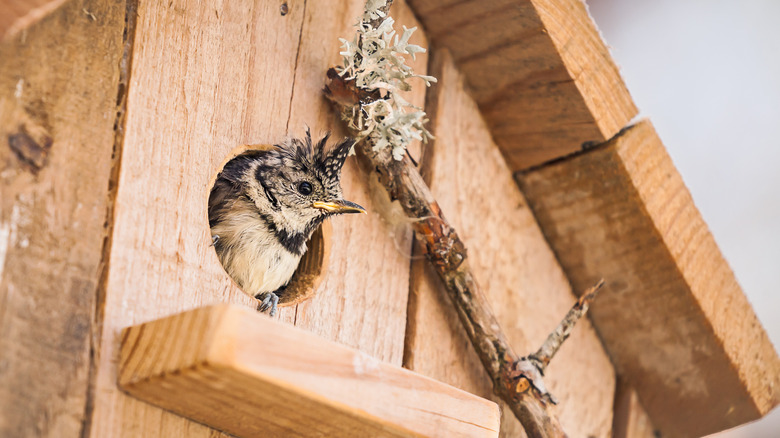
Birdhouses are among the many bird-attracting features you can DIY from scrap wood to help convert your yard into a haven for feathered friends. A well-placed birdhouse can attract species like bluebirds, chickadees, wrens, and maybe even some owl species, depending on the box design and entrance hole size. There are several backyard birds that love birdhouses, and most small songbird houses do best when mounted about five feet off the ground and secured to a tree or post in a relatively quiet spot with partial sun. But even if you've got height, location, and design right, you might be wondering why your birdhouse isn't that active. One simple upgrade can make a noticeable difference: adding plants near the entrance.
Mounting potted plants near your birdhouse adds charm to the space and creates a more functional habitat. You can reuse old plastic pots for an affordable option, or dress them up with decorative planters on hooks. Vegetation provides perches, cover from predators, and even nesting material. According to the Cornell Lab of Ornithology, birds are more likely to use areas that offer nesting sites, food, water, and protection from predators. These planters also serve as a useful way to attract other beneficial wildlife. By adding thoughtfully chosen potted plants around your birdhouse, you can build a miniature ecosystem that makes birds feel safer and more at home. Plus, it looks adorable.
How to style your birdhouse planters (and the best plants to use)
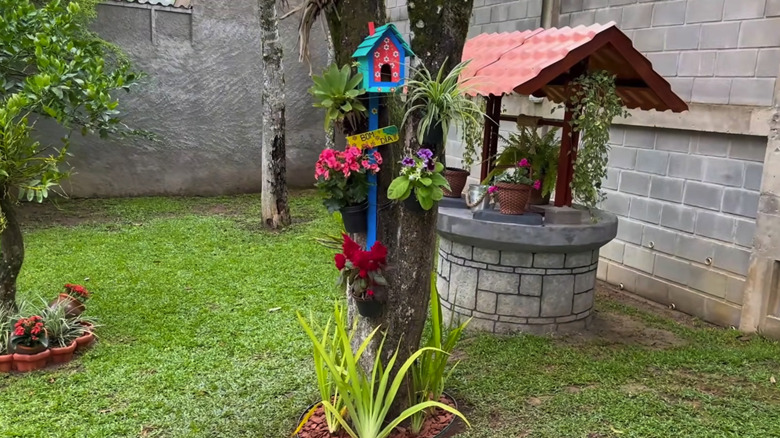
If you're looking for tips to attract a more diverse variety of birds to your yard, you won't want to overlook this birdhouse and potted plant pairing. Mounting potted plants around a birdhouse is easier than you might think, especially if the birdhouse is hung on a tree. You have several options for mounting plant pots to a sturdy trunk or wooden post, including screws, wire, hooks, or pot racks, such as Fahawel Metal Ring Brackets or SSNewog Plant Wall Holders.
The simplest and most affordable option is to drill a hole in an old plastic flower pot and screw it to the trunk or wooden post, or wrap the pot and post together with lengths of wire. Place a second, slightly smaller pot inside the mounted pot. If you are using a hook or metal bracket, make sure the product is rated for outdoor use. Then fasten it securely to the trunk or pole according to the manufacturer's instructions. Wall-mounted brackets also work for birdhouses attached to walls, such as on the side of a shed or fence. Avoid using any hangers that swing — the movement may scare birds away. When you hang your plants, keep the entry hole clear and flight paths unobstructed.
Once your pots are securely mounted, you can fill them with potting mix and plants. Flowering annuals attract beneficial insects, which are a crucial protein source for nesting birds. Herbs like dill, parsley, and fennel can attract caterpillars for birds to feast on. Ornamental grasses are a great option to provide birds with nesting material they don't have to searching for. Focus on native plants that thrive in containers wherever possible.
Add value to your birdhouse planters with layers of native flora
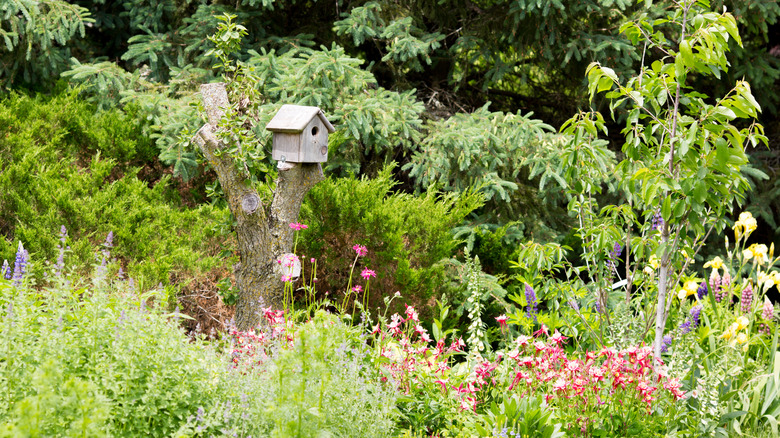
Adding potted plants near your birdhouse entrance isn't the only way to make use of this bird-attracting planting tip. To truly transform your birdhouse area into a bird-friendly haven, you need to extend the benefits of plants beyond the entry hole. Layering native plants around the birdhouse is a birdscaping tip that will turn your yard and garden into a bird haven. Research suggests that native plant layers can significantly increase local bird diversity by providing food at varying heights and throughout the seasons. The aim is to mimic natural habitats: canopy above, protective plants with nesting materials in the middle, and ground cover below.
Birds instinctively seek out ground cover for protection and foraging, so its presence can make them feel safe. This additional foraging space and shelter is perfect for fledglings that are still learning to navigate the world. There are plenty of beautiful ground covers that will have birds flocking to your yard. Grow these plants in shallow containers if you don't want to permanently alter the landscape below your birdhouse. Shrubs such as native dogwoods or viburnums provide berries, nesting cover, and perches, making them a good choice for the garden beds surrounding birdhouses mounted high on tree trunks or tall poles. For low-mounted houses, consider native grasses and flowering perennials that attract insects during the growing season and release seeds at the end of the season.