

The Common Garden Tool You Didn't Know You Should Replace Annually
We may receive a commission on purchases made from links.
Gardening tools are like trusty friends in the backyard. They make back-breaking labor a breeze and tough chores more fun than folly. However, owning gardening tools is only part of the equation. You also need to make sure that you keep your equipment in tip-top shape. If you don't, they may end up malfunctioning at the worst possible time. There is a catch. While you can oil a pair of shears or sharpen a hoe, repairing is not an option (or at least not a feasible or worthwhile one) for some tools. Take, for instance, gardening gloves. They're one of the most essential gardening tools. However, if they get torn or their seams split, it's generally game over for them. Even if you could repair them, it's usually not worth the time or cost. The best option is to get a new pair every year.
Depending on how often you use them and what they're made of, you might have to replace your gardening gloves more or less often than annually. If you are, for example, an avid gardener who uses gloves frequently, that could mean few months. Holes, an unpleasant smell that cleaning won't fix, and a poor fit (either too loose or tight) are clear signs that it's time for a new pair. If you're thinking gloves are for the weak and you can garden just fine without them, think again. While you might be able to overcome small wounds and blisters, a serious infection is definitely something you don't want. Plus, you can catch some really nasty fungal infections from plants and soil through skin contact alone.
Features to look for when purchasing new gardening gloves
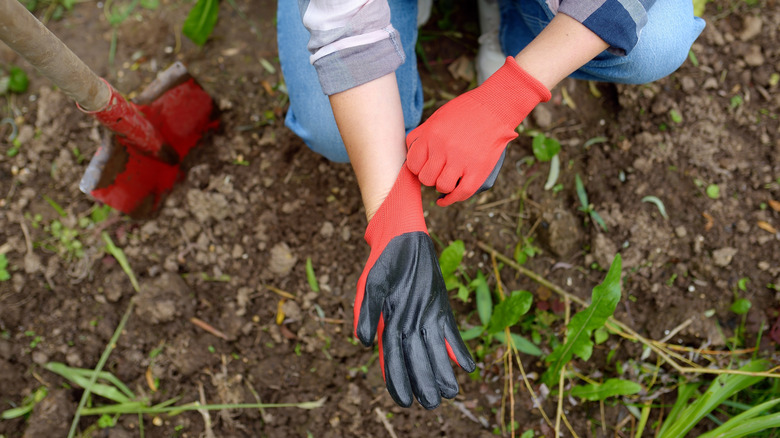
If you are like most gardeners, affordability is a top priority when purchasing a new pair of gloves. However, going cheap is not the best approach. Spending a few extra bucks is always worth it if it means you end up with a more durable, longer-lasting, and useful pair of gloves. Instead, focus on material, and choose it based on what type of gardening tasks you most regularly perform. For instance, if you do a lot of heavy-duty gardening tasks like pruning and digging, Intra-FIT Leather Gardening Gloves or Oizen Spandex Thorn-Proof and Puncture-Resistant Gloves are some of your best options. However, if you are a hobby gardener mostly doing light weeding and seeding, a breathable nylon or cotton pair, like Digz Cotton Jersey Garden Gloves, will do the job.
Once you have decided on gloves made of an appropriate material, the next task is to make sure you get the right fit. If your gloves are too loose, they will decrease your control and increase your exposure to problems. After all, you don't want to nick an exposed palm on rose thorns or have a bug crawl inside that gaping hole near your wrist. Keep an eye out for low-quality gloves that release colored fabric dye, too. To test a pair before you buy, hold a wet wipe to the material for 30 seconds. If the color comes off on the wipe, put them back on the shelf. Once you have your new pair home, clean your gardening gloves regularly to extend their life. Don't throw away your old pair, either. Some genius ways to repurpose gardening gloves inside and outside the home include turning them into planters, gnomes, bouquet holders, and sculptures.