

Grow These 20 Flowers With Rosemary And Fill Your Garden With Pollinators
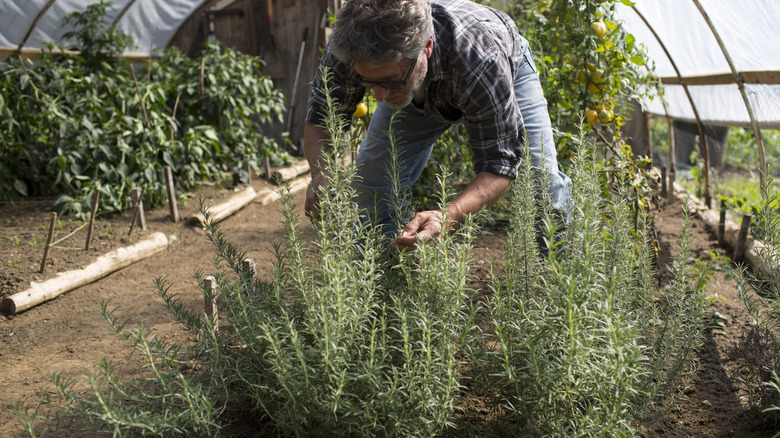
Without question, rosemary (Salvia rosmarinus) is a herb you should be growing in your garden or in outdoor pots. It's more than just a delicious culinary addition. This shrub offers many benefits for gardeners — it repels pests that munch on your plants while attracting pollinators, like bees, butterflies, and even hummingbirds. Rosemary is a perennial shrub that prefers warm, dry climates, thriving in USDA Hardiness Zones 7 to 10, though some varieties will grow in gardens in Zone 6.
While this fragrant herb is amazing all on its own, knowing which companion plants grow well alongside it can enhance its many benefits. Flowering plants like alyssum maintain soil temperatures for rosemary, while roses also encourage bees to keep coming back. Sunflowers, marigolds, and zinnias are a few more examples of the flowering plants you may want to consider growing right alongside your rosemary — they thrive in similar growing conditions.
Rosemary will get along with pretty much any flowering plant that likes well-draining and slightly dry soil, grows in the same zones, and doesn't compete for space. In many cases, these pairings create mutually beneficial relationships that can improve the health of your garden by fighting off even more insects and attracting even more pollinators. Rosemary already boosts vegetable gardens in various ways, but planting certain flowering plants next to it — like those listed below — can boost the effects.
Marigolds
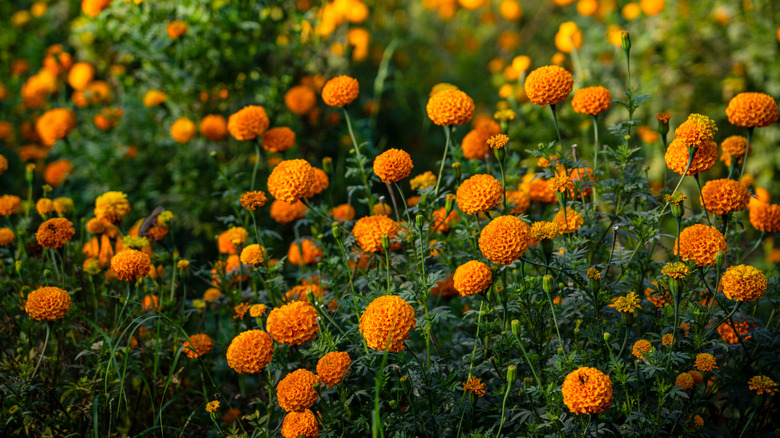
Like rosemary, marigolds (Tagetes spp.) repel pests and thrive in the same zones (Zones 2 to 11). They keep away nematodes, spider mites, and aphids, all of which can be a problem for rosemary. The brightly colored marigold flowers attract beneficial pollinators, including bees and butterflies. They also bring in predatory insects like ladybugs, which eat some pests. If that wasn't enough, the earthy, savory smell of rosemary matches nicely with the fall-themed hues of a marigolds' blooms, creating a garden that is as attractive to the nose as it is to the eyes.
Black-eyed Susans
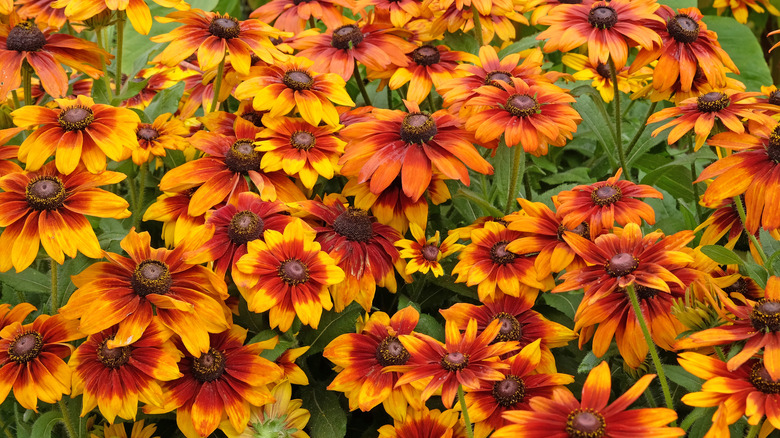
Rabbits tend to enjoy eating perennial black-eyed Susans (Rudbeckia hirta), so growing black-eyed Susans next to a plant that may repel these pests, such as rosemary, could help them last all season long. Since they tend to bloom in late summer and fall, both plants are at their peak around the same time of year, granting maximum protection and a fun mix of bright florals and strong scents. Black-eyed Susans thrive in Zones 3 to 9, where they enjoy the warm but not hot climate.
Alyssum
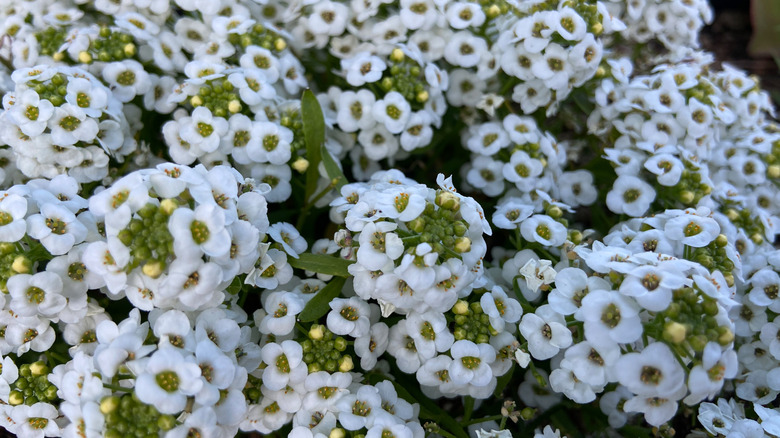
Alyssum (Lobularia maritima) thrives in the warmer end of rosemary's growing zones: Zones 9 to 11. This plant has bright white flower clusters that pair well with the herb's forest green stems and leaves. The smell of rosemary may help to repel insects that could harm alyssum's delicate foliage, while the latter's beautiful blooms attract pollinators like ladybugs and hoverflies that eat aphids and other pests. Additionally, since alyssum is a ground cover, it suppresses weeds and keeps the soil moist and cool for rosemary without taking up too much root space.
Euphorbia
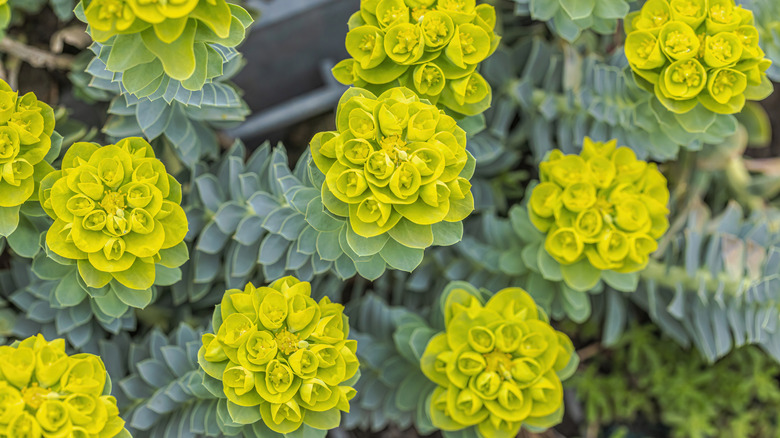
Euphorbia (Euphorbia spp.) is a type of flowering succulent that does well in warmer and drier environments, just like rosemary. It thrives in Zones 5 to 11. Together, they bring in a mix of pollinators, from butterflies and bees to birds and small mammals. Many people consider some species of euphorbia weeds and actively try to get rid of them. Instead of removing this pollinator-friendly plant, consider potting it up next to some rosemary instead. The euphorbia will stay contained and the pair will be a great source of food for all kinds of critters.
Lavender
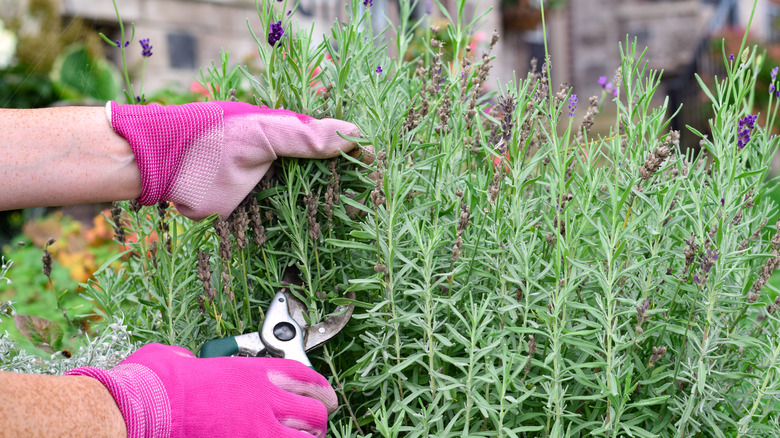
Lavender (Lavandula angustifolia) is a flowering scented herb that works well with rosemary. Together, they may repel plant-eating insects, deer, and rabbits. Additionally, the bright flowers are a popular choice for pollinators like bees. Both herbs enjoy well-draining soil and don't mind a bit of neglect. Combined, the two plants would make a lovely border along a path or surrounding a deck. Lavender enjoys cooler weather, so they only overlap in Zones 6 to 9. The fragrant herb tends to bloom in summer, while rosemary tends to flower in the fall, extending the season of beauty and fragrance.
Pansies
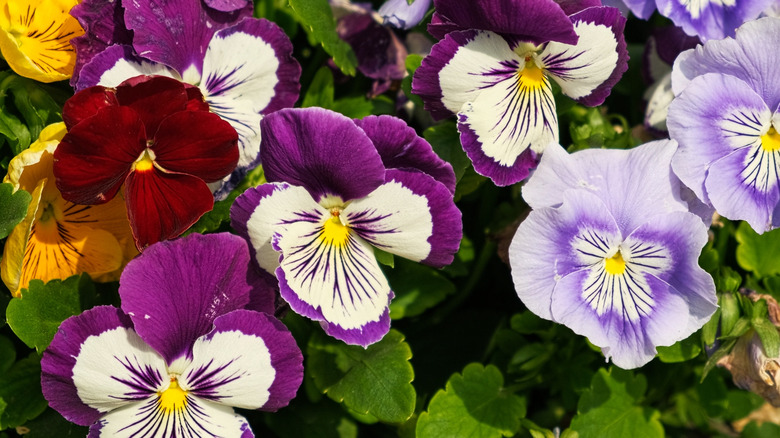
Growing rosemary in a planter instead of in the ground? Pot-happy pansies (Viola × wittrockiana) are an amazing companion. These low-growing flowers add a burst of color and cover any exposed areas of soil, while the rosemary adds height and texture. Pansies are usually in full bloom and hitting their peak growth in summer. Pansies are often grown as annuals, despite being hardy in Zones 2 to 9. Expect them to hit their peak growth and full bloom in summer. Once they are done, rosemary will start flowering, so you don't have to worry much about competition for space.
Petunias
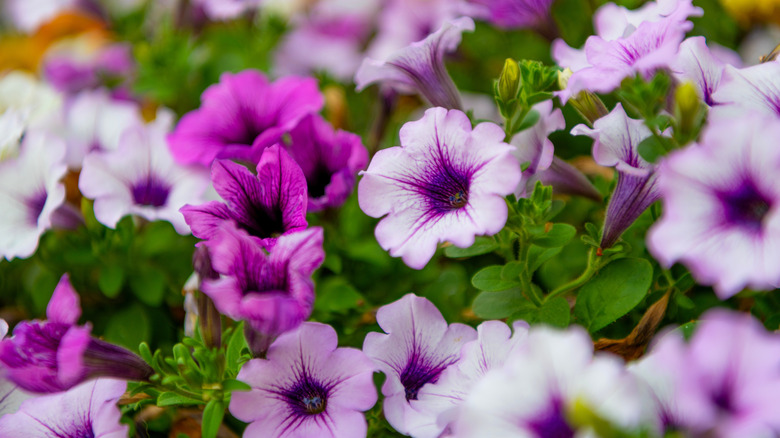
Petunias (Petunia x hybrida) are another fun container companion for rosemary. As perennials, these flowering plants prefer the heat; they're hardy in Zones 9 to 11. Petunias are undeniably beautiful. With the right care and in warmer climates, they can bloom continuously for years, though four to six months at a time is more common. However, like rosemary, petunias have benefits in the wider garden. Both plants naturally repel pests thanks to the odorous chemicals they contain. Plant them in a border to protect more tender garden flora — especially against insects like aphids, squash bugs, and tomato hornworms.
Borage
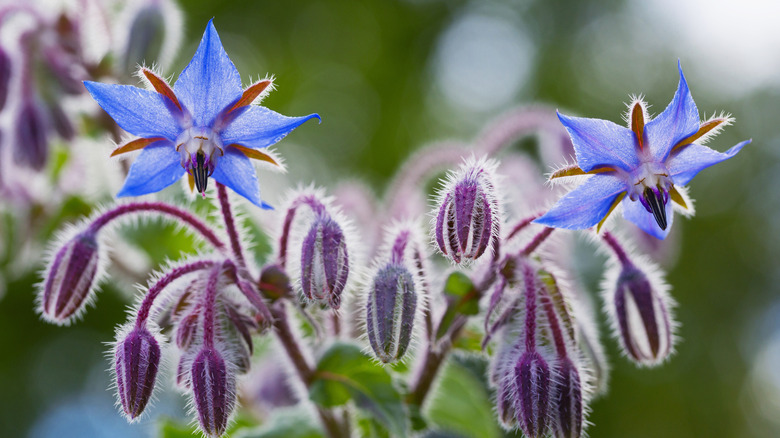
The main reason rosemary and borage (Borago officinalis) work well as companion plants is thanks to their similar growing conditions. Both enjoy soil that drains well and is slightly moist, so they'll both thrive in the same garden bed. Additionally, they have similar flowering seasons — they're considered fall interest plants. Their USDA Hardiness Zones overlap, with borage thriving in Zones 3 to 10. Together, they keep a lot of pesky insects away, including squash beetles. Beautiful borage is also a self-seeding herb you can plant to keep rabbits at bay in the garden.
Abelia
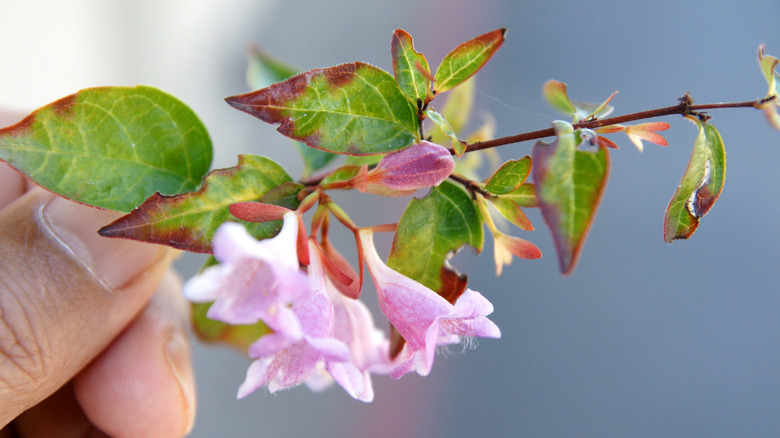
Glossy abelia (Abelia × grandiflora) is a flowering shrub with long-lasting blooms and shiny leaves. It works well planted next to rosemary because both plants enjoy similar environments. Abelia thrives in Zones 6 to 9 and is drought- and heat-tolerant. Additionally, this pretty shrub is deer-resistant and seems to face few pests, just like rosemary. Like its herbaceous counterpart, this plant also attracts beneficial insects, such as hummingbirds and butterflies. The beautiful and delicate flowers of abelia have a strong fragrance that complements the scent of rosemary's blooms, creating a heady fall garden.
Roses
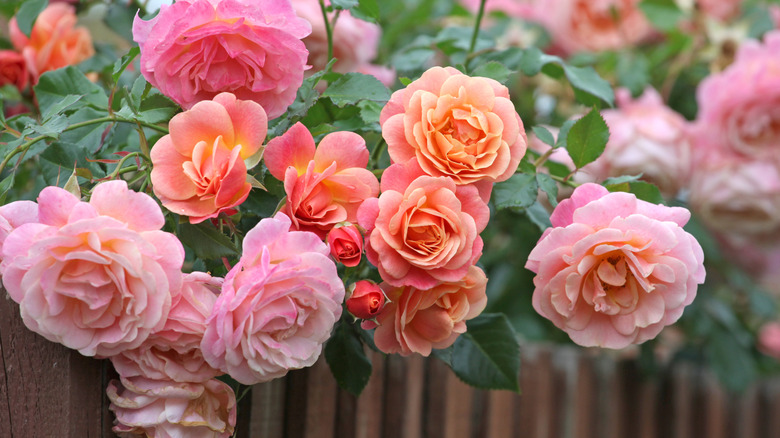
Roses (Rosa spp.), somewhat temperamental but stunning flowering shrubs, are found in gardens throughout the U.S. They are usually hardy down to Zone 5, but some will grow as low as Zone 3. Unfortunately, it's not just people who love roses. They are heartily enjoyed by pests of all kinds. Planting some rosemary next to your roses may go some way toward keeping hungry insects and mammals away while attracting beneficial critters, like bees. If you really want to bring in pollinators, plant rosemary with Rosa species that boast flowers with wide-open centers.
Yarrow
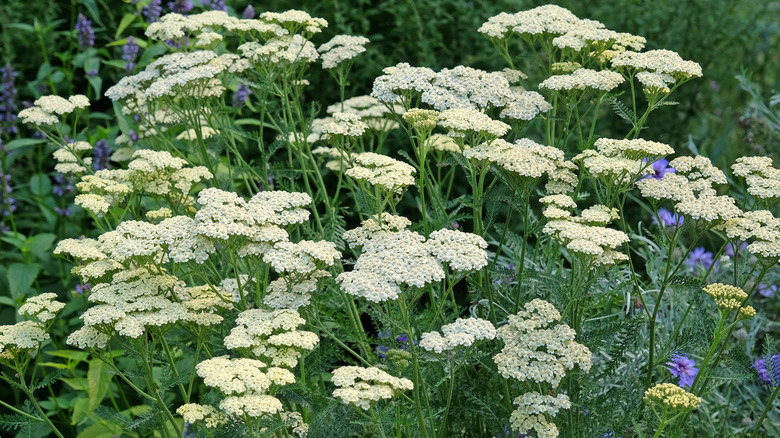
The fragrances of yarrow (Achillea millefolium) and rosemary are complementary, which is one reason they work as companion plants. Yarrow is hardy in Zones 3 to 9 and grows wild in many U.S. states. However, you can also plant yarrow in your garden. It's native to North America and does an excellent job of attracting local pollinators, including butterflies, bees, and flies. It's a good partner with rosemary when creating garden beds that look as nice as they smell — and that attract lots of beneficial insects. Plus, yarrow doesn't require a lot of maintenance, just like rosemary.
Penstemon
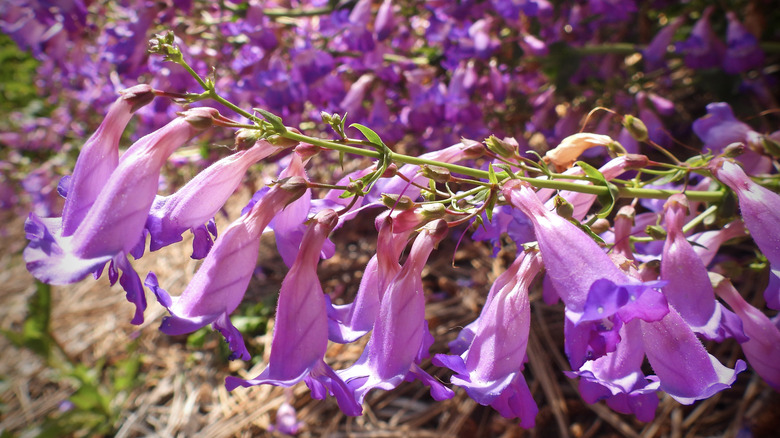
Like rosemary, penstemon (Penstemon digitalis), also known as smooth white beardtongue, enjoys dry soil and sun. Its zones are 4 to 9, though some varieties are a little more durable in both hotter and cooler temperatures. These flowering plants are pollinator magnets, with most cultivars attracting several different species of bees, though bumblebees are their primary pollinator. However, penstemons with pink and red flowers seem to bring in the most pollinators. Consider how many little flying insects you really want to attract when choosing beardtongue cultivars to buy for your garden as a companion plant for rosemary.
Zinnias
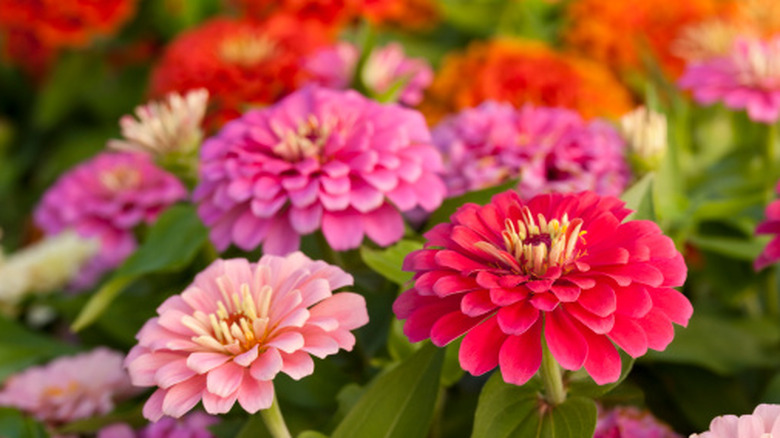
Zinnias (Zinnia elegans) and rosemary both enjoy full sun and well-draining soil. The former may enjoy a little more water than rosemary, but can tolerate drier conditions for a time. Zinnias grow in Zones 2 to 11, so you can work them in pretty much anywhere you decide to plant rosemary. However, the main reason these flowers do so well alongside their herbaceous partner is that they are loved by pollinators of all kinds, but especially butterflies and hummingbirds. Meanwhile, rosemary helps to keep away pests that harm zinnias, creating a beneficial partnership.
Salvia
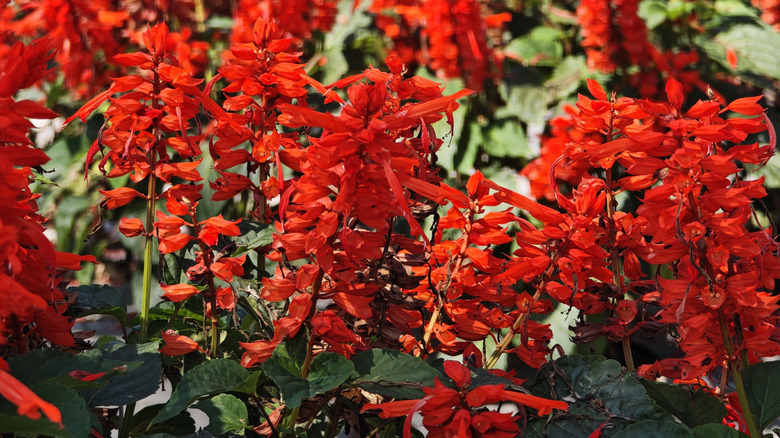
Salvia (Salvia spp.) will grow happily alongside rosemary, thanks to their similar growing requirements. Both plants are durable, especially when grown in Zones 3 to 8. Their strong, earthy smells work well together, making for a pleasingly fragranced garden. If your goal is to catch the eye and bring in beneficial insects, you have plenty of options when it comes to salvia species and cultivars, including the magenta-blooming salvia that pollinators can't resist — 'Smokey Jazz.' The deep red flowers are sure to be a hit with beneficial birds and insects.
Geraniums
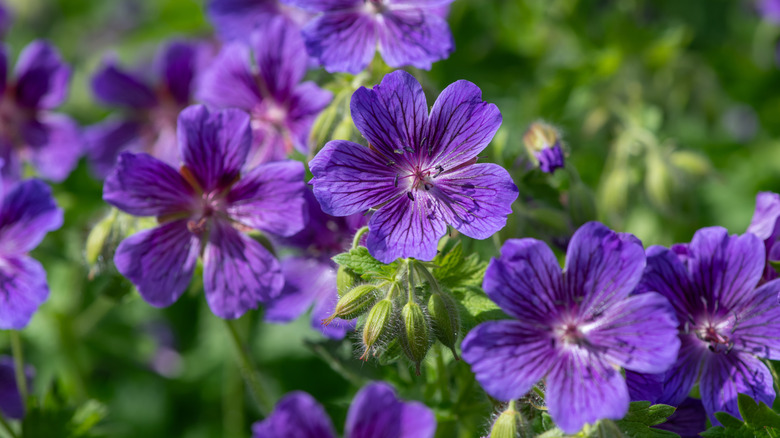
Geraniums (Pelargonium spp.) are winter hardy in Zones 10 to 11 and enjoy similar growing conditions to rosemary. Since overwatering is one of the avoidable mistakes that are killing your geraniums in the garden, planting them next to rosemary, which also prefers dry soil, will help you remember to water both plants lightly. Additionally, rosemary may help to deter the spider mites that commonly plague geraniums. The flowers of both plants attract bees and butterflies. Combine their many powers by planting them together in containers, where the bright scent of geranium pairs nicely with that of rosemary.
Calendula
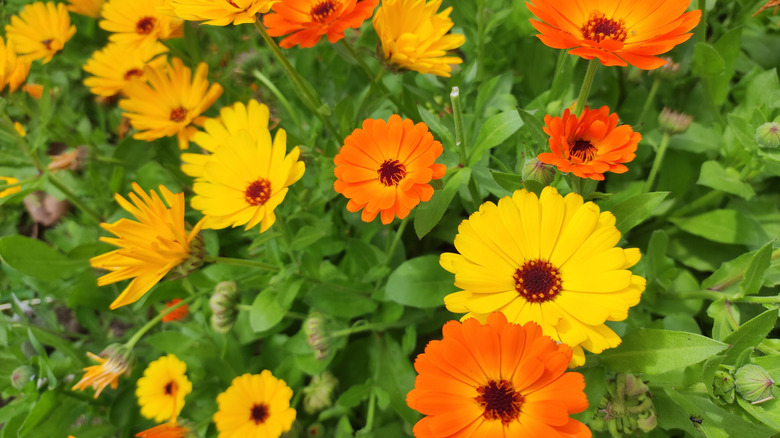
Calendula (Calendula officinalis) is an edible flower that will attract bees and pollinators to your garden — and it just so happens to grow wonderfully alongside rosemary, too. Plant both plants in your vegetable beds alongside crops like broccoli to keep away many harmful insects (that's rosemary) and attract pollinators and beneficial pest killers like ladybugs (calendula in action). Calendula plants flower continuously until the first hard frost. Calendula is hardy in Zones 9 to 11, but can be grown as an annual down to Zone 2.
Sunflowers
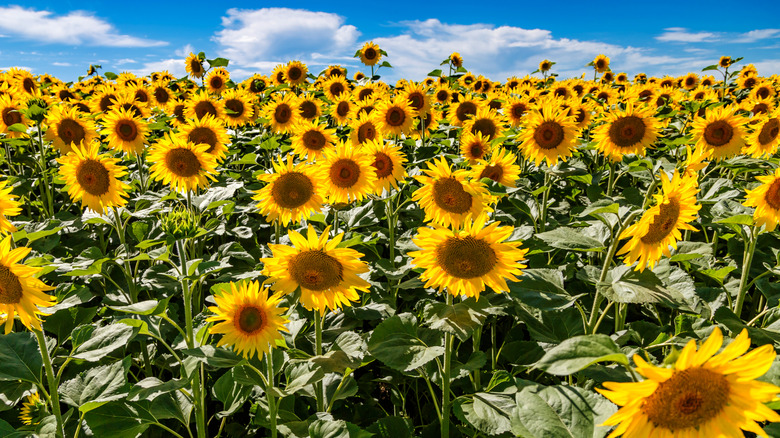
Even big and bold sunflowers (Helianthus spp.) can benefit from rosemary's pest control abilities. These huge flowering plants provide shade during the hottest times of the day for their shrubby, herbaceous companion. Of course, sunflowers attract all sorts of pollinators, just as rosemary does, especially different bee species. While any sunflower species or cultivar could work in your garden, there are some that thrive alongside rosemary. For example, the native swamp sunflower (Helianthus angustifolius) blooms in fall and attracts bees searching for late-season nectar. Most sunflowers are hardy in Zones 4 to 9.
Thyme
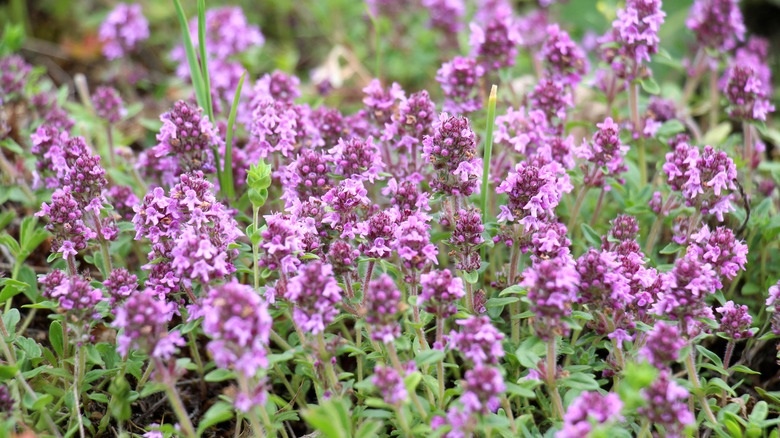
Thyme (Thymus vulgaris) and rosemary deter different types of insects, allowing for full-coverage pest control. Both are Mediterranean, so they thrive in similar habitats. Thyme grows best in Zones 7 to 11 and is easy to grow. Like rosemary, thyme's tiny flowers attract beneficial insects to your garden. As an added benefit, rosemary and thyme both taste amazing, and can be used together or separately in meals. Plant these herbs in your garden and you'll not only keep bad insects away and attract good insects, but you'll also have a steady supply of delicious culinary additions.
Dahlias
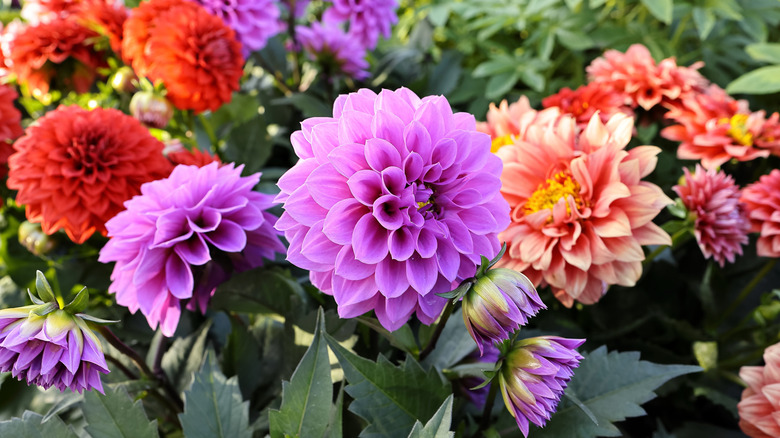
Dahlias (Dahlia spp.) struggle quite a bit with snails. Counter the problem by planting a few rosemary bushes alongside these flowering plants. The strong scent of rosemary may repel pesky land mollusks, giving your dahlias a chance to thrive. Dahlias like a warmer climate and are hardy in Zones 8 to 10. They're great for filling gaps in your garden beds with color because they continue blooming long after many flowering plants are spent for the season. Look for dahlias that boast flowers with wide-open centers if you want to attract lots of pollinators.
Coneflowers
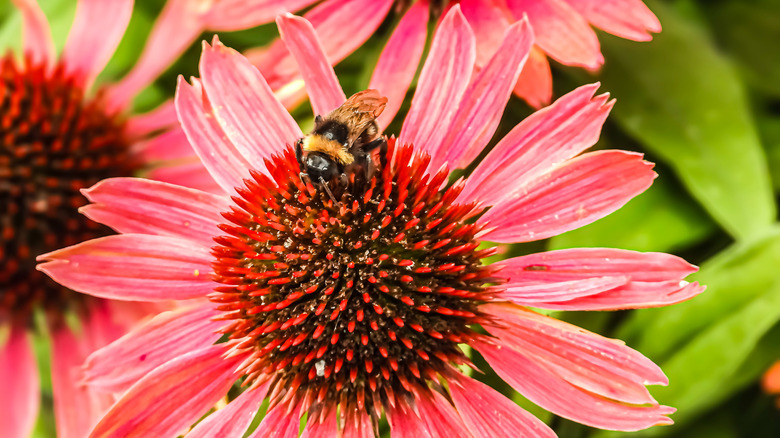
Coneflowers (Echinacea spp.) are another flowering plant that does well alongside rosemary. They look amazing together, with the rich evergreen of the herbaceous shrub contrasting nicely beside the bright coneflower petals. The two plants have somewhat overlapping growing zones: coneflowers are hardy in Zones 3 to 9. Coneflowers need more water than rosemary while they are young, but once they're established, they will tolerate dry conditions. Wildlife of all kinds — both insects and songbirds — are attracted to these coneflowers. Avoid double-flower cultivars because they don't produce pollen, nectar, or seeds.