

Plant This Fruit Tree In Early Spring For Strong Growth & Delicious Harvests That Keep Coming
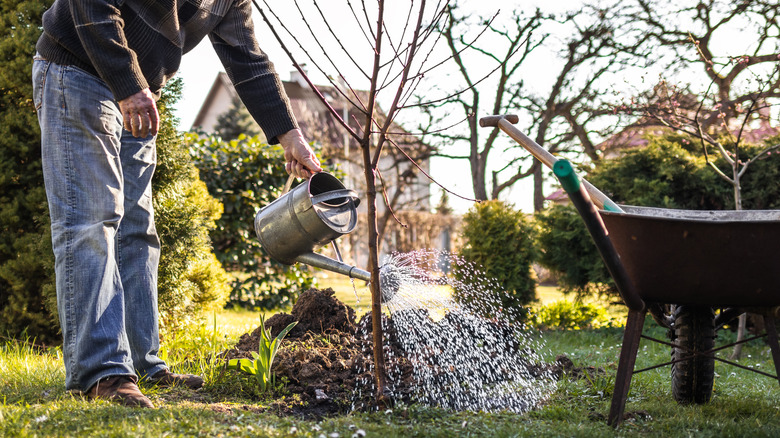
If you're planning to add fruit trees to your yard, timing matters. With pear trees (Pyrus communis), spring is the time to act. Planting in early spring gives pear trees the time they need to establish strong roots before summer heat kicks in. That head start can lead to better and healthier growth and delicious harvests.
Pear trees are wonderful options for gardeners looking for an easy fruit tree to look after. While growing and caring for a pear tree is fairly straightforward, there are some things to keep in mind. First, remember that young trees need a few years before they start bearing fruit. There are tips and tricks to help your fruit trees grow and produce faster, but you'll need a bit of patience. New trees should be planted in well-draining soil, in a sunny spot in your garden. To thrive, pear trees need around an inch of water a week (more when they're new). To drink that water well and absorb it, strong roots are key, which is why planting new trees in early spring is a good idea.
By planting in March or April, you're giving trees some time to take root. By the time July and August roll around with their hot temperatures, the tree will be able to absorb water and stay healthy. Then, when winter rolls around, the tree will be strong and healthy enough to withstand dormancy and cold temperatures. Planting in early spring is necessary for bare-root pear trees (which are planted while dormant), but it's also preferred for container-grown trees.
Pear planting considerations for your zone
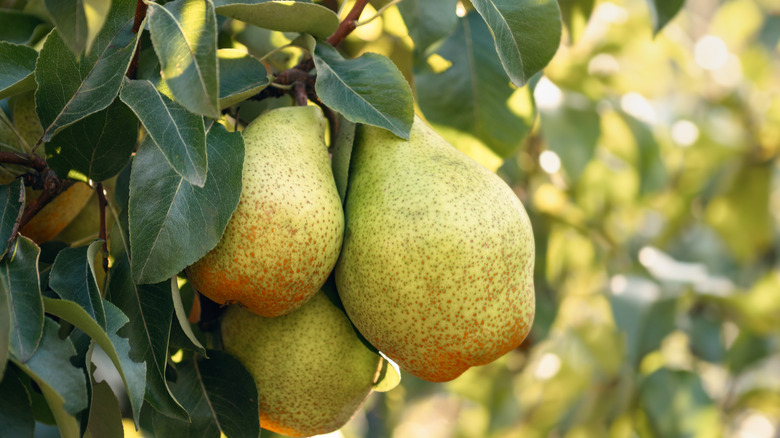
If you've decided to plant a bare-root pear tree rather than a container-grown one, the timing is really important. That's because the tree is still dormant, so it needs to go into the ground before the temperatures rise too much. At the same time, you cannot plant a tree in frozen ground, so you'll have to wait for it to thaw. In general, thawing happens at the start of spring, though it depends slightly on location and climate zone.
In the colder zones of the United States, like northern Minnesota or Maine (zone 3), bare-root trees should go in the ground between mid-March and mid-April. In slightly warmer zones 4, 5, 6, and 7, you can plant bare-root fruit trees in March.
For container-grown pear trees, you'll want to make sure that there is no risk of frost left in your area. As soon as the ground is thawed and the risks of frost are behind you, transfer these young trees to your garden soil. Summer heat and winter cold are harsh conditions for a young tree, so the more time it has to establish itself and gain strength, the better. With this approach, even a beginning gardener can grow a pear tree in their yard.