

12 Bright Blue Flowers That'll Attract Hummingbirds All Summer And Fall
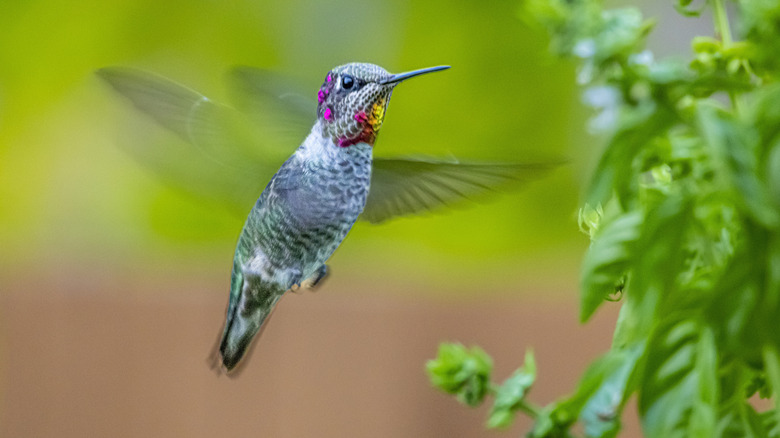
Hummingbirds are the ultimate garden visitors, darting among your carefully arranged flower beds to feed while they entertain you with their acrobatics — and you may see even more of them in late summer and autumn. While you may have been focusing on red blooms to attract these birds, it turns out they love to feed on high-quality sources of nectar from other inflorescence colors too. That means you can expand your wildlife-friendly landscaping plans to include blue blooms such as those from phlox (Phlox paniculata), asters (Symphyotrichum), or sages (Salvia guaranitica). There are different types of these plants, as well as other species, that will keep everyone's favorite pollinating birds flocking to your yard throughout summer and fall.
In fact, to keep hummingbirds well-fed and visiting your yard, many different types of nectar sources can be a huge boon. And when you choose flowers that are born in summer and autumn, you'll be adopting an excellent strategy to support these tiny birds as they migrate. Whether you're carefully planning a meticulously designed landscaping color palette that incorporates shades of blue, or you're just trying to add diversity to your landscaping, you'll find numerous selections from azure to periwinkle blooms to support these tiny birds for most of the year. Just be sure to compare the following plants' USDA Hardiness Zones and growing conditions to your own for the best chance at a flourishing garden and happy hummers.
African lily
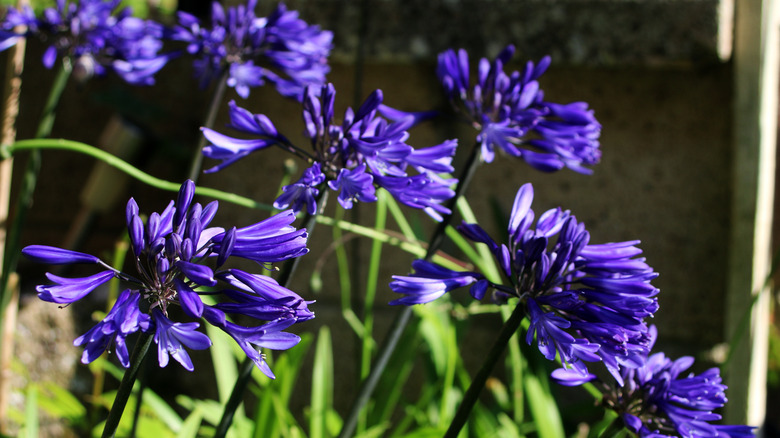
African lily (Agapanthus spp.), also simply known by its genus name, Agapanthus, is an attractive plant that will lure hummingbirds to your yard with bright flowers they can't resist. Best suited for zones 8 to 11, these perennials produce long stems that bear clusters of blooms in summer and continue into autumn. Grow African lilies in full sun or part shade, preferably in moist soil that has good drainage. The inflorescence color and plant sizes vary depending on the type of Agapanthus – for a deep azure color, choose the cultivar 'Brilliant Blue,' which reaches 2 feet tall.
Asters
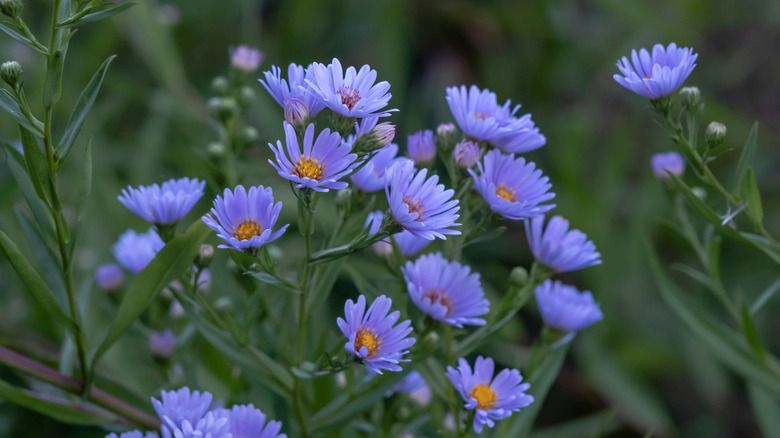
Another option, asters (Symphyotrichum spp.), are among the stars of the late summer and fall pollinator garden. These hummingbird-friendly plants will also attract other pollinators active at this time of the year, such as butterflies and native bees, to your yard. There are many types of Symphyotrichums that have blue flowers, such as species like New York asters (Symphotrichum novi-belgii) and spreading asters (Symphotrichum patens), both of which are perennials in zones 4 to 8 that require full sun or part shade and well-draining soils. Expect these plants to reach 2 to 5 feet tall when planning your beds.
Autumn phlox
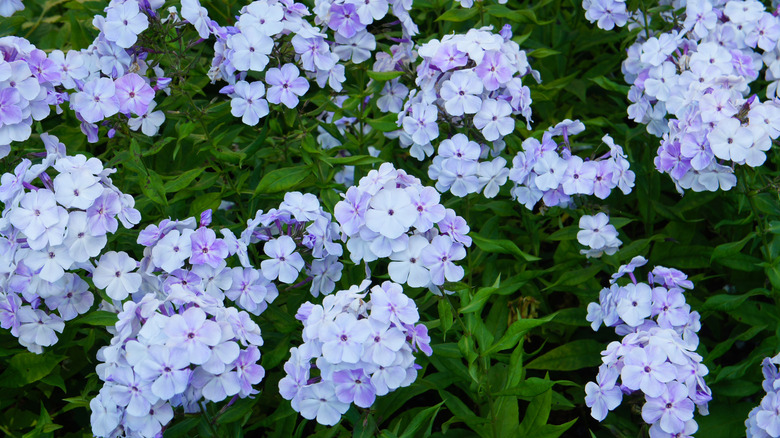
Autumn phlox (Phlox paniculata) is a native plant of the central and eastern U.S. that you can count among the plants that will attract both hummingbirds and butterflies to your yard, thanks to its tubular flowers. Available to gardeners in zones 4 to 8, this perennial reaches up to 4 feet tall and grows well in full sun or part shade as long as the soil is moist and drains well. Starting in summer and continuing into fall, autumn phlox bears blooms that are different colors, depending on the type, such as 'Blue Paradise,' a sprightly periwinkle-colored cultivar.
Blue anise sage
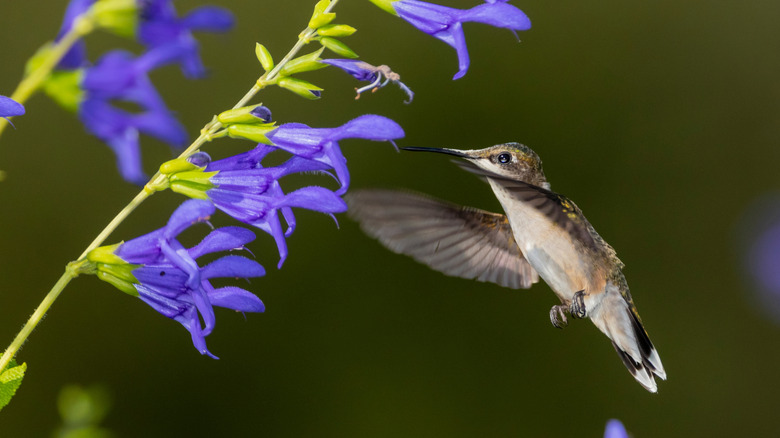
Blue anise sage (Salvia guaranitica) is a late summer flower that hummingbirds can't resist visiting. But they aren't the only ones — butterflies and bees also use this type of sage as a food source. It has gorgeous, tubular-shaped bright blue blooms and oval-shaped green leaves — and can grow to be up to 5 feet tall. It's a perennial in zones 7b through 10 that can grow in either full sun or part shade in your yard but prefers moist soil. Expect flowering from summer until the end of fall.
Bluebells
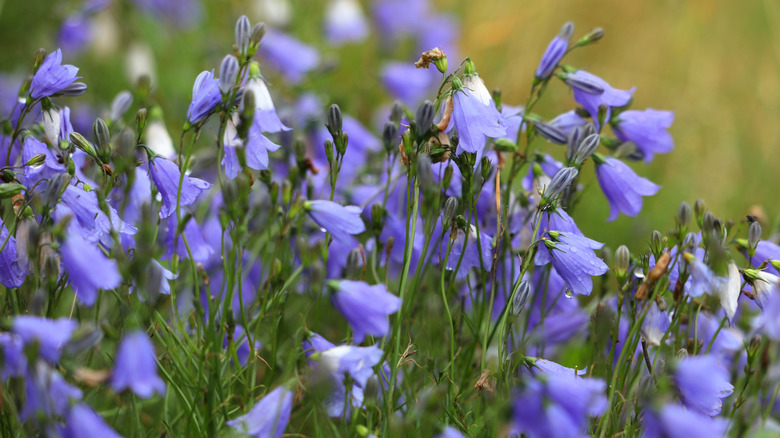
Bluebells (Campanula rotundifolia) are U.S. native perennials that produce nodding, bell-shaped, blue flowers that attract hummingbirds from summer to fall. Their blooms can also be purple, depending on the type. These small plants grow to be about 18 inches tall and are suitable for growing in gardens located in zones 3 to 8. Bluebells thrive in full sun or part shade and grow best in well-draining, moist locations in your yard.
'Electric Blue' Penstemon
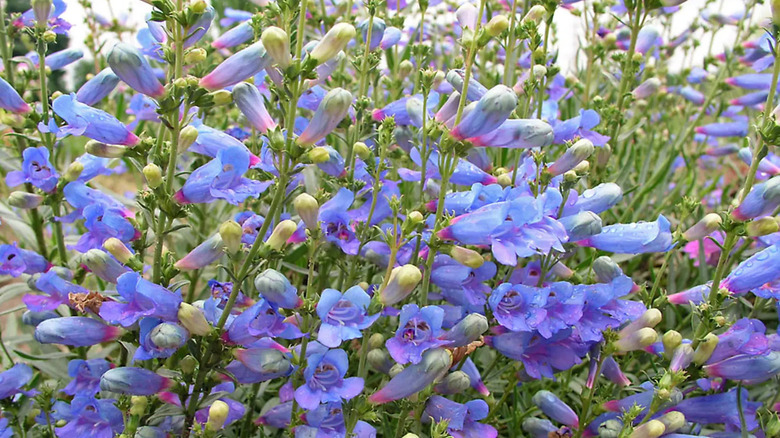
If you're looking for a blue-flowered plant to draw in hummingbirds to a dry location in your yard, there are many Penstemon species that will do the job — but many of them are spring bloomers. 'Electric Blue,' on the other hand, will provide wildlife with a nectar source in the summer and fall. This cultivar of Penstemon heterophyllus reaches 18 inches tall and is fast growing. Its pollinator-friendly flowers are tubular and appear in an intense shade of azure. Grow this drought-tolerant Penstemon in full sun and well-drained soils in zones 5 to 7.
Giant hyssop
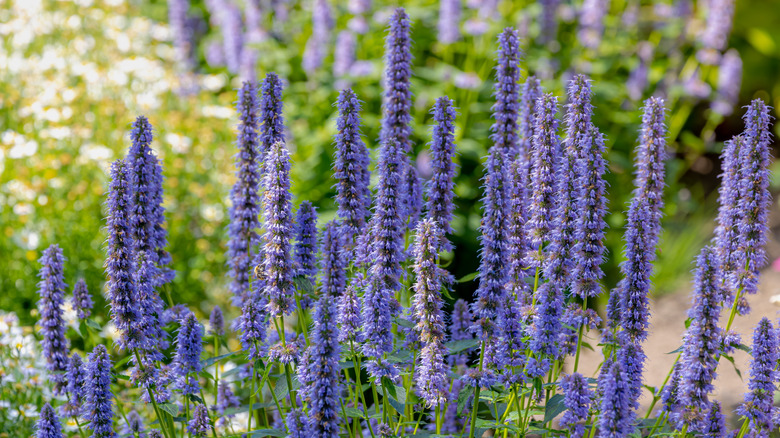
Giant hyssop (Agastache spp.) attracts everyone's favorite pollinating bird to your yard, and another one of its common names is hummingbird mint. For those in a hurry to help wildlife, you can fill an empty garden with Agastache quickly since it's a fast-growing flowering perennial – but only grow it if you live in zones 5 to 10 and have a spot in full sun with good drainage. There are many species and varieties of Agastache, such as 'Blue Fortune' and 'Blue Boa,' both of which are loved for their blue blooms that appear throughout summer and fall.
Great blue lobelia
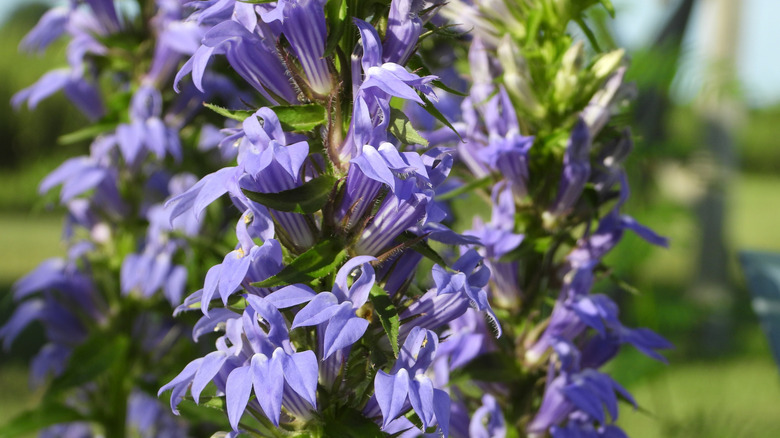
If you're seeking out plants to attract hummingbirds to a moist area such as a rain garden, great blue lobelia (Lobelia siphilitica) will make an excellent choice to add splashes of bright color throughout summer and fall. This perennial wildflower is native to the U.S., reaches up to 3 feet in height, and has tubular blooms with prominent lips that are also favorites of butterflies. Grow this beautiful lobelia in zones 4 to 9, in spots in your yard with moist or wet soils where full sun to part shade is available.
Mealy sage
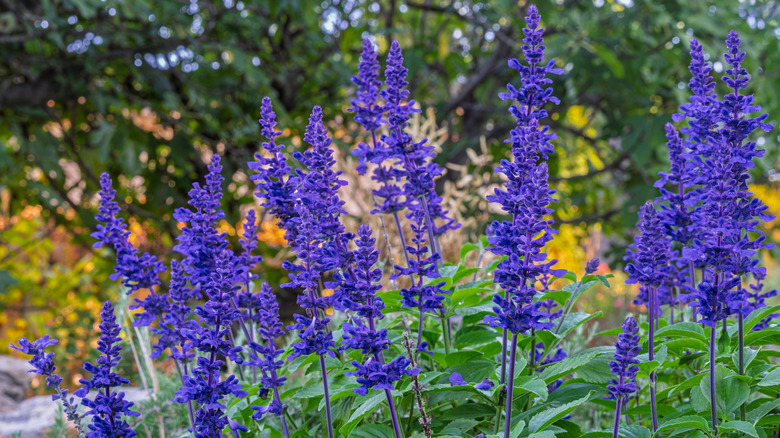
Mealy sage (Salvia farinacea) is another type of Salvia that attracts hummingbirds to the yard or garden. While the flowers of these plants can also be purple or white, there are many types that have bright blue blooms, such as certain of the cultivars in the Sallyfun series. Gardeners in zones 8 to 10 can grow these pollinator favorites as summer and autumn nectar sources in full sun and moist or occasionally dry soil. Expect these plants, native to the south-central U.S., to reach up to 3 feet tall.
Pitcher sage
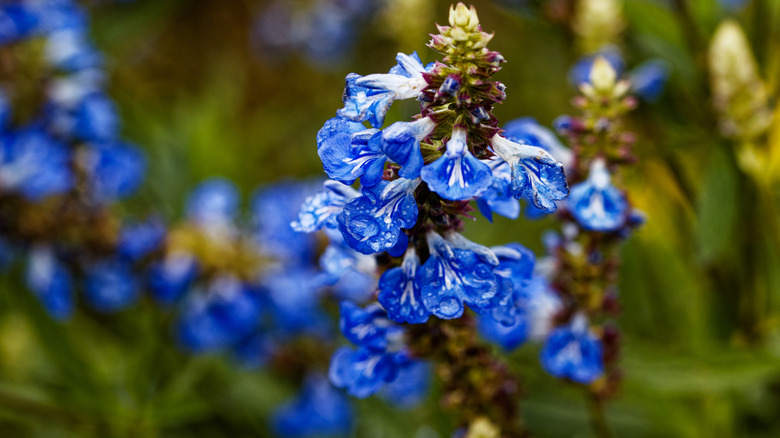
Gardeners in zones 5 to 9 with sandy or rocky soil should consider growing pitcher sage (Salvia azurea), also known as blue sage. This type of Salvia has bright, azure-colored, tube-shaped, lipped flowers that are born starting in late summer and continue throughout fall, providing food for hummingbirds in your yard as they make their autumnal migrations. This species is native to the southern and central U.S., ranging from Arizona to South Carolina. Grow it in part shade to full sun where the soil is moist but drains well.
Russian sage
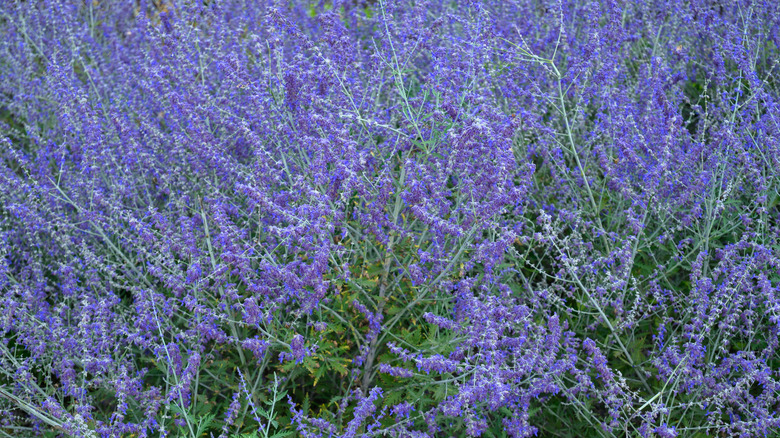
Russian sage (Salvia yangii) is a staple of the drought-tolerant garden that's loved for its sprays of late-season color. This perennial flowers throughout summer and autumn, attracting hummingbirds and other pollinators with its colorful inflorescences. Some types of this species have bluer blooms than others, such as 'Rocket Man' and 'Blue Haze.' This showy plant thrives in zones 5 to 9, in full sun and well-drained soil. You can even grow Russian sage in a pot to draw birds to your yard in summer and fall.
Stoke's aster
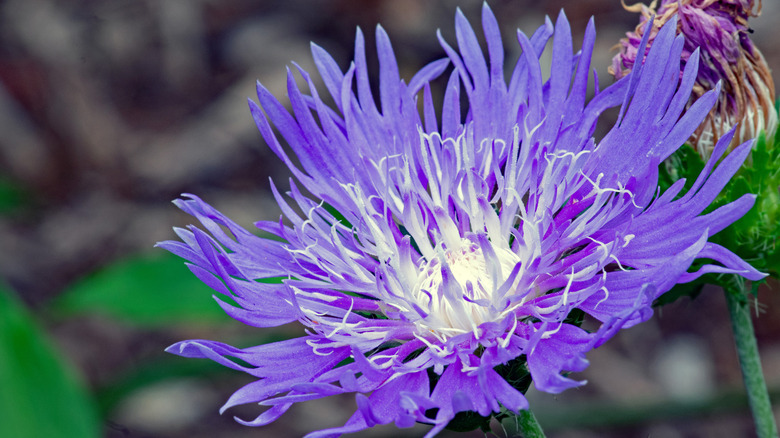
If you have a spot with well-drained, moist soil in zones 5 to 9, you can also grow Stoke's aster (Stokesia laevis), the blue flower that'll bring birds and vibrant color to your garden. It will feed hummingbirds in your yard during summer and fall. These low-maintenance perennials have long, narrow leaves and beautiful, showy blooms that can be blue — or white, purple, pink, or yellow depending on the variety. Stokes' asters grow well in full sun or part shade and also attract bees and butterflies.