

Bleach Or Vinegar: Which Is Best For Keeping Your White Towel Fresh?
White towels have a way of effortlessly making a bathroom feel crisp and hotel-level clean — until they start looking dingy, stiff, or just a little off. Even regularly washed towels can trap detergent residue, mineral buildup from hard water, and body oils, all of which dull brightness and lock in odors over time. Luckily, there are two common fixes that have been used for years to bring towels back to life: bleach and vinegar. Both methods can transform a dull towel, but they work in very different ways. There are many ways to use vinegar around your laundry room, but when it comes to keeping white towels fresh, vinegar is usually the better option for routine care because it removes residue and odors, while bleach is better for occasional deep sanitizing and stain removal. Choosing the right solution depends on what your towels need most at the time: regular maintenance or a full reset.
Chlorine bleach is widely used for whitening fabrics due to its ability to break down stains and kill bacteria through the process of oxidation. The Centers for Disease Control and Prevention notes that chlorine bleach solutions, when used correctly, are highly effective disinfectants against even the most resilient germs. That sanitizing power can be helpful for heavily soiled towels or those that have been exposed to bacteria.
Vinegar, on the other hand, doesn't have the same disinfecting qualities as bleach, but it excels at breaking down residue and neutralizing odors. The mild acidity of distilled white vinegar helps dissolve the detergent buildup and mineral deposits that leave white towels feeling stiff and looking dull. For everyday freshness, vinegar's residue-removing power can make a noticeable difference.
Save bleach for deep cleans and use vinegar for everyday washing
For towels that are heavily stained, or have been exposed to mildew or bacteria, like gym towels or those left damp in the hamper, bleach can provide the ideal reset. Chlorine bleach removes organic stains and gets rid of odor-causing microorganisms, which is why it's often recommended for disinfecting laundry when needed. However, bleach does come with tradeoffs. Chlorine bleach in particular can weaken cotton fibers over time if used frequently or at high concentrations, which leads to thinning, fraying, and rough textures. It can also cause yellowing if residue remains or if it reacts with body oils and hard water minerals. Because of this, its best to reserve bleach for occasional deep cleaning and whitening rather than every wash cycle. Even so, bleach should still be used carefully to avoid any damage. Always dilute it with water and never pour it directly onto fabric, which can cause spotting or weakening.
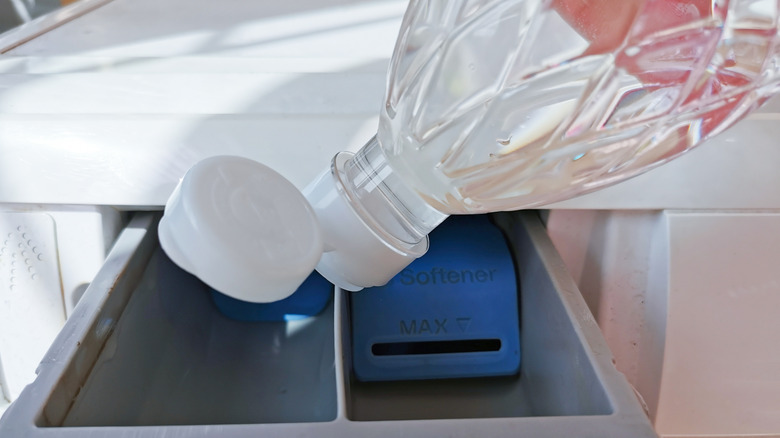
For routine towel care, vinegar usually offers better long-term results. Its mild acidity helps remove detergent residue and fabric softener buildup, both of which are major culprits of trapped odors and reduced absorbency. Adding ¼ cup of white vinegar into the fabric softener compartment helps reduce buildup and keep towels extra soft and vibrant, while one full cup can be a great way to deep clean and remove detergent, oils, and more from towels on occasion. Vinegar also helps neutralize odors rather than masking them, making it especially useful for towels that smell sour after repeated use. Because it's gentler than bleach, it can be used regularly without weakening fibers or fading brightness. Always research before using bleach for any type of cleaning, as there are some things you should never clean with bleach.
A balanced approach for bright, fresh towels
While you can use either bleach or white vinegar to brighten your white towels, you should never use both. Mixing bleach and vinegar together can create highly toxic chlorine gas. Instead, stick to one cleaning solution and ensure towels go through a thorough rinse cycle before switching. In the end, keeping white towels fresh doesn't come down to one miracle product. It's a matter of understanding what causes dullness in the first place — residue, bacteria, and trapped moisture — and using the right solution at the right time. With vinegar for regular care and bleach for occasional deep cleaning, white towels can always stay bright, soft, and ready for use.
There are other simple habits and laundry hacks that can also help remove stains and preserve brightness, from avoiding using too much detergent, to washing towels in hot water and drying them thoroughly. Skipping fabric softener and giving towels room to tumble freely can also improve softness and absorbency. Pre-soaking is an easy laundry hack that can help remove stains from your white towels. Another simple habit that helps towels stay fresh is giving them space in both the washer and dryer. Overloading not only traps moisture and prevents proper rinsing and airflow, but also stops detergent and water from reaching all surfaces of the dirty laundry in the first place, which can leave towels feeling damp and musty. A lighter load allows water and heat to properly circulate, which helps towels dry fully and stay fresh for longer.