

You'll Want To Replace This Type Of Coffee Maker In 2026 – Here's Why

We may receive a commission on purchases made from links.
In 2026, plastic, it seems, is everywhere. It swims atop our oceans. It clogs our landfills. And, as it turns out, it floats around in our coffee, too. However, this kind of synthetic polymer ain't big enough to see, not in the way those single-use water bottles that end up in the seas or the ground are, anyway. Rather, we're talking microplastics, which come to you courtesy of your own coffee machine. Fortunately, the best solution for this issue isn't necessarily no more coffee. Instead, you should trade out your plastic coffee maker for one that won't leave unnatural microscopic deposits behind.
Here's the scoop on how this happens. Just as heat pulls the flavor out of your coffee beans it also extracts tiny plastic particles out of your brew maker, too. It isn't just the machine's external parts that are at issue here. All that piping-hot water, along with some teensy plastic particles, trickles through the appliance's lengths of internal tubing and reservoirs. Eventually, the microplastic-filled water makes its way out of your machine and into your coffee cup.
One cup o' Joe filled with some unnatural particles won't kill you; hundreds of cups could cause problems. The more exposure your brew maker has to hot water, the greater the potential for damage becomes as the plastics oxidize and cracks start to form in various parts of the machine. The health risks increase as the destruction to your coffee maker's structures grows. Studies show that these tiny particles of plastics end up in myriad organs, including the brain and heart. Once they're in the body, conditions like inflammation, immune system dysfunction, and tissue injury result.
What should you use to make your coffee instead?
All of this information may make you bemoan the potential loss of your favorite coffee maker brands because they make brewing up your morning java so easy. However, there are all kinds of awesome subs for them: They still put out a more-than-decent cup of coffee. What they don't come with is all that plastic.
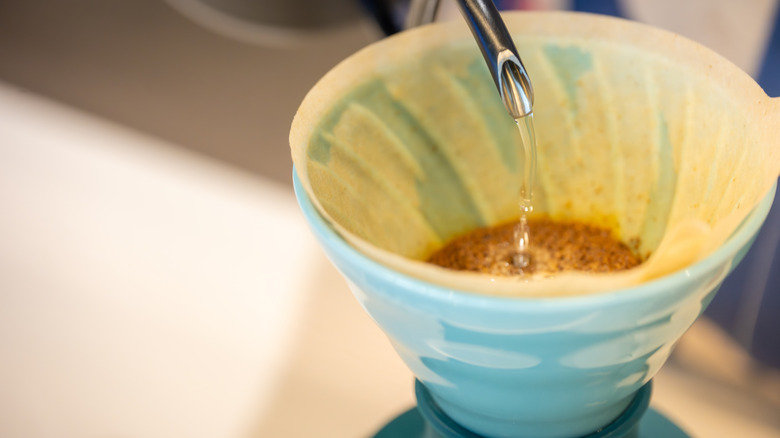
Pour-over coffee makers offer one such option and work just like they sound. You put coffee grounds in a brew basket that sits on top of a glass coffee urn, or in some cases, your coffee mug, and pour hot water over the grounds. The basket has holes in the bottom of it, just like your reliable old drip coffee maker. These holes allow the coffee to — you guessed it — drip down into the pot.
As far as the filtration is concerned, some types, such as the Creano Ceramic Cone Brewer, call for a paper or wire basket filter to be placed inside the brew basket Others, like the Pure Over XL Brew Kit, have a glass filter. Still, the basic idea behind them is the same. It's also worth mentioning here that some pour-over coffee makers have a plastic brew basket. If you're trying to avoid microplastics in your coffee, you'll want to forgo this type. Because you're pouring scalding water into the plastic basket, you're activating the same processes that eventually leach the plastics out of your coffee machine's parts.
Other options for making your morning brew
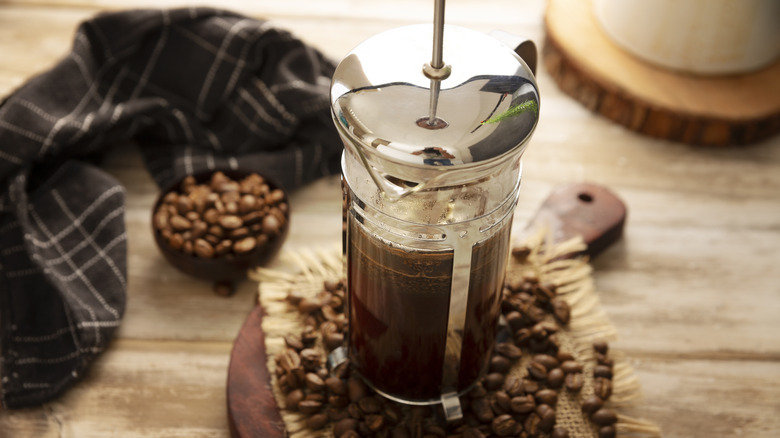
French press coffee pots offer still another tried-and-true method of delivering your heated jolt of morning caffeine. This model of java maker is what's known as an immersion brewer. For this method, you'll drop coffee grounds into the bottom of a glass carafe and add water. You'll then push a plunger with a mesh filter down over the grounds. This keeps the grounds at the bottom, under the plunger, and the drinkable coffee on top. To go plastic-free in this set-up, try a stainless steel model like Cafe Du Chateau Stainless Steel French Press Coffee Maker.
A moka pot is a stove-top solution to this dilemma. This all-metal gadget boasts three compartments — one for water, one for grounds, and one for the brewed coffee. When the water in the bottom compartment steams, it pushes through the layer of grounds, leaving brewed coffee in the top portion of the pot. The result is a coffee that's rich enough for your espresso drinks and microplastic-free.
Finally, there's the percolator pot. This vintage kitchen item is finding new life once again as java drinkers move away from plastic coffee machines. These have a couple of important parts: the metal basket at the top, a metal spout that pierces the middle of it, and a glass bulb knob on the lid. When the water in the pot starts to boil, the force of the bubbles pushes the scalding water up to the basket via the tube. This introduces the hot water to the coffee grounds in the basket, staining the liquid your preferred shade of chocolate in the process.