

How To Grow Tradescantia From Cuttings For Endless Purple Foliage
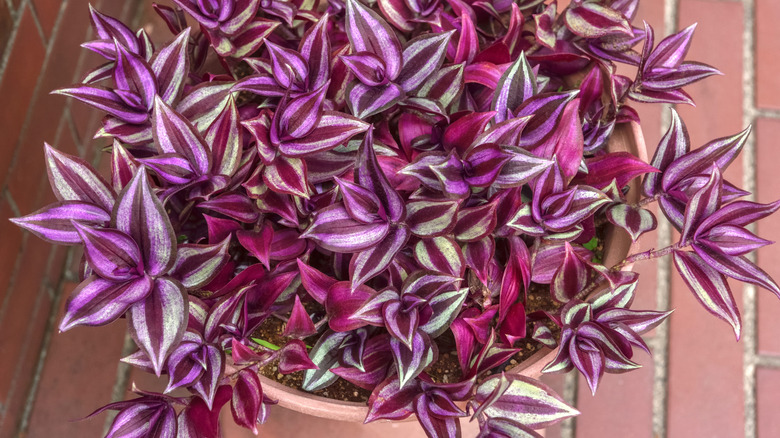
Growing a long, trailing plant with stunning foliage is simple if you know how to harvest and root the vines of a Tradescantia, also known as spiderwort or inch plant. This perennial, native to the Americas from southern Canada to northern Argentina, is known for its hardy nature and diverse colors. While specific varieties like the silver striped zabrina or the deep purple pallida 'Purpurea' are popular, most members of the spiderwort family have the same easy-going growth habits. While it grows happily as a houseplant, those living in USDA Hardiness Zones 9 through 12 can enjoy it as a year-round outdoor ground cover or trailing container plant. The secret to maintaining a constant supply of these plants lies in their unique ability to sprout new roots from nearly any part of their fleshy stems. Whenever you want to start a new plant, snip a 4-inch cutting and put it in water or moist soil to begin the rooting process.
Because Tradescantia plants become leggy and lose their older leaves near the base of the plant over time, regular pruning is the best way to keep your plants looking healthy. And you can propagate each pruned stem, which can eventually grow up to 6 feet long in ideal conditions, once it gets enough moisture and humidity. Aside from the striking visual of the plant, this species is known for growing quickly, especially during the spring and summer months when it's getting the most light. A single parent plant can produce dozens of offspring in a single season, making it one of the most cost-effective ways to fill a home with colorful plants.
Take stem cuttings to encourage a bushier mother plant
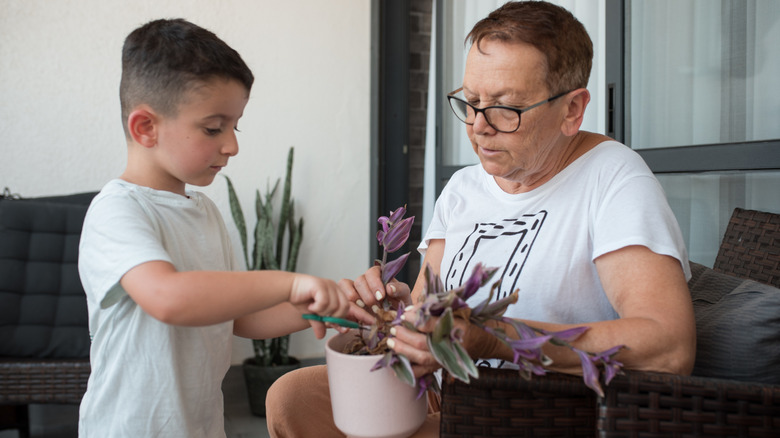
It's normal to feel a bit nervous about cutting back your plants, but your Tradescantia actually needs it to look its best. These are colorful houseplants that will perk up your indoor space, but when you let the vines grow without trimming them, the plant puts all its energy into the tips. This is why the base of the plant often ends up looking thin. To fix this, grab a pair of sterilized scissors and find a healthy vine, making a clean snip so the leaf node — the small bump where the leaf meets the stem — remains on the piece you plan to root. Each cutting should be about 4 to 6 inches long so there's enough of the stem surface for the plant to establish itself. Once you have your cutting, pull off the leaves from the bottom half so you have a bare tail to work with. Snipping these ends off triggers a hormonal response in the mother plant that forces it to branch out from the sides rather than just growing longer.
To get the most out of your mother plant after pruning, put it in a location that gets about 6 hours of bright, indirect sunlight per day. Without enough light, the internodes, or the space between leaves, will stretch, making the plant look thin. Regular pruning forces the plant to distribute its energy to create a bushy crown. While you can prune the Tradescantia throughout the year, cutting the plant during the active growing season typically results in the fastest recovery for the mother plant.
Root your Tradescantia cuttings in water or soil for quick results
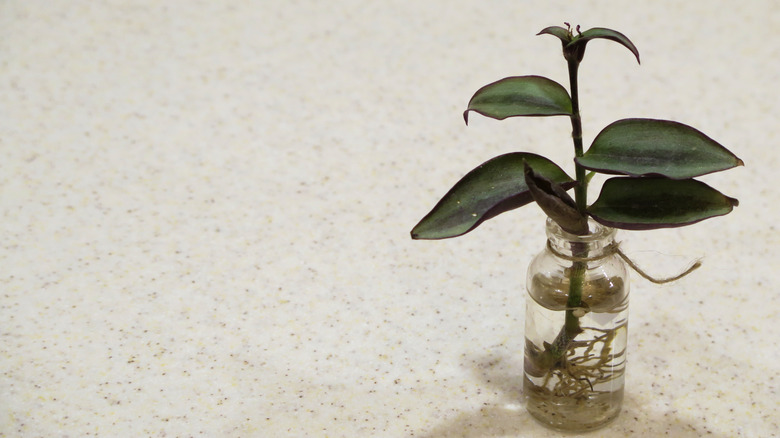
Once the stems are prepared, you can choose between two ways to grow the roots. Putting the leafless ends of the cuttings into a glass of room-temperature water might be the most popular way of rooting this plant because you can watch the roots develop within just a few days. You should place the glass in a spot with bright, indirect light and change the water once a week. Once the roots are at least an inch long in water, they're ready for their new home in some high-quality potting soil. Keeping the newly potted plants in a humid environment for the first week will ease the transition and prevent the leaves from wilting.
You can also tuck the cuttings directly into a pot filled with moist, well-draining potting mix. Using a mixture of peat moss and perlite provides the right kind of drainage to prevent the stems from turning mushy. If you decide to use soil, you'll need to keep the medium consistently damp for the first few weeks to encourage root growth at the nodes and help the new plants get started. Keeping the soil hydrated makes sure the stems won't wilt before they have a chance to grow roots. In about a month, those little clippings will have established strong roots and started to grow purple leaves. This cycle allows you to increase your collection of Tradescantia plants or share them with others without ever needing to buy a new plant.