

11 Pros Of Using Artificial Turf In Your Landscaping
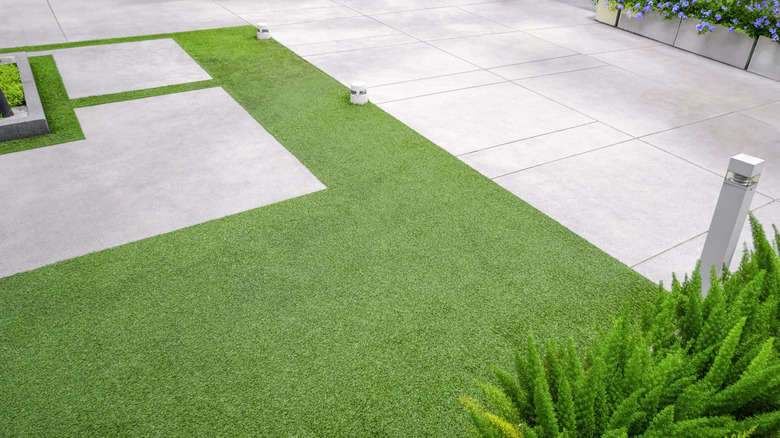
For homeowners all over the United States, having a well manicured lawn is a source of pride. However, it can also be a major source of stress due to the amount of care and consistently that is required to maintain natural grass. Fortunately, artificial turf provides a nice alternative for people who want to maintain a lovely green lawn without all of the hassle that typically comes with it.
Whether you have a large yard or just a small area that you'd like to have spruced up, artificial turf can be the solution you've been looking for. While the upfront cost may seem a bit daunting, for many people it can feel like a worthwhile investment that pays for itself over time. Are you considering artificial turf for your yard, but aren't sure about the benefits? Keep reading to learn about 11 pros of using artificial turf in your landscaping.
Conserve water
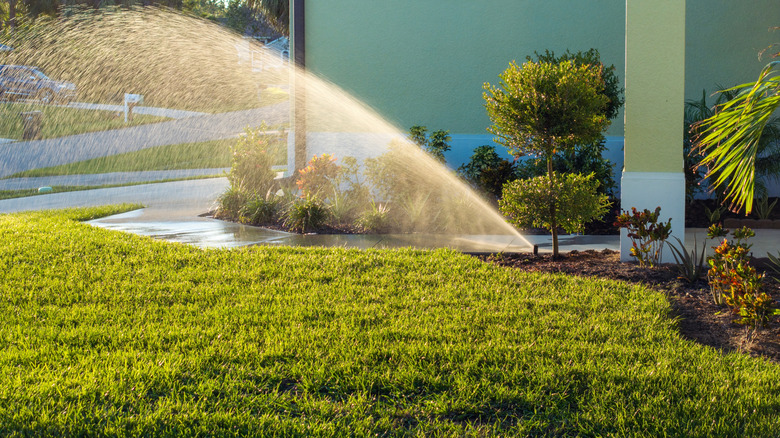
Did you know that approximately 9 billion gallons of water are used per day across the United States for watering landscapes alone? According to the United States Environmental Protection Agency, around half of the water used outdoors is wasted. While watering is necessary for gardens with natural grass, artificial turf doesn't need to be watered, and installing it could help you use roughly 70% less water each year. So, in addition to conserving water, artificial turf can also help homeowners save on water bills.
Although artificial turf doesn't need to be watered in the same way as natural grass, it does need to be hosed down periodically for cooling and cleaning. For many people, a quick weekly rinse is sufficient. However, people who have pets and/or whose lawns get high foot traffic may need to hose their turf more frequently.
Save time with less maintenance
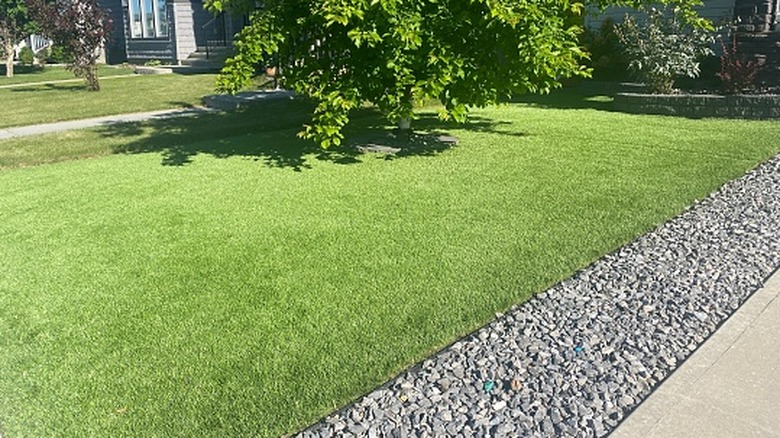
Keeping a natural grass lawn looking green and beautiful requires a lot of regular maintenance. In addition to regular watering, natural grass also needs to be mowed at least once a week during peak growing season. According to Today's Homeowner, the average American spends 384 hours over the course of their lifetime just mowing their lawn. That average increases to 510 lifetime hours for people living in the southern part of the country. These numbers don't even take into account the time people spend fertilizing and watering their grass. Artificial turf, however, doesn't require as much time and attention.
While some maintenance is required to keep artificial turf looking its best, it's not nearly as labor-intensive. On top of hosing down your turf, the only other regular maintenance tasks you'll have to worry about are picking up debris and brushing the fibers. Brushing should be done around once a month to prevent blades from becoming matted and uneven.
Have a green yard all year long
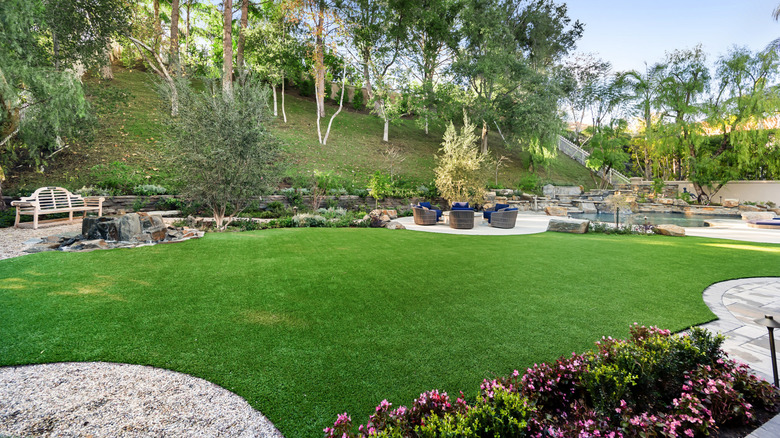
One of the biggest downsides to natural grass is that it can turn brown and unsightly when it isn't properly maintained or when weather conditions become harsh. After all, we've all seen grass turn patchy and brown in the summer heat. Thankfully, this isn't something you'll have to think about when it comes to artificial turf. Since turf is not a living plant, its color isn't affected by watering schedules and/or changes in the weather.
Most modern turf is UV stabilized by the manufacturer, but it's still important to talk to your installer to ensure that the specific artificial turf you're interested in has a UV-resistant design, as this is what keeps it from fading due to sun exposure. Since the UV resistance is added during the manufacturing process, your artificial turf's color should last as long as your turf does. While high-quality turf should maintain a nice green appearance for its entire lifespan, there is a chance that it may get slightly less green over time. Regardless, though, you won't have to deal with your lawn turning brown.
Artificial turf can withstand a lot of foot traffic
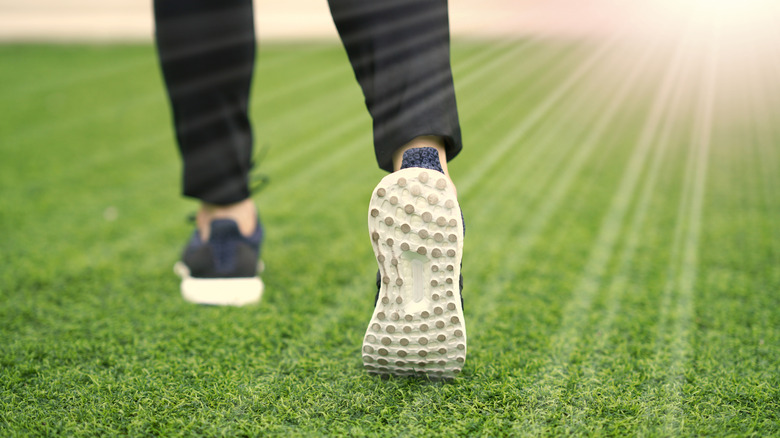
If you have children who like to play in the grass, have pets, or like to host lots of gatherings in your yard, then you know that heavy foot traffic can be really hard on natural grass. When grass is constantly walked on, blades can become damaged, and soil can get compacted. Over time, this can lead to your grass becoming dry, brittle, and brown. Once natural grass is damaged, getting it back to its healthy state can be time-consuming and expensive.
According to Angie's List, the cost of reseeding your lawn can be close to 10 to 20 cents per square foot on average. This doesn't even factor in the cost of labor. Artificial turf, however, is much more durable than natural grass and can generally handle being walked on without getting damaged.
Although artificial turf is generally more resistant to foot traffic, it's still important to understand that certain kinds of turf hold up in high foot traffic environments better than others. For example, Vista Sport turf, which is commercial grade for playing fields, is better for high traffic areas than Spring Rye 65, which is ideal for areas that are focused on aesthetics, but aren't constantly being used.
Reduced weed growth
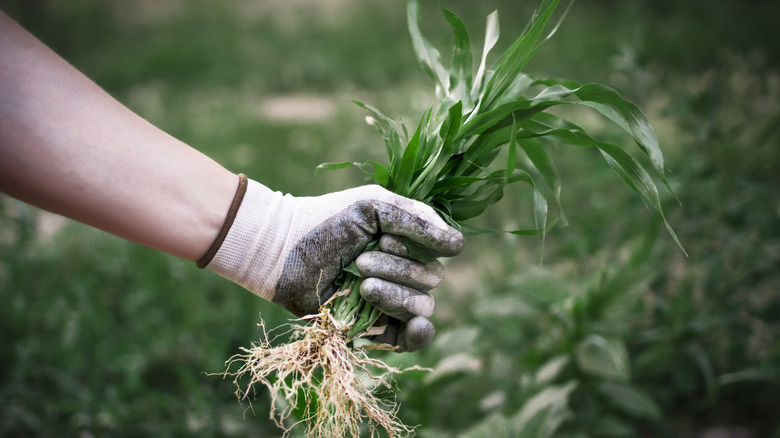
Anyone who has ever had to deal with weeds growing in their lawn understands how frustrating it can be. Not only do weeds make your landscape look less than stellar, but they can also damage your lawn by taking the resources that your grass needs to thrive. When installed correctly, artificial turf helps prevent weed growth because the turf's base layer creates a barrier beneath that makes it difficult for weeds to pop up. If keeping weeds at a minimum is especially important to you, look for turf that has polyurethane backing, as it is stronger and more durable than latex.
Even though the chances of weed growth are far lower when you install artificial turf, it's important to note that it's not always a 100% weed-proof solution. In some cases, weed seeds can be spread by animals or the wind and take root. The good news is that in the rare instance that weeds do become visible, they typically grow around the edges of the turf or on the top layer, not through the base of the turf. If weeds do appear on your turf, they can be removed by hand or by spraying the area with white vinegar.
Artificial turf can last well over a decade
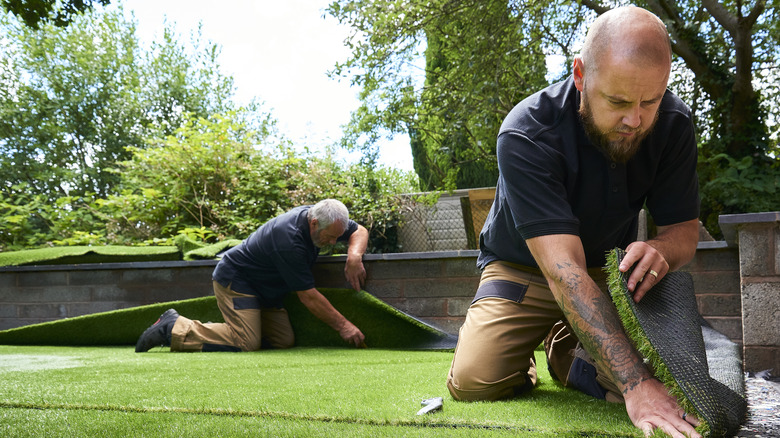
One of the things that may make people shy away from artificial turf is that it can be fairly costly to install. Angie's List reports that installing artificial turf costs $5,768 on average, but can cost up to $15,000 depending on the size of your yard and the type of turf you choose. However, many homeowners still consider turf to be a worthwhile investment because it can last up to 15 years when installed and maintained properly. Remember, though, even if your turf does last for a decade or more, it may not look as good as it did when you first had it installed.
People who choose to install artificial turf can also get a bit of added peace of mind because many turf companies offer warranties. In some cases, these warranties can last for up to 20 years. That said, it's important to read the warranty thoroughly to understand exactly what is covered. In many cases, damage due to normal wear and tear won't be covered. Other common exclusions include damage by pets and damage from events like floods and fires.
No need for fertilizers and pesticides
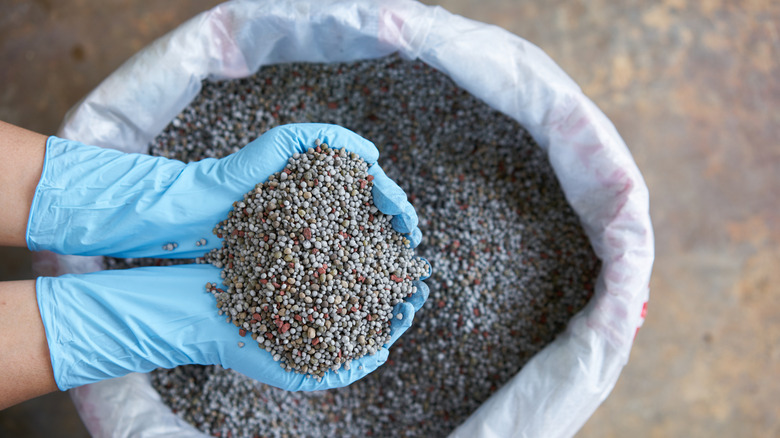
Fertilizers and pesticides are par for the course when maintaining a natural grass lawn. However, artificial turf allows homeowners to kiss both of those things goodbye. Since artificial grass is synthetic, it doesn't attract pests, and because it's not a living thing, it doesn't need to be fertilized. Since fertilizer can cost between $67 and $405 for a typical yard, and pesticides can be between $50 and $210 on average, not having to worry about these things can result in significant savings over time.
In addition to the cost savings, not using fertilizer and pesticides can help make your landscape a little more environmentally friendly. Remember, though, that this doesn't mean that artificial turf is a completely eco-friendly solution. Certain types of artificial turf may contain per- and polyfluoroalkyl substances (PFAS), heavy metals, and other harmful chemicals (via ABC News). Turf can also be a bit unfriendly to the environment if it is not properly disposed of and ends up in landfills.
Artificial turf is great for drought-prone regions
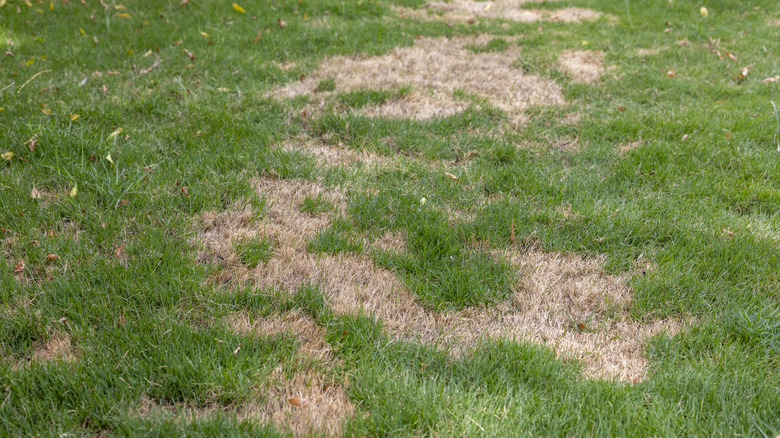
Have you ever tried to maintain a lush green lawn in an area that is prone to droughts? If so, you know that it can be very expensive and can feel nearly impossible. Artificial turf is the perfect solution because it doesn't need water to maintain a healthy appearance. As mentioned earlier, this is a big factor in why turf is a popular choice in the southwestern United States, where droughts and water bans can occur.
On the flip side, artificial turf also doesn't become oversaturated in areas that do get a lot of rain, or even snow. Artificial turf features various types of drainage systems that allow water to pass through instead of sitting on top of the turf. It's important to learn about the different drainage options to understand which will work best for your yard. For example, most residential turf has perforated backing, which consists of small holes that allow water to flow through. This backing typically has a drain rate of around 30 inches per hour. Other types may have fully permeated backing, which allows water to flow through the entire surface area of the turf and allows hundreds of inches of water to drain per hour.
Breathe easier during allergy season
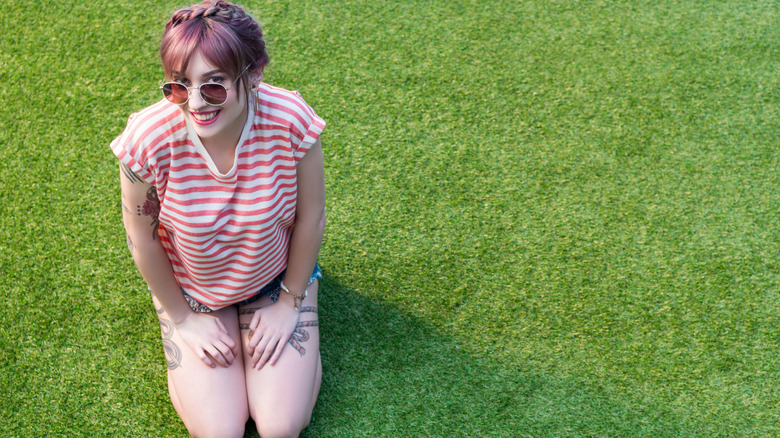
All of the allergy sufferers out there know just how much of an irritant grass can be. In fact, you don't even have to touch grass to send your allergies into overdrive. Grass releases pollen which can trigger allergic reactions and cause a range of symptoms including sneezing, itching, and watery eyes. Grass pollen can even cause life-threatening anaphylaxis in extremely rare cases. For people with allergy-induced asthma, grass pollen can also trigger an asthma attack. As a result, artificial turf makes for a great alternative for allergy sufferers as it doesn't produce any kind of pollen.
The lack of pollen isn't the only thing that makes artificial turf ideal for people who suffer from allergies. High-quality options are also mold-resistant, which prevents allergens like mildew from forming. Additionally, not using fertilizer means that you won't be exposed to chemicals that could potentially trigger an allergic reaction.
Flexible design options
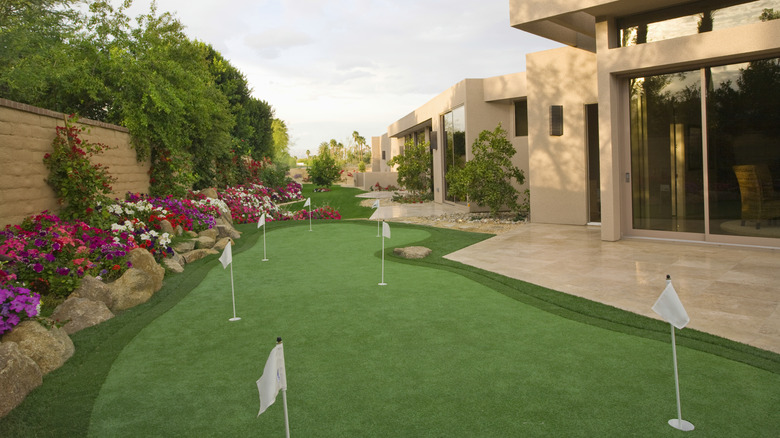
One of the pros of artificial turf is that it can be installed in any shape or size, making it ideal for things like backyard putting greens. For example, putting greens made from artificial turf can maintain their playability all year long and can last for 10 to 15 years with minimal maintenance. It's important to keep in mind that the upfront cost of installing an artificial turf putting green tends to be higher than natural grass. Artificial turf putting greens cost around $5 to $25 per square foot, according to Angi, while natural grass is only $1 to $2 per square foot, not including labor costs. Other outdoor spaces that can benefit from artificial turf include children's play areas and spaces for pets, since turf is highly durable and easy to clean.
Artificial grass also allows for added creativity because it can be installed in places where grass can't grow. For example, artificial turf can be installed on patios and balconies. It can even be installed indoors for those who want a little green space inside or want to maintain cohesion between indoor and outdoor spaces.
No mud in your yard
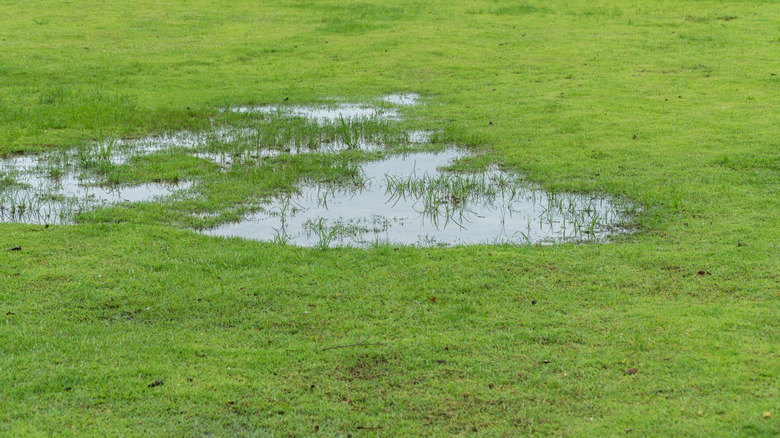
One downside to natural grass is that it can get muddy when it rains. Not only can this lead to unattractive mud patches in your lawn, but it can also result in mud being tracked into your home. Luckily, this isn't something you'll have to worry about with artificial turf. Since turf doesn't need soil, mud isn't an issue, which can be especially appealing for people who live in areas with heavy rain.
Keep in mind, however, that while turf doesn't need soil to thrive, it is typically installed on top of soil. So, in order to truly avoid mud problems, your turf must be installed properly with a strong, properly compacted base layer and a permeable backing that allows water to drain properly. Additionally, mud can still find its way onto your turf from other areas of your yard if there is dirt or soil nearby.