

Invasive Bamboo To Steer Clear Of And Safer Types To Grow
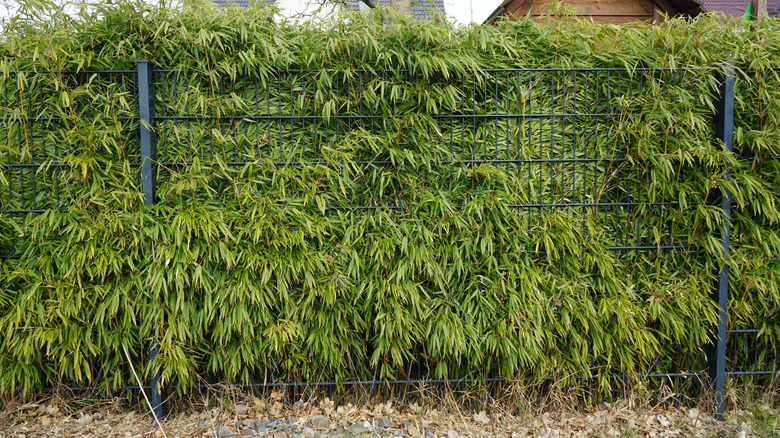
Plant the right bamboo and you can create an attractive privacy screen in your yard. Plant the wrong one and you can have a nightmare on your hands. Among the more than 1,400 species of bamboo, some are destructive invaders while others are not. The difference usually comes down to how they reproduce. Bamboo is the world's tallest perennial grass and can reproduce either in clumps that can be contained in one place or by underground runners that can run wild and take over your yard, your neighbor's property, and can even break through driveways and foundations.
Fortunately, there are ample alternatives to the invasive varieties if you know what to look for. A number of species are even native to North America. But keep in mind that bamboo species can be fast-growing, even vertically if not horizontally. Clumping bamboos are slow to spread, but they can grow very tall (some up to 70 feet!), shading out competitors and producing large, dense root systems that can drive out nearby plants. Before planting, consult the National Invasive Species Information Center or local extension resources to confirm the species is not invasive in your region.
Don't Plant Golden Bamboo
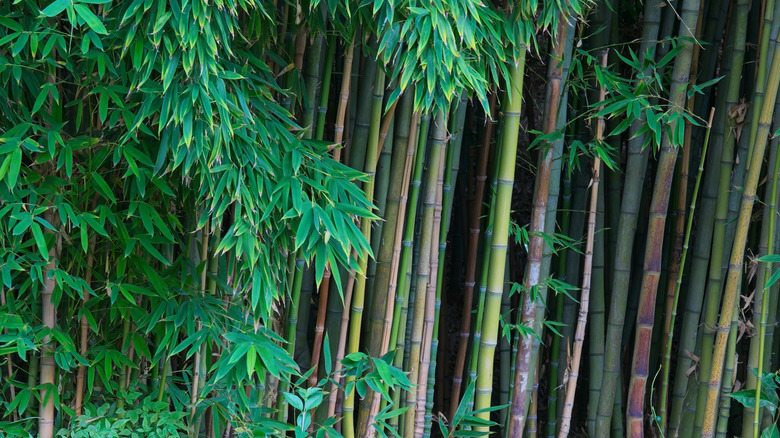
One of the worst and most common of the invaders is golden bamboo (Phyllostachys aurea), which can grow up to 20 to 30 feet and displace native species. Like many invasive species, it was introduced to the United States as a landscape plant, then got out of control. Numerous cultivars were developed, including "Dr. Don," "Flavescens Inversa," "Holychyrsa," and "Koi." If you see these cultivars for sale, proceed with caution and confirm local regulations before planting. It spreads aggressively through rhizomes that are notoriously difficult to remove once established.
Plant Fountain Bamboo instead
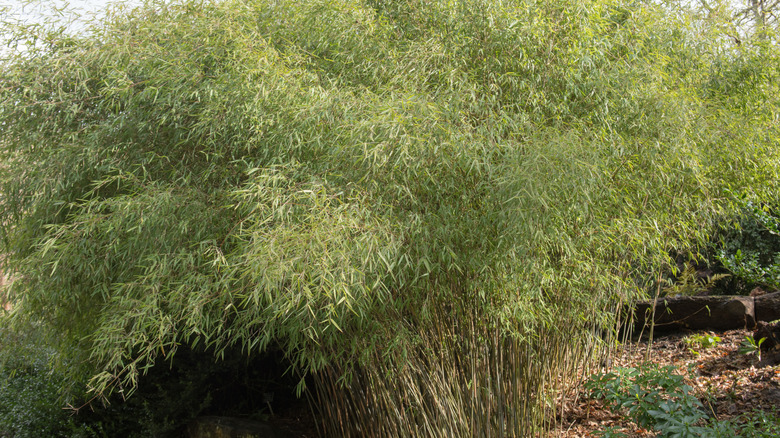
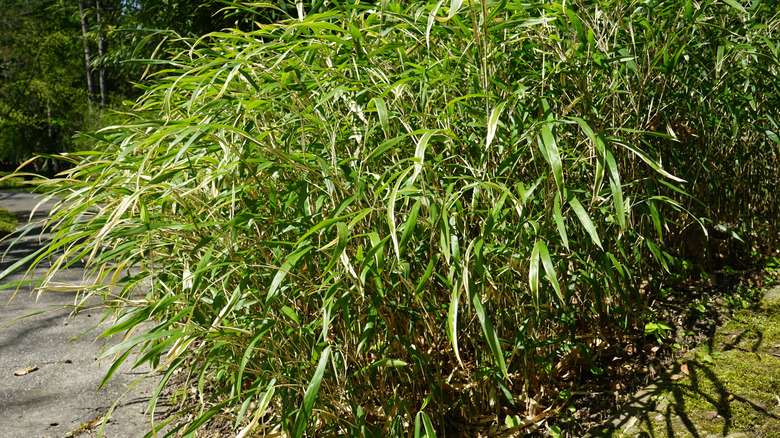
Fountain bamboo (Fargesia nitida) is a non-invasive option suited to cooler climates in USDA Hardiness Zones 5 to 9. It grows up to 15 feet tall with draping foliage with a fountain-like appearance, making it a good privacy hedge. It does well in the shade and is cold-hardy. While it's highly versatile in terms of where you plant it, it prefers moist, rich soil. Pictured here is the frequently planted Fargesia nitida 'Jiuzhaigou,' which slowly forms a clump 8 to 12 feet tall.
Don't Plant Heavenly Bamboo
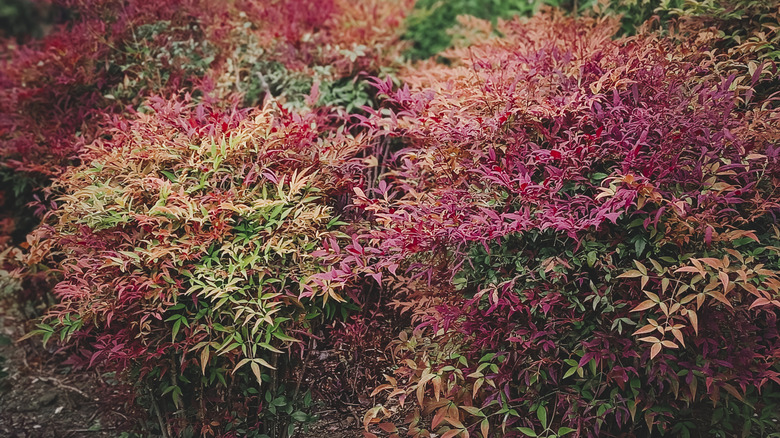
Heavenly bamboo (Nandina domestica) is another invasive plant that you should avoid planting in your yard, and despite the name, it's not an actual true bamboo. Introduced to North America in the early 1800s, it became popular, with many cultivars developed to highlight its beautiful foliage. It is anything but heavenly. It is considered invasive in many regions, and its berries contain compounds that can be toxic to pets and wildlife if consumed in large quantities.
Plant Rivercane instead
Rivercane (Arundinaria gigantea) is a North American native that grows in Zones 5 to 9, along waterways and in floodplains. It usually grows from 8- to 20-feet tall. It is vigorous but typically forms clumps rather than spreading through long-running rhizomes. Rivercane has long been used for basket making by Native Americans, but you can also use it to make your own DIY bamboo fence or as a "canebrake" to provide shelter and food for wildlife, including pollinators. Just keep in mind that rivercane is highly flammable, so don't plant it near your home or other structures.
Don't Plant Common Bamboo
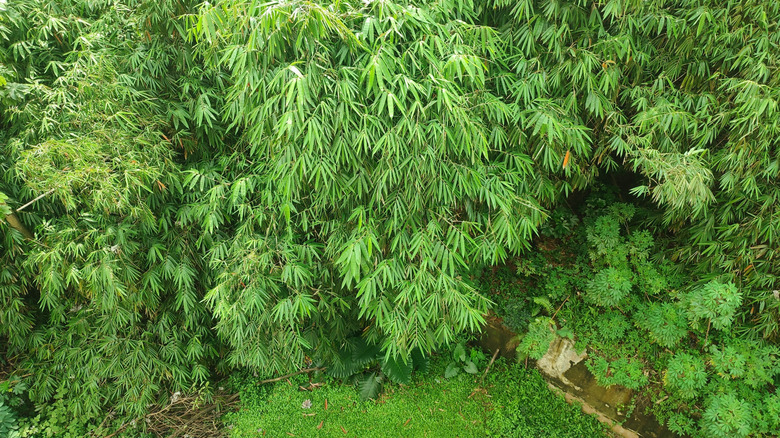
Common bamboo (Bambusa vulgaris), also known as feathery bamboo, has long been used for construction, tools, and musical instruments, among other traditional uses. But it's highly invasive. Several popular cultivars have been developed from common bamboo, including dwarf Buddha belly bamboo (Bambusa vulgaris 'Wamin'), which can grow to 15 feet tall, and painted bamboo (Bambusa vulgaris 'Vittata'), which can grow in 3-foot-wide clumps of up to 60 feet tall. Both are found in ornamental gardens and can be difficult to remove once established.
Plant Chinese Dwarf Bamboo instead
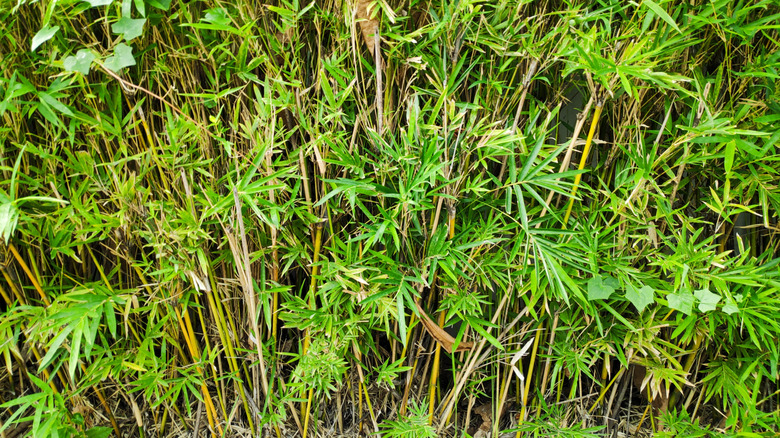
Despite its name, Chinese dwarf bamboo (Bambusa multiplex) can reach 25 feet but is often pruned into a dense hedge, which is why it is commonly known as hedge bamboo. It is hardy in Zones 8 to 11 and has decorative stalks that are yellow with green stripes. Unlike many species that prefer consistently moist soil, Chinese dwarf bamboo is relatively drought-tolerant and can grow well in full sun as well as partial shade. Bambusa multiplex 'Alphonse Karr' is a popular cultivar.
Don't Plant Compact Golden Striped Bamboo
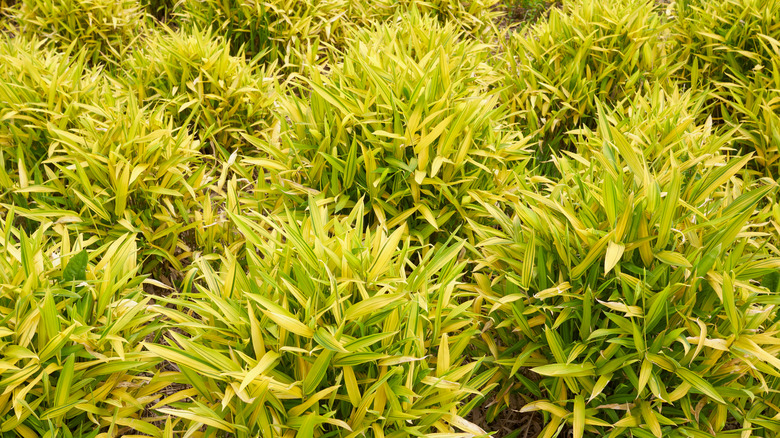
Compact Golden Striped Bamboo (Pleioblastus viridistriatus), also sold as Kanuro Zasa, is considered an invasive bamboo species in many regions. It grows up to 5 feet tall from rhizomes that will run in all directions to form large colonies. It will grow in many soil types, is hardy in USDA Zones 6 to 10, and has no serious diseases or pests to keep it in check.
Plant Clumping Bamboo instead
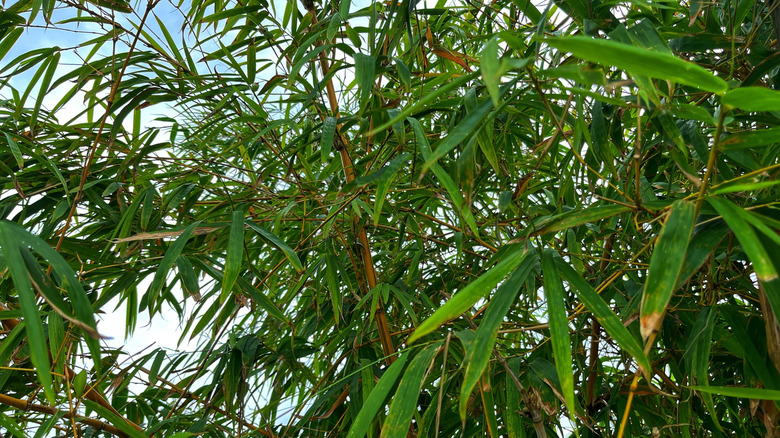
With the common name of "clumping bamboo," Fargesia robusta is considered a noninvasive species with attractive blue-green canes and is often used for privacy screening, serving as a living alternative to a non-living bamboo privacy fence. Fargesia robusta 'Campbell' is a commonly planted cultivar that has attractive white sheaths adorning its green canes. Clumping bamboo is both sun-tolerant and cold-hardy in Zones 5 to 8, able to survive in temperatures as low as minus 10 degrees Fahrenheit. It can grow up to 15 to 18 feet tall. It's best suited for partial shade but can tolerate moist, well-draining soils of many types.
Don't Plant Golden Groove Bamboo
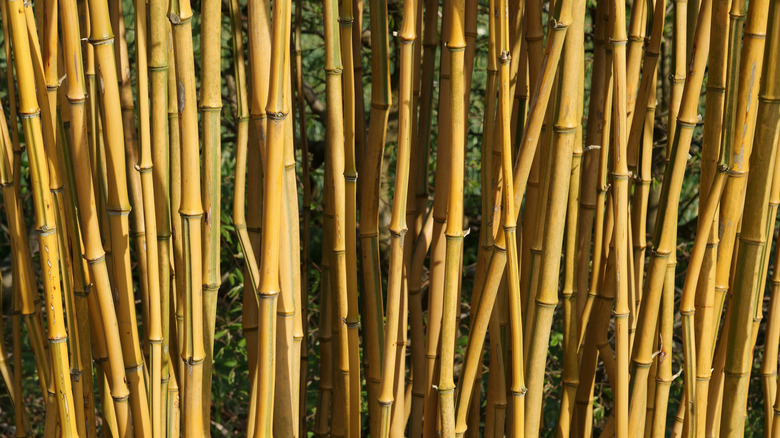
Able to grow up to three feet a day, golden groove bamboo (Phyllostachys aureosulcata), also known as yellowgroove bamboo, is considered not just invasive but very invasive, especially in the eastern United States. A native of China, it has spread into parts of Japan, where it has displaced native tree species. When planted along streams, it can disrupt nearby ecosystems and alter local food webs.
Plant Tropical Blue Bamboo instead
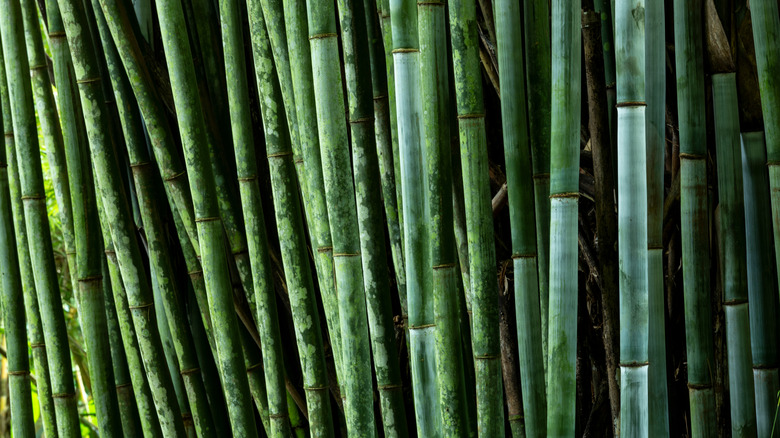
As its name suggests, tropical blue bamboo (Bambusa chungii) is limited to the warmer, tropical climates of USDA Zones 9 to 11. Temperatures below 21 degrees Fahrenheit can seriously damage the plant. Like other "blue" bamboos, it is often planted because of its distinctive bluish-grey canes and its height, growing up to 25 feet tall, making it another excellent choice for privacy screens. Bambusa chungii 'Barbellata' is an attractive cultivar. As with most bamboos, it prefers moist, fertile, well-draining soil in full sun or partial shade.
Don't Plant Black Bamboo
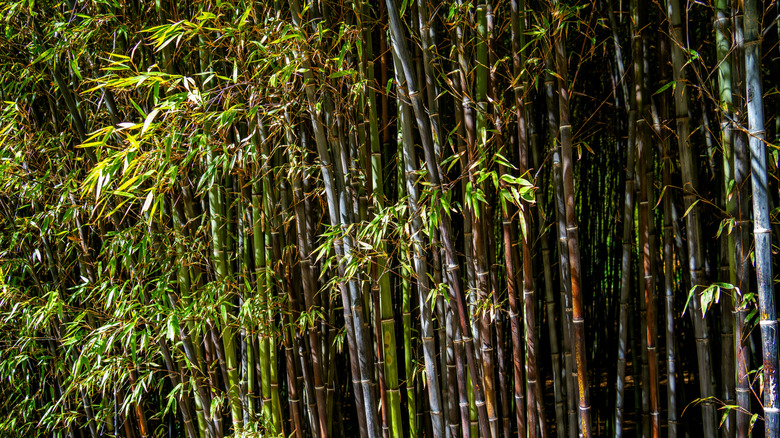
Black bamboo (Phyllostachys nigra) is an aggressive spreader that can grow up to 35 feet tall. It has infested natural wetlands from Florida to Hawaii, allowing no other plants to grow in the area. It can grow in both infertile and fertile soils and may host certain pests and pathogens. When broken, its woody canes become sharp and are even known to damage farm equipment in the process of trying to manage them.
Timor Black Bamboo instead
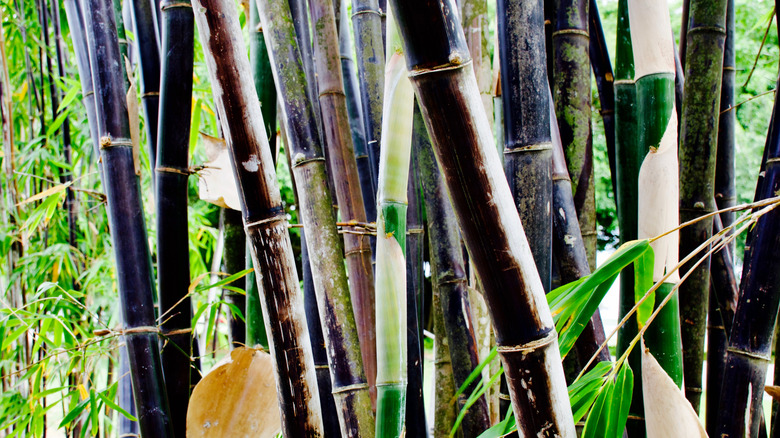
Timor black bamboo (Bambusa lako) is known for its dark chocolate-colored canes that appear nearly black. It can be found growing in locations such as Disney's Epcot Center. While it's less hardy than many bamboos, surviving only in USDA Zones 9 to 11, Timor black grows more slowly and is generally considered less aggressive than black bamboo (Phyllostachys nigra). However, slower growth does not mean limited size; Timor black can grow up to 60 to 70 to 70 feet tall within three to four years.