

The Valuable Jar Brand To Look For At An Antique Store
We may receive a commission on purchases made from links.
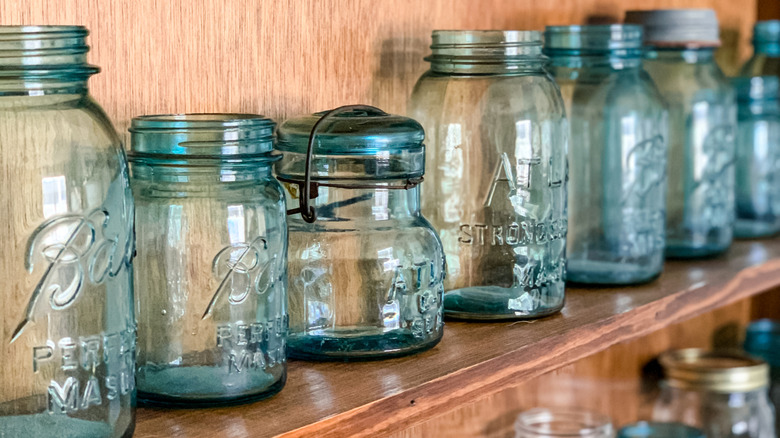
Since they first came onto the scene in the 1800s, glass canning jars have been a staple in many kitchens across the United States. Not only are they a convenient and safe way to store your yearly garden harvest, but they can also be used to organize household items and to create vintage-style home decor. Glass mason jars have become a valuable collector's item for those who love vintage Americana. And besides Mason, one name in particular is synonymous with glass canning jars — Ball. Many vintage Ball canning jars can be quite valuable, so they're worth keeping an eye out for at your local antique store. If you happen to spot a vintage Ball jar in amber, cobalt blue, or olive green, you can be sure it is on the higher end of the value scale for these jars.
In the late 1880s, the Ball brothers opened their first glass jar manufacturing company in Buffalo, New York. By 1900, they were the largest manufacturer of glass canning jars in the U.S. Over the decades, Ball has produced a wide variety of canning jars in various shapes, sizes, and colors, and many of them are extremely collectible — some more valuable than others. Depending on the style, color, and age, discovering a vintage Ball jar at an antique store can be a truly valuable find. While many vintage Ball canning jars are worth collecting simply for their novelty, it's worth focusing on the more unique colors and the few rare jars with printing errors.
Which Ball mason jars are worth looking for at the antique store
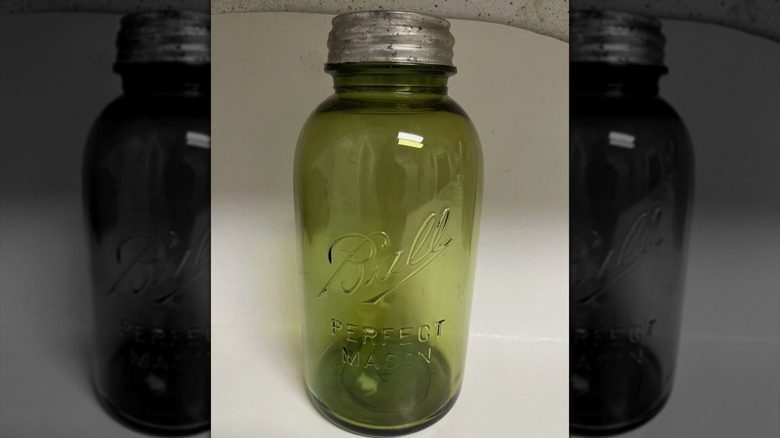
Because Ball was such a large producer of canning jars in the late 19th and throughout the 20th centuries, there are a lot of collectible jars out there to find. There are a few things you should be immediately looking for when you walk through the doors of your local antique store. The first thing that's easy to spot right away is color. As mentioned before, if you spot an amber, olive-green, or cobalt blue mason jar, it's worth taking a closer look. These colors are less common than the traditional clear and the "Ball blue" color produced after the mid-century.
The next thing is the Ball logo. This will help you determine the approximate age of the jar. You can find the dates and description of the logo changes at the Outer Banks Candle Company website to help identify your jar. It's also important to note the size of the jar: gallon, half-gallon, quart, pint, or jelly jar. Gallon or half-gallon jars that are intact with little to no damage are generally rarer than the smaller sizes. If you find a Ball canning jar with what looks like the label embossed upside down, you've found a real treasure. These types of jars were made for a short time during the 1920s for dispensing coffee and are rather unique. Any Ball jars with the jar's name misspelled are highly collectible. Jars with certain numbers embossed on the bottom can be more valuable as well; in particular, "13" is worth keeping an eye out for.