

Plant This Popular Cold-Hardy Bean Variety In February For A Nutritious Harvest
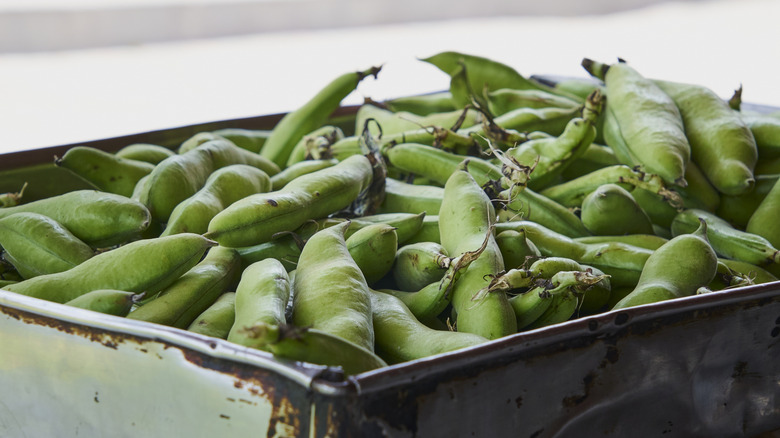
Though it may not seem like a good time to plant crops, February is perfect for getting a head start on the growing season. Not all vegetables need to wait until after the last frost date to thrive outdoors. Fava beans (Vicia faba) are one such cold-hardy crop that withstands the frosty weather as winter fades into spring. Different from most other beans, these plants prefer growing in cool weather and are resistant to temperatures as low as 21 degrees Fahrenheit. Many growers can plant seeds in February, though the exact planting date varies depending on where you live. Getting a head start on the growing season is favorable because these beans need 4 to 5 months to mature after planting. To grow a nutritious harvest, you must plant fava bean seeds as early as possible in spring.
Why grow fava beans? They're versatile, for starters. A single plant gives you edible flowers, shoots, leaves, bean pods, immature beans, and dry beans. Grow a whole bed full of the plants and use separate plants for different goods to get the most out of them. In spring, you'll have fresh and nutritious shoots to harvest. Then, in late spring and summer, you'll have flowers and young bean pods to pick. Leave the pods for a bit, and the seeds will swell to a size similar to lima beans. Pick them and shuck the seeds, then boil and peel them before enjoying. Finally, you may let the pods sit on the plants to grow dry fava beans. These seeds grind into a flour-like substance, or they work like similar dry beans in the pantry. The possibilities are endless!
How to plant and grow fava beans in the late winter garden
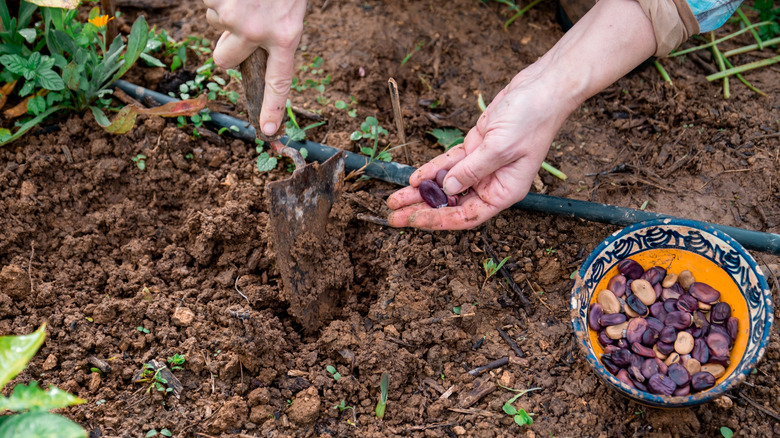
Using heat-boosting techniques, you can plant fava beans earlier than you normally would. Growers in warm regions of California can safely plant these beans from fall through February without protection, though gardeners across the states may still have ice and snow on the ground. If this sounds like your state, try using row covers or greenhouse plastic with metal frames to heat the soil and prepare it for planting. Be sure to keep those materials around, as there are many ways to use row covers for a healthier garden. Warm your beds and direct sow the seeds, planting them about 1 to 2 inches deep. The bigger the variety, the deeper you should plant the seeds.
Some growers experience wet or frozen soils during February. In these gardens, consider sowing seeds in pots in a cold frame or a greenhouse outdoors. Don't seed them indoors, as the plants are cool-season crops and the indoors may be too hot for them. If you don't have a cold frame or greenhouse, try winter sowing the seeds in a protected spot outdoors in milk jugs. Or, build a mini-greenhouse with a plant pot tray and a humidity dome. Sow the seeds in pots, keep them moist, and wait for germination in 7 to 14 days. Finally, transplant the seedlings once they reach 4 to 5 inches tall from March through April. Keep the soil moist, but not soggy, and watch as your seedlings flourish into stocky bean plants. Support the stems if they flop, and wait for flowers, pods, and beans to grow in the coming months. Next year, consider also planting fava beans in September for healthier soil the next spring.