

How To Propagate Spiderwort For An Endless Supply Of Pretty Purple Plants
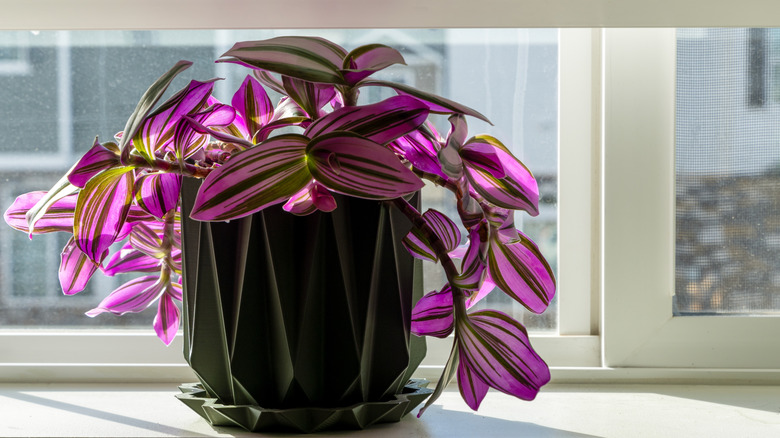
One spiderwort plant is all it takes to make more! Spiderwort species in the genus Tradescantia propagate readily from cuttings. They're climbers and danglers with stunning foliage that's perfect for hanging baskets. Some spiderwort species are native to temperate areas in the U.S., while others are tropical plants that thrive in frost-free regions elsewhere in the Americas. Though they're famous for their purple hue, not all spiderworts are purple. Some are green, others have stripes of pink, and a select few are solid purple. If you like the spiderwort you have, you can use this propagation hack to turn the single plant into as many as you need. Simply take some cuttings, stick them in a growing medium of your choice, and watch as they root.
To propagate indoors, you'll need a bushy spiderwort plant, some jars or small flower pots, and some water or soilless potting mix. Optional extras include trays to catch water (from watering) and a shelf to hold the potted propagules while they root. You'll also need to find a spot in your home with ample light. The cuttings need bright light to root; they'll rot in the dark. Pick a location next to a window, or add grow lights to your list of supplies. These lights work well in any room and will quickly turn a dark house into a propagation station. If you prefer to propagate your spiderwort cuttings outdoors, the process is mostly the same, but choose a spot that receives bright, indirect sunlight for most of the day. Without roots, the cuttings are weak and need help to take in water and nutrients. A humidity dome will keep them moist and perky.
Propagate spiderworts in water or a soilless potting mix
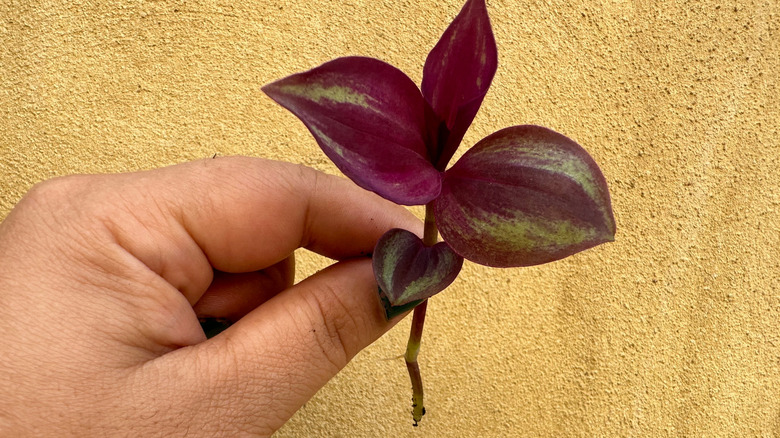
It turns out that spiderworts are one of the many houseplants you can propagate in water. Water is a low-maintenance option for rooting cuttings compared with soil, though transplanting may require more effort, and soil propagation may be faster. The nice part of water propagation is that you can see the entire process firsthand. You can watch the roots form, so you'll know exactly when your spiderwort cuttings are ready for their first pot. That doesn't mean it's difficult to stick fresh cuttings into potting mix and let them root. With a soilless medium, you simply need to pay closer attention to the cuttings to ensure they're rooting rather than rotting. If you're new to propagation, water may be the best method — it helps you get a feel for the process.
Take 4- to 6-inch-long stem cuttings from your thriving spiderwort using sharp, sterile scissors or pruners. Ensure each piece of stem has a node, the point on the stem where new growth emerges. Stick the cutting, including the node, into a jar of water or starter pot filled with soil, then place it in a spot with bright, indirect light. Roots will start to form within a week. Ensure soil-planted propagules stay moist, but not soggy, and refresh the water of water-propagated spiderwort cuttings at least weekly. After about three weeks, check that your cuttings have enough roots before planting spiderwort in your garden or in larger houseplant pots. Whenever you need more plants, simply repeat the process to multiply your spiderwort stock.