

This Flower Pot Combo Will Attract Beautiful Hummingbirds
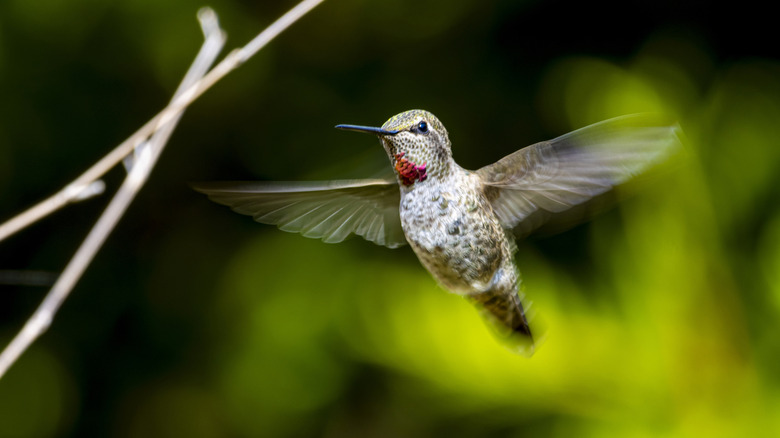
Watching hummingbirds flit around your porch is a highlight of summer, but getting them to actually stop by your yard can feel like a game of chance. You might think you need a massive garden or a bunch of expensive feeders to get their attention, but you can actually bring them right to your door with a pair of potted plants. By growing lantana (Lantana camara) and petunias (Petunia x hybrida) together in the same container, you create a bright, nectar-filled mini-garden that these birds can't resist. The setup is one way to draw more hummingbirds into your yard without a lot of effort. Bonus: Lantana produces a strong scent that naturally repels hungry deer and rabbits, keeping your flowers intact for hummingbirds.
This planting combination works so well because it offers exactly what hummingbirds are looking for: bright colors they can see from a distance and a reliable food source that they can use all season. Instead of relying on a plastic sugar-water feeder, these flowers provide a natural meal that keeps hummingbirds coming back. Trumpet-shaped petunia blooms are a perfect fit for the long beaks of hummers, while the disc-like clusters of tiny lantana flowers provide a steady supply of the sugar they need to survive. Placing these pots on a sunny patio or balcony gives you a front-row seat to their hovering and darting without the work of growing a flower bed.
The best lantana and petunia varieties for attracting hummingbirds
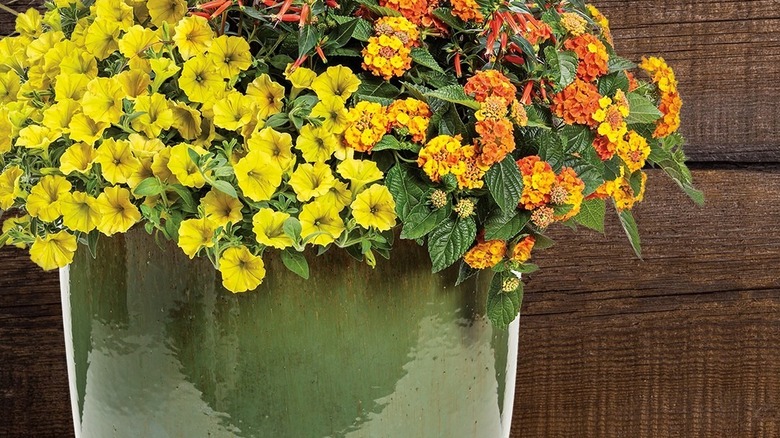
Lantana is one of the best choices for a sunny container because it thrives when the summer heat kicks in. This plant is perennial only in USDA Hardiness Zones 10 to 11. Gardeners in other zones grow it as an annual. This stunning flowering shrub stands out because its flower heads feature many tiny blossoms that change color as they mature, moving from yellow to orange, pink, or deep red. Hummingbirds instinctively look for these colors, so the plant acts as a neon sign in your outdoor space. Planting bright, upright lantana varieties like 'Bandana Red,' 'Lucky Yellow,' or the 'Bloomify Red' ensures your container garden is attractive to hummingbirds. They won't crowd out the petunias, either.
While some petunias trail over the edge of a pot, other varieties grow in mounds that work well as a filler in containers. They're often considered one of the best flowers to plant alongside lantanas for the shape and texture they provide. Petunias are usually grown as an annual, but like lantana, they will live year-round in USDA Hardiness Zones 10 to 11. The plants are famous for their tubular blooms that hummingbirds reach their beaks into for a meal. To attract lots of hummers, choose petunia varieties with red, orange, yellow, purple, or even blue flowers. Keeping your petunias blooming abundantly takes a little care, like daily watering in summer and deadheading wilting blooms. The plant will focus on growing new flowers instead of seed production.
How to grow petunias and lantana together in containers
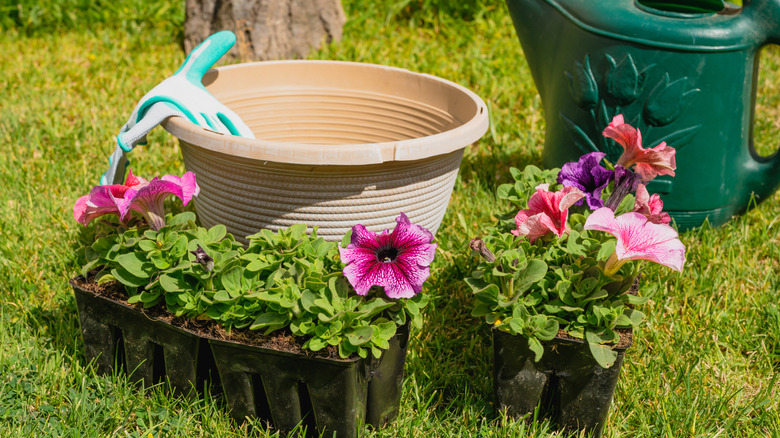
Once you've potted up your selected petunia and lantana varieties, put the container in a spot that gets five to eight or more hours of direct sunlight. This will prevent the plants from growing leggy stems and, in particular, keep your lantana blooming all summer long. Both plants benefit from a granular fertilizer applied every three to four weeks. Use a formula high in phosphorus to encourage your petunias and lantana to prioritize flower production over leaf growth. As long as the pot has holes for drainage and good quality, well-draining soil, you'll have a healthy hummer pit stop for the entire season.
Containers lose moisture much faster than in-ground beds, so you should check the soil every day. If it's dry, give your plants a drink. Lantana doesn't mind a little dry soil and loves the sun, so it will continue to grow and flower even during drought-like conditions. Petunias, on the other hand, prefer consistently moist soil. Finding a balance between the two preferences is one of the only challenges with this pairing. If watering at midday, you should avoid getting water directly on the petals of either plant. Droplets can cause sun scorch or encourage the spread of fungal diseases. In mid-summer, if your petunias start to look sparse, trim them back by a third to stimulate fresh growth, boost blooms, and ensure your container garden attracts hummingbirds through to the end of the flowering season.