

Plant This Popular Herb Next To Sage For A Healthier, More Delicious Harvest
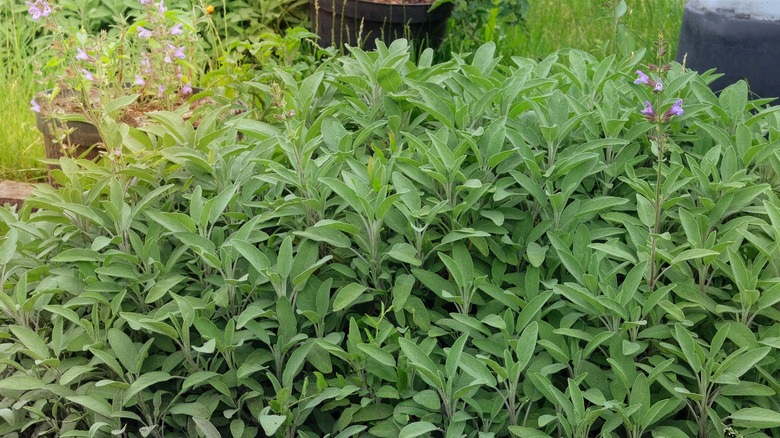
If you're already growing sage (Salvia spp.) in your garden, you know how rewarding it can be. Depending on the species or cultivar you choose to grow, this hardy, fragrant herb adds bold flavor to your savory dishes in your kitchen and attracts pollinators to your garden. With the right care, sage can thrive for years outdoors, and companion planting is a great way to help your plants achieve optimal longevity. Pairing sage with the right neighbors can improve airflow, reduce pest pressures, and even enhance the herb's already vibrant flavor. One popular plant that stands out from the crowd as an ideal partner for sage is rosemary.
Rosemary (Salvia rosmarinus) is an easy-to-grow herb you'll want to plant next to sage in your garden to help support healthy growth, improve flavor, and keep pests away from your other plants. When you plant rosemary next to sage, you're setting up a partnership that works both above and below the soil. These Mediterranean natives share similar sunlight, soil, and watering needs, which makes planning your garden layout simple and efficient. Plus, they are both perennial in USDA Hardiness Zones 8 to 10, though sage can survive down to Zone 5. Placing them side by side in a sunny, well-draining bed helps promote healthier, more delicious plants without adding extra work to your gardening routine.
How rosemary and sage support each other in the garden
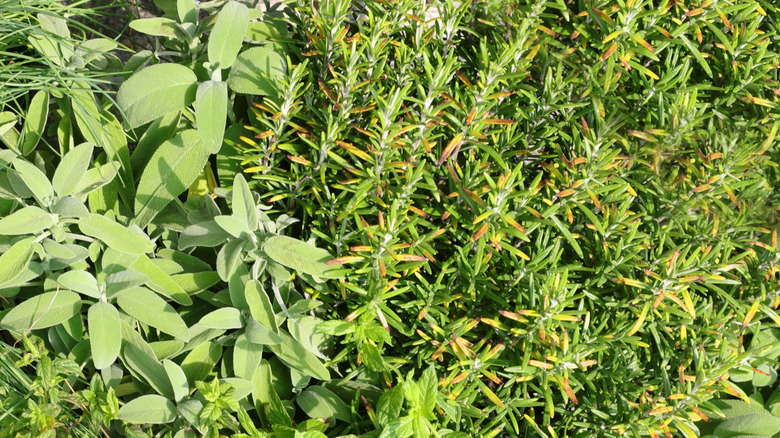
If you live in the right growing zones, sage and rosemary are perennial herbs that you can plant once and they'll return to your garden on their own each year. To plant them together, choose a spot that sees at least six hours of sunlight every day and has loamy soil with a neutral pH. Neither plant likes wet feet, so if you don't have well-draining garden beds, add some sandy or rocky soil to improve water flow. If your soil is compacted or lacks nutrients, amend it with compost before planting to create the ideal environment for both herbs.
You may want your sage and rosemary right next to each other, but each plant still needs enough room to grow without compromising airflow and nutrient uptake. Space your plants at least 12 inches apart. Rosemary grows into an upright woody shrub, but sage tends to form a soft, compact mound. Together, they create a dense canopy that helps shade the soil surface, reducing moisture loss and limiting erosion in garden beds. Plus, they don't need heavy fertilization. Too much nitrogen can reduce essential oil production in herbs — and it's the oil that deters pests and creates flavor.
One of the major benefits of both plants working together in your garden is natural pest control. Rosemary's strong aroma may deter flies, root maggots, fleas, cabbage moths, carrot flies, and bean beetles, as well as animals like deer. Sage also produces fragrant oils that might discourage insect pests. On the flip side, sage may grow more flowers with rosemary nearby, boosting both plants' pollinator-attracting abilities.
Choose culinary varieties for ideal sage and rosemary companion planting
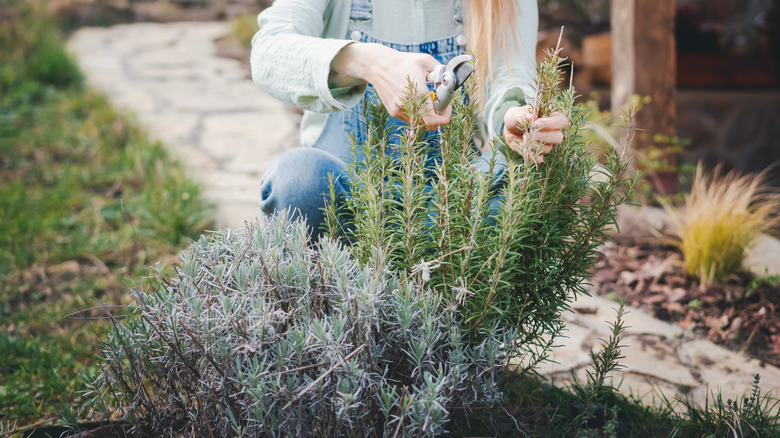
Sage and rosemary are most commonly grown in home gardens for culinary purposes. However, there are many species and cultivars of each, with some working best as strictly ornamental plants or attractive additions to pollinator gardens. The culinary varieties of both herbs produce flavorful essential oils that are concentrated in the leaves before the plants flower.
Common garden sage (Salvia officinalis) is prized for its earthy, slightly peppery flavor that is often used in roasted dishes. Pineapple sage (Salvia elegans), on the other hand, is more delicate, and is commonly used fresh in salads or dried for tea. Both species grow beautifully next to rosemary. Upright, shrubby rosemary species and cultivars are best for culinary use and for companion planting with sage — try columnar Rosemarinus 'Tuscan Blue,' cold-hardy Rosemarinus 'Arp,' or semi-upright Rosemarinus 'Roman Beauty.'
Learning when to harvest rosemary for the best flavor — and sage, for that matter — is vital. Cut stems right after the morning dew dries and avoid taking more than necessary, since over-pruning can kill the plant. Growing sage and rosemary together as companion plants creates ideal moisture and soil conditions, leading to bigger and more abundant — though possibly slightly less flavorful — foliage.