

10 Dwarf Plum Trees That Can Thrive When Grown In Pots
We may receive a commission on purchases made from links.
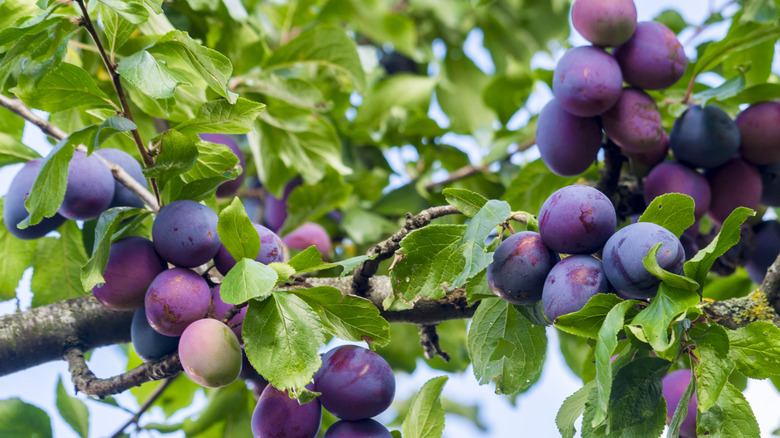
If you are a fan of growing tasty fruits, plums should definitely be on your list. Plums are not just tasty; they are also incredibly healthy. But there is a problem! A typical plum tree is up to 25 feet tall and has a very broad canopy. This can be a problem for homeowners with small yards who want to grow plums. Luckily, though, there are several dwarf cultivars of plum trees available. They are perfect for growing in containers because they don't grow that big, are easier to prune, and their root systems are also more manageable in pots. Some good examples include 'Hollywood' plum, 'Weeping Santa Rosa' plum, 'Stanley', and many more. However, choosing to grow a dwarf cultivar is only part of the equation. If you want your dwarf plum tree to thrive, you must also provide it with the right growing conditions and care.
For instance, you must make sure that your USDA Hardiness Zone is compatible with the dwarf plum tree you are planning to grow, unless you can bring it indoors for the winter. Similarly, you must choose the right pot. Ideally, you need a container that is at least 20 inches in size. Don't use a small pot, as it might end up making your dwarf plum tree root-bound, which can negatively affect its health. And lastly, you must pay close attention to your dwarf plum tree's sunlight, watering, and fertilizing needs. If you ignore these things, your dwarf plum tree might fail to properly grow, flourish, and thrive.
'Hollywood' plum
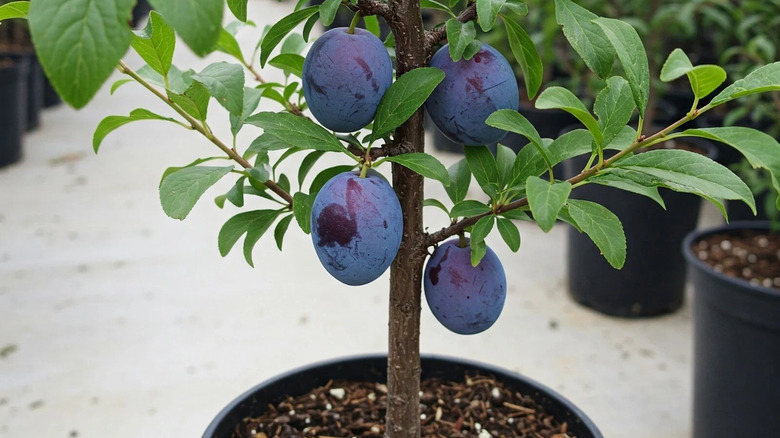
First on the list is the 'Hollywood' plum (Prunus salicina x 'Hollywood'). It was introduced in 1936 and is regarded as an exceptional ornamental fruit tree. The tree has beautiful purple leaves and a mesmerizing display of small white and pink flowers in spring. Also, thanks to its compact growth habit and a mature size of around 8 to 12 feet, you can easily grow it in pots and tight spaces. Just ensure you are in hardiness zones 5 to 9 before you decide to grow it outdoors.
'Weeping Santa Rosa' plum
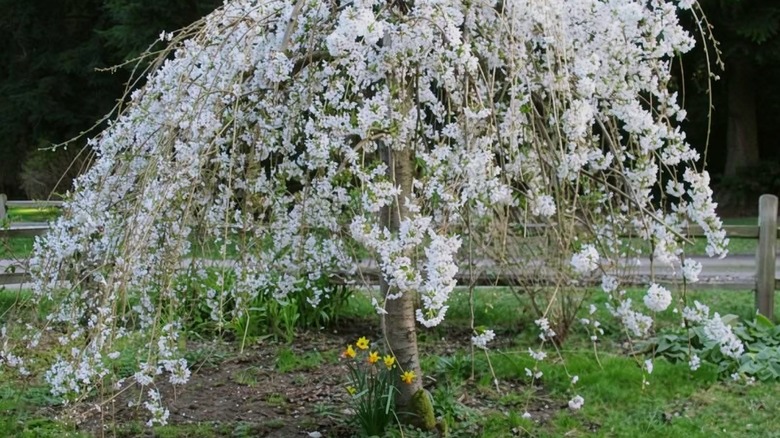
If you love both weeping trees and fruit trees, the 'Weeping Santa Rosa' plum (Prunus salicina x 'Weeping Santa Rosa') is worth a look. The tree has graceful, draping branches that, when fully grown, almost touch the ground. Plus, it can yield more than 30 pounds when properly cared for. It is self-fertile, so it doesn't need to grow near other plum trees to produce fruit. It grows only about 8 to 10 feet tall, thrives in zones 4 to 9, and can bear fruit in as little as two to three years after planting.
'Stanley' plum
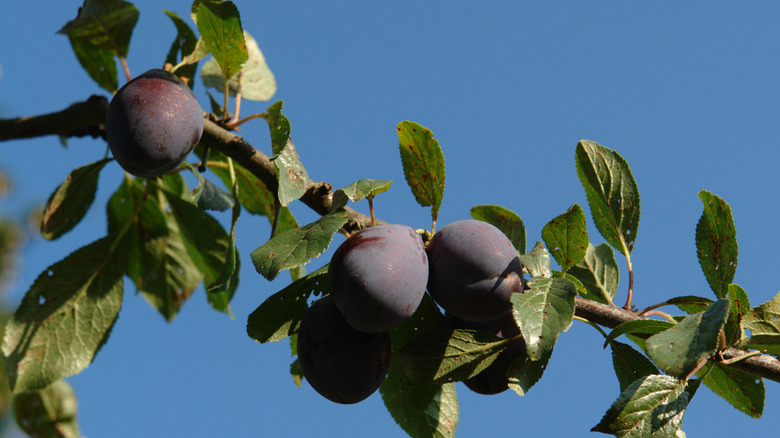
The 'Stanley' plum (Prunus domestica 'Stanley') was developed in 1920, and today it is among the most widely grown plum varieties in the eastern U.S. The fruits are known for their high sugar content and have a semifirm texture when eaten raw. But what makes them really special is their exceptionally good shelf life. As for the hardiness zones, the 'Stanley' plum can be planted in zones 4 to 8. It grows up to 12 feet at maturity and produces a yield of at least 50 pounds each year.
'Victoria' European Plum
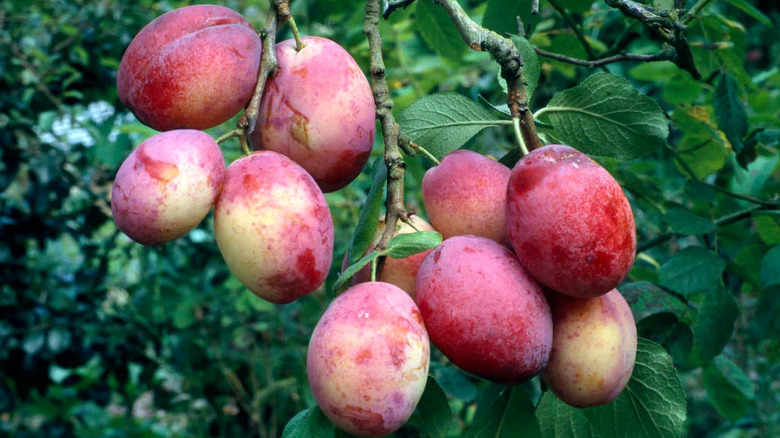
The 'Victoria' European plum (Prunus domestica 'Victoria') is the most planted plum variety in England. However, it can also be grown in USDA growing zones 5-9 in the US. The tree is a semidwarf and grows to a height of about 12 feet. Since 'Victoria' is self-fruitful, you can plant it on its own and still get fruit. However, for the best yields, it is recommended to plant it alongside another European plum variety. Its fruit has a very pretty plum color, and the 'Victoria' European plum itself is among the most productive of all European plum types.
Bubblegum 'Toka' plum
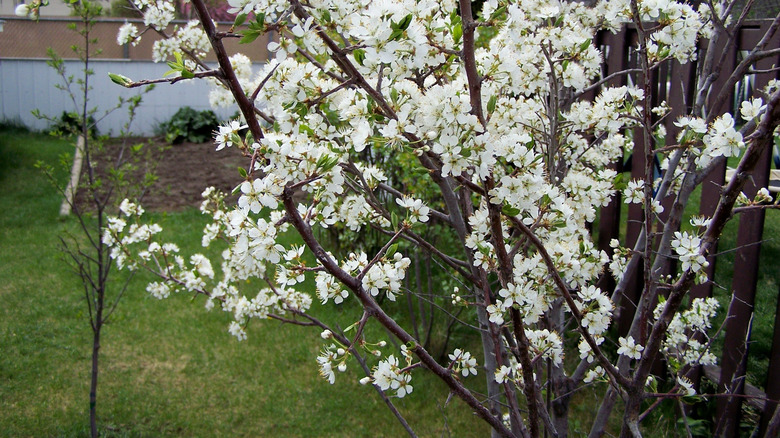
If you are looking for a cold-hardy fruit tree, consider the Bubblegum 'Toka' plum (Prunus salicina 'Toka'). It can survive temperatures as low as -50 degrees Fahrenheit and is hardy down to zone 3. Plus, it produces an abundant yield and ripens about 15 days before the 'Stanley' plum. Its flesh has a distinctive candy-like flavor, hence the name Bubblegum. Just keep in mind that you will need to grow it with other plum tree varieties for pollination, and its fruit can only be stored for one month.
'Nadia' cherry plum
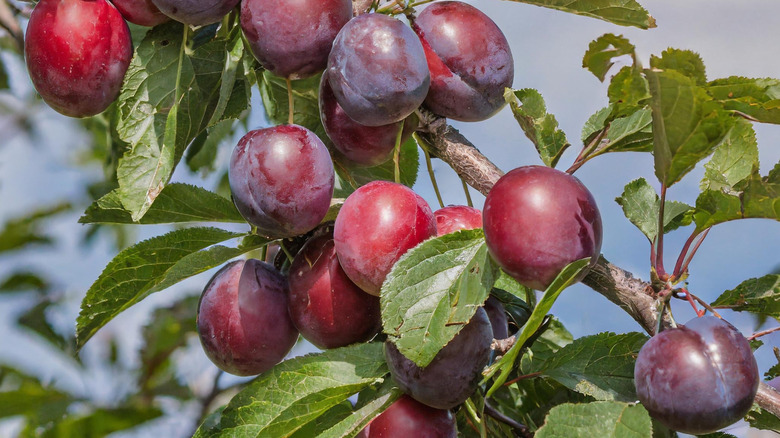
The 'Nadia' cherry plum (Prunus salicina x Prunus avium 'Nadia') is a great choice for people who are having a hard time deciding between growing a plum and a cherry tree. It is a cross between the two, and you can grow it easily in zones 5 to 7 as long as you plant it in a spot that gets full sun. The tree grows to about 12 feet tall, and its fruit ripens around midsummer. Also, keep in mind that the 'Nadia' cherry plum is not self-fertile and needs to be planted near other Asian plum trees.
'Italian prune' European plum
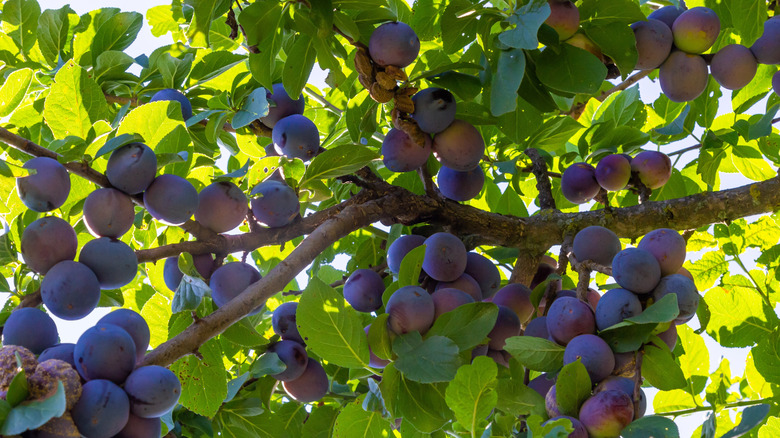
For people who are looking for plums that can be dried and stored, the 'Italian Prune' European plum (Prunus domestica 'Italian Prune') is a good choice, thanks to its firm and sweet flesh. Plus, it is self-fertile. As for the cold hardiness, the 'Italian Prune' plum thrives in zones 4 to 9 and can tolerate temperatures as low as -25 degrees Fahrenheit. In addition, the tree is resistant to bacterial spot and can live for a very long time when properly cared for.
'Shiro' Asian plum
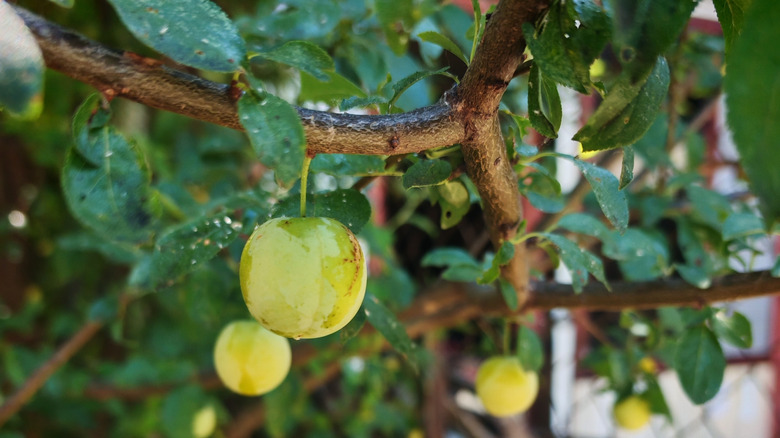
'Shiro' (Prunus salicina x 'Shiro') is another self-fertile and early-blooming plum tree cultivar, and it can be grown in zones 6 to 9. Dwarf trees grow only about 8 to 12 feet tall, which makes them another good choice for growing in pots. Plus, this tree produces a ton of yellow, incredibly juicy, sweet fruit. Another trait that makes the dwarf 'Shiro' plum appealing to many is its ability to tolerate urban pollution. All you have to do is put it in a spot that gets at least six hours of sunlight.
'Methley' Asian plum
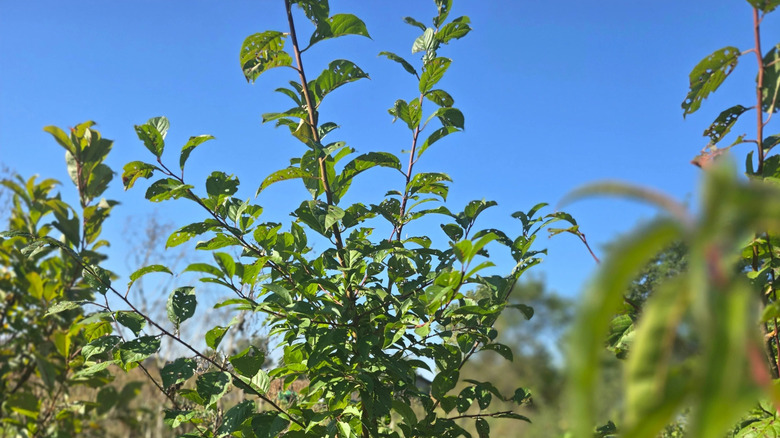
The 'Methley' Asian plum (Prunus salicina x 'Methley') is one of those fruit trees that even a beginner gardener can grow. Its dwarf cultivar grows to about 8 to 10 feet tall, and can be planted in hardiness zones 5 to 9. The 'Methley' Asian plum is also a good pick because it's a heavy producer, tolerates warm temperatures well, and requires only around 150 chill hours to produce fruit. You just need to make sure to stake it so it does not lean.
'Spice Zee' NectaPlum
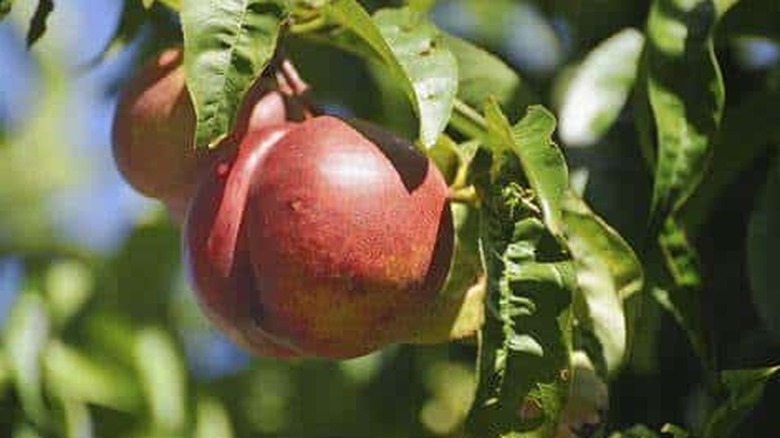
Last on the list is the 'Spice Zee' NectaPlum (Prunus persica var. nucipersica x 'Spice Zee'). It is a cross of plum, peach, and nectarine — basically a delicious three-in-one fruit package. You can grow it across zones 6 to 9, and it grows to about 10 to 14 feet tall. 'Spice Zee' is also highly ornamental, thanks to its beautiful spring blooms and leaves that turn red-green in summer. Also, it is self-fertile, so you can plant it alone in a pot in your garden.