

How To Grow Raspberries Indoors For Delicious Fruit That Lasts Well Beyond Summer
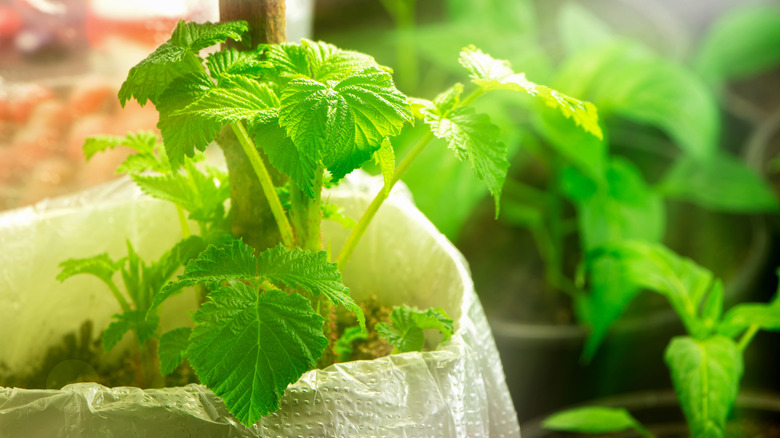
Indoor gardening has seen a big rise in the past few years. Today, people grow pretty much everything indoors, including raspberry plants, and honestly, it makes sense. After all, not everyone has a garden. And even if they do, growing raspberry plants indoors still has its perks. Take, for instance, the control you get over the growing conditions. Indoors, you can precisely manipulate the conditions to suit a raspberry plant's specific needs. The result? Your raspberry plants will grow healthier and yield more. Furthermore, growing in controlled conditions extends the harvest season.
Raspberry plants come in two types: summer-bearing and fall-bearing. The summer-bearing ones produce fruit in June and July, whereas the fall-bearing raspberries produce two crops — one from mid-August till frost, and another small one in the coming early summers. So, if you grow them together, you can extend the harvest season well beyond summer. All you have to do is make sure your raspberry plants get plenty of sun in a proper container, and that they are watered and fertilized on time.
There are other benefits of growing raspberries indoors. Outdoors, when grown in the ground, raspberry plants tend to spread via underground suckers. If not properly controlled, they can turn the whole garden into a mess. However, when you keep them in pots indoors, their wandering roots get stuck. They just don't have anywhere to run to anymore. The result? The plant stays neatly contained, making it much easier to manage and maintain.
Tips and tricks for growing raspberry plants indoors
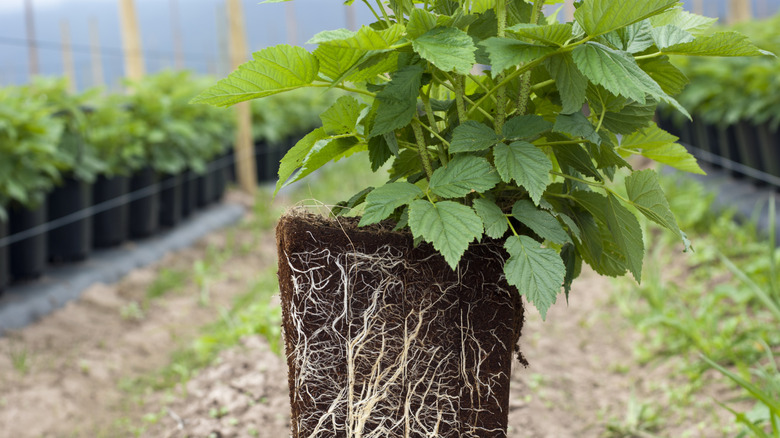
Start by picking a dwarf raspberry plant. A few good examples include 'Boyne' raspberry, 'Anne' raspberry, and 'Caroline' raspberry. Once you have the plant, it is time to choose the container. For raspberries, you need something that is at least 2 feet deep. Raspberries are deep-rooted plants, and they won't perform well in shallow containers. In addition, you also need to make sure that you grow your raspberry plants in the right medium. So, use a well-draining potting mix made for container plants. Or you can use old potting soil by revitalizing it with a "banana soup."
Once the container is ready, put the plants in. This should ideally be done in the spring. Once the plant is in, put it near a bright window. Raspberry plants are full-sun plants and need at least six to eight hours of sunlight. Add some grow lights for indoor plants if natural light is insufficient. In addition, water your indoor raspberry plants daily. You need to keep the container soil consistently moist but without making it soggy. As for fertilizing, feed your plants every month with a water-soluble fertilizer.
Also, harvest berries only when they are fully ripe. You will know when they are ready when they just come off the plant with a gentle tug. If it takes a hard pull, leave them on for a little bit more. And lastly, once you have harvested, don't forget to prep the plants for the next fruiting season. You can do this by pruning out the canes that fruited, as they are not going to bear fruit again. Plus, removing them will give the fresh growth access to more resources and plenty of space, leading ot better growth and richer yields.