

28 Fastest-Growing Flowers To Plant From Seed For A Flourishing Garden
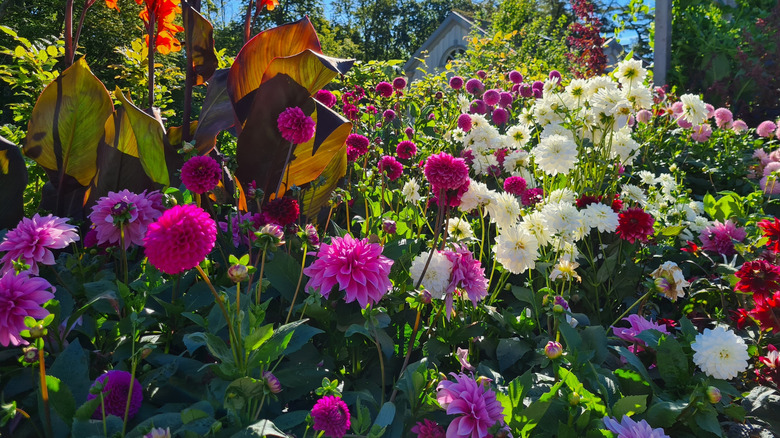
Transforming a bare patch of soil into one bursting with color and petals is exciting. Starting with seedlings may not be as appealing, especially if you're on a tight budget or covering a large expanse. In those cases, starting from seeds is friendlier to the pocket, and if the plants grow quickly, often more rewarding. Zinnias, cosmos, evening-scented stock, blue thimble flower, annual phlox, marigolds, and borage are some of the fastest-growing flowers for seed planting. You might also find success with annual sunflowers such as 'Gypsy Charmer' and 'Strawberry Blonde.'
Most of these plants complete their seed-to-flower cycle in about eight weeks or less, which aligns well with nature's pace. But keep in mind that results can vary due to climate, soil, and other environmental factors. That being said, providing seeds with optimal growing conditions, as detailed on their labels, generally helps them reach their maximum growth rates. Also, note that these are all annuals and will die after the first frost. However, planting self-seeding varieties such as sweet alyssum and blue woodruff, which drop seeds after flowering, can result in new blooms the following year with little extra effort. Curious to know more? Here are 28 flowering plants you can grow quickly from seed for a vibrant, flower-filled space.
'Gypsy Charmer' sunflower
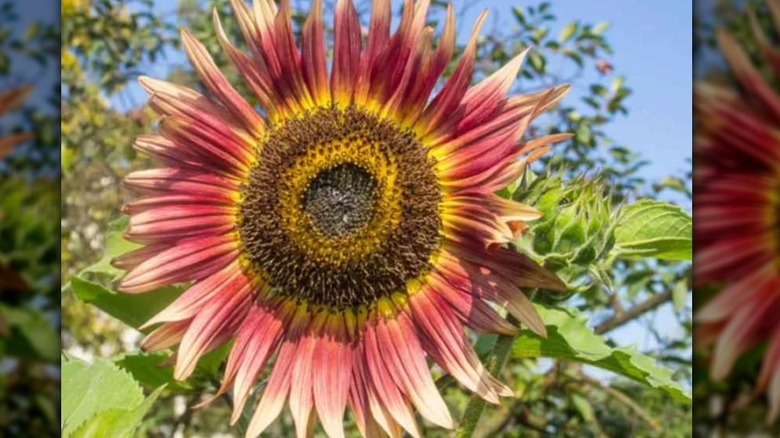
'Gypsy Charmer' sunflower (Helianthus annuus 'Gypsy Charmer') brings an exotic charm to gardens — and quickly at that — with its multi-toned flowers in shades of red, bronze, and lemony yellow. Although they lack pollen, the flowers still attract butterflies and bees with nectar, and later attract birds with their seeds. After the last spring frost, sow the seeds directly in the garden soil about ½ inch deep; they will germinate in a fortnight. Flowers may take between 45 and 50 days to fully develop and will continue blooming until frost. You may have to stake their stems to prevent flopping.
ProCut Red sunflower
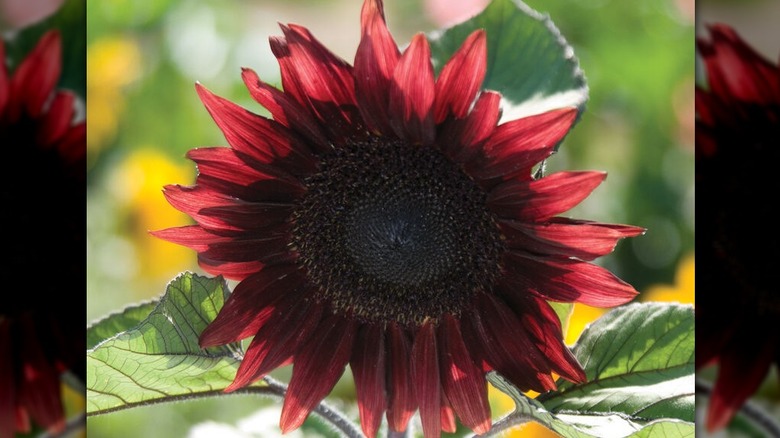
Quite the contrast to standard sunflowers, ProCut Red sunflower (Helianthus annuus 'ProCut Red') brightens summers with ruffled blooms that range from burgundy to cherry red. Since it produces a single stem, you can use it as a fast-growing, vertical accent in sunny gardens. Plant it in a sheltered site so the flower doesn't catch the wind and flop. Seeds sown ½ inch deep should germinate within seven to 14 days and produce flowers in about 50 to 60 days. Retain the flower heads during fall for finches. Avoid growing them in highly fertile soil, as overly rich conditions can cause misshapen blooms.
'Empress of India' nasturtium
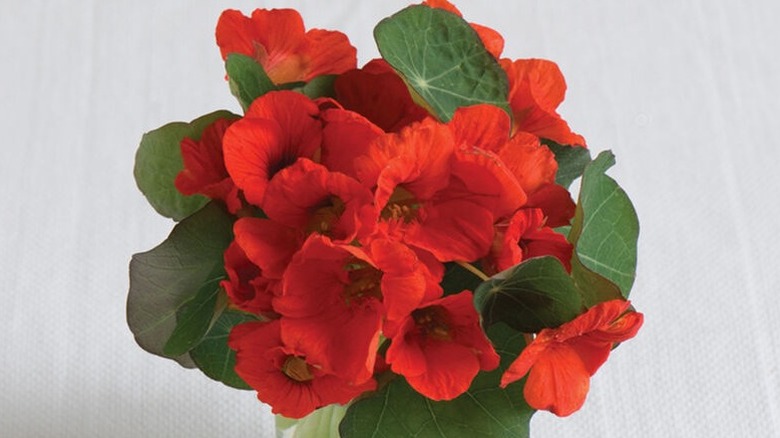
An heirloom variety popular in the Victorian era, 'Empress of India' nasturtium (Tropaeolum minus 'Empress of India') is a fast-growing plant known for its scarlet red blooms. When directly seeded in the garden about 1 inch deep, they produce seedlings within about 12 days and mature in 55 to 65 days. They form a compact, 20-inch-high bushy mound that you can tuck in front of spring bulbs to mask their dying foliage, or pop in containers. They produce some of the best edible flowers for charcuterie boards and garnishes.
Big Smile sunflower
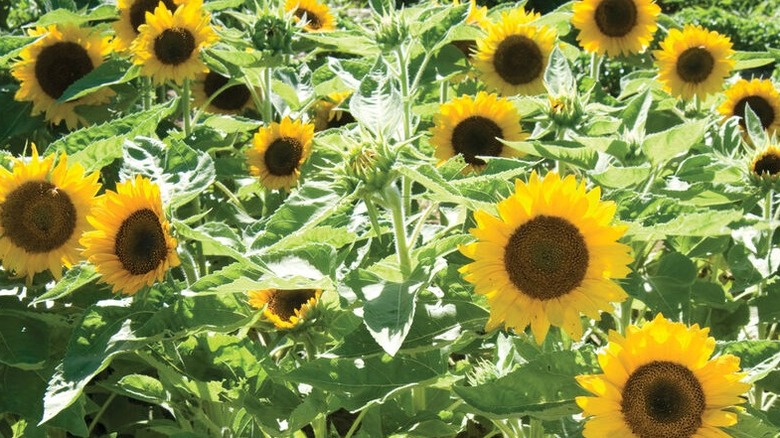
Looking for a way to get your kids into gardening? Consider Big Smile sunflower (Helianthus annuus 'Big Smile'). Tiny hands can easily sow the seeds, though they'll need to wait about two months for the traditional yellow blooms. At 24 inches tall, Big Smile has a smaller stature, which means you can conveniently tuck it in small spaces or even pop it in containers. A single plant can produce up to five flowering stems, so plant accordingly. Also, it produces pollen, so avoid using it in indoor arrangements if you're allergic.
'Salmon Baby' nasturtium
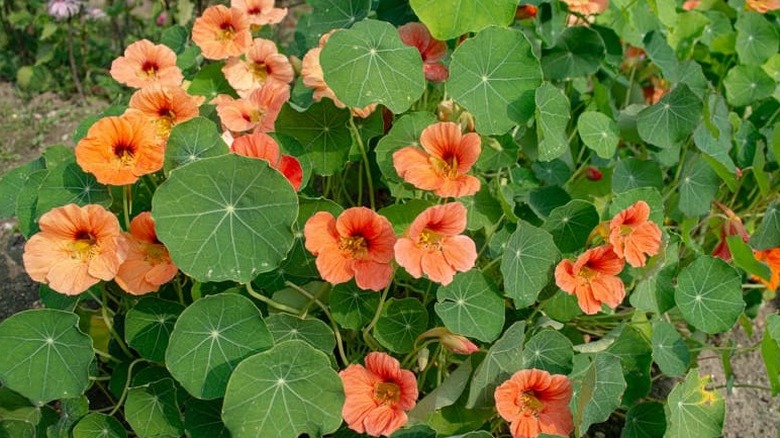
'Salmon Baby' nasturtium (Tropaeolum majus 'Salmon Baby') is a pollinator-friendly, petite plant you can grow for mid-summer blooms. Start sowing the seeds two weeks ahead of the last spring frost into the garden soil for the earliest blooms, or successively through early summer. You'll see blooms until the plant is killed by frost. The seed-to-flower cycle completes in about 55 to 65 days, depending on growing conditions. Give it full sun and well-draining soil. 'Salmon Baby' tops out at about 12 inches and works best fronting flower beds or in contrasting containers.
Zinnias
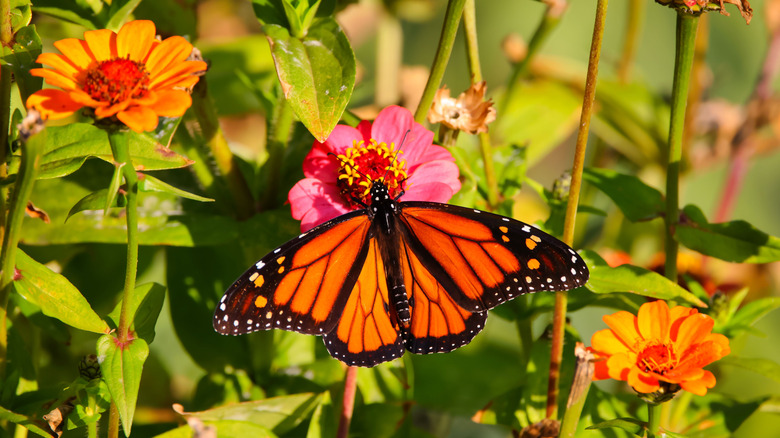
Zinnias (Zinnia elegans) typically produce seedlings in as few as four days and flowers within about 60 days, although this timeline can differ depending on the variety. Dwarf varieties bloom even faster, and you can further shorten the seed-to-flower cycle by sowing seeds in compost-amended soil. Zinnias can't handle frost and don't take well to transplantation. Wait until after you've seen the last of spring frosts and directly sow their seeds about ¼ inch deep into the soil for a gorgeous display all summer long. In the fall, harvest the seeds from your garden and replant next year for endless blooms.
'Phoenix' nasturtium
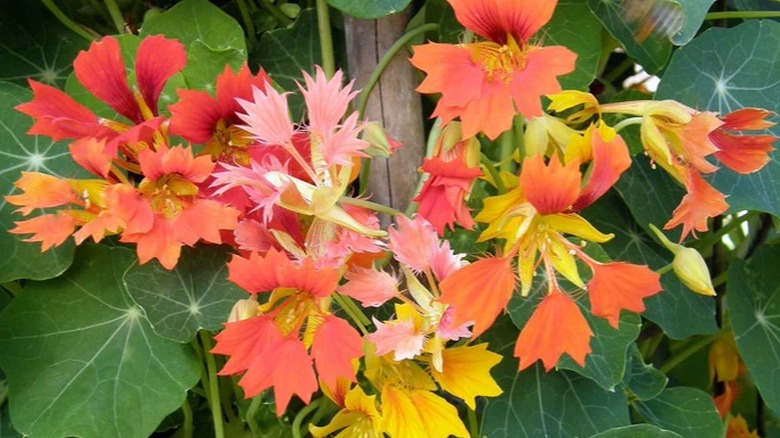
'Phoenix' nasturtium (Tropaeolum majus 'Phoenix') adds a unique spin through its split-petaled flowers that stand out as burning flames. Once planted, it produces continuous flowers through frost that you can leave on for pollinators, harvest for garnishes, or use as trap crops in vegetable gardens. After nicking the seed coats and soaking them overnight, sow them 1 inch deep in full or part-sun. Seedlings usually emerge in 10 days, while the foliage is topped in blooms in another 55 days. Avoid growing them in rich soil, as high nitrogen levels may encourage leafy growth at the expense of flowers.
'Strawberry Blonde' sunflower
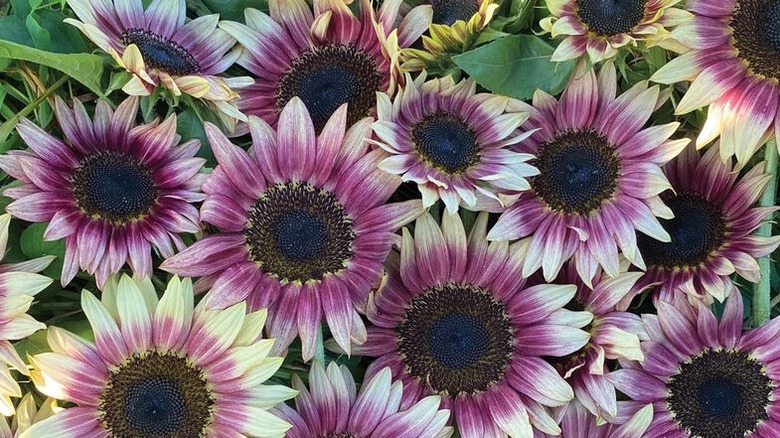
'Strawberry Blonde' sunflower (Helianthus annuus 'Strawberry Blonde') makes a beautiful accent with brown centers encircled in burgundy petals that fade into lemony yellow tips. You can sow the seeds directly into the soil when it's about 70 degrees Fahrenheit outside, and thin out the seedlings after two weeks to make space for their final size. Alternatively, you can get a head start by sowing seeds indoors two weeks ahead of the final frost. Planted optimally, they will flower in about 65 days. Another advantage is that their petals are edible and work well as garnishes.
'Bloody Mary' nasturtium
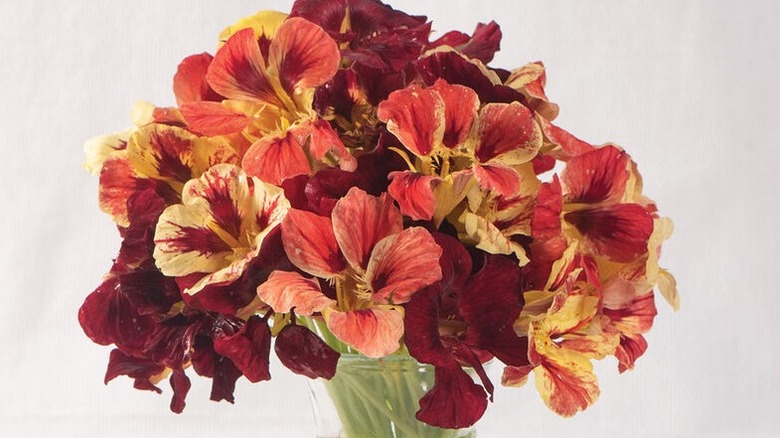
A Fleuroselect Novelty winner, 'Bloody Mary' nasturtium (Tropaeolum minus 'Bloody Mary') features a host of bi-colored flowers in red and cream undertones against bluish-green foliage. They're available both as vines and with bushy forms. Sow them outdoors when temperatures warm to 65 degrees Fahrenheit. Seeds require darkness for germination, so place them in a 1-inch-deep hole and cover with soil. Space the seeds about 8 to 12 inches apart. Flowers should appear in about 65 days. Nasturtiums can self-seed, so choose their location wisely or deadhead faded flowers to control spread.
'Sunrich Gold' sunflower
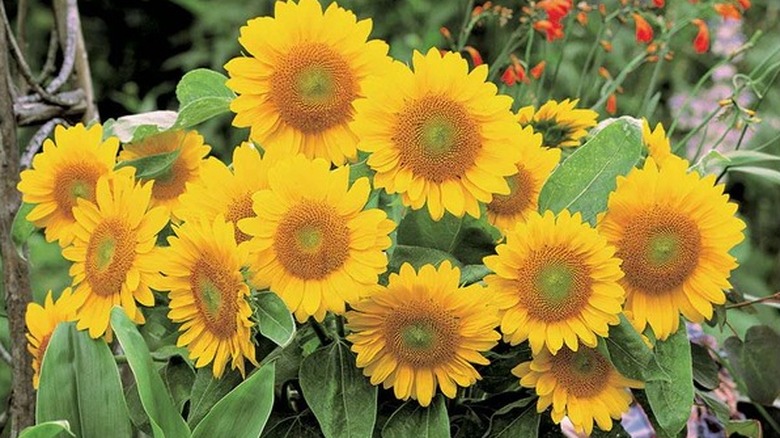
'Sunrich Gold' sunflowers (Helianthus annuus 'Sunrich Gold') aren't as fast as the ProCut sunflower varieties, but fully mature in about 60 to 70 days. For this reason, they're usually planted successively to extend the sunflower season. Their flowers — yellow petals with green discs — are nearly identical to one another, striking up a gorgeous display when massed. Because they don't transplant well, it's best to sow them directly in the garden after the last spring frost. Avoid pinching their tips, as this can prevent flowering. They don't produce pollen and last a long time in floral arrangements.
Cosmos
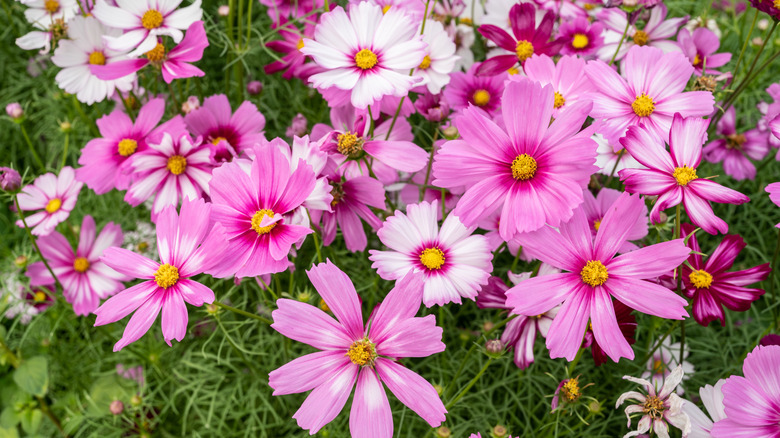
Available in a spectrum of colors, including pink, violet, and red, cosmos (Cosmos spp.) are a dependable choice in cottage gardens. Seeds can germinate within one or two weeks, while flowers take about eight to 12 weeks to fully develop. By continually removing spent blooms throughout the growing season, you can enjoy continuous flowers for nearly three months. One advantage is that they readily reseed. Cosmos prefer poor soil and require at least eight hours of direct sun. After the last frost passes, scatter the seeds, lightly cover them with soil, and water to keep the soil consistently moist.
Canary creeper
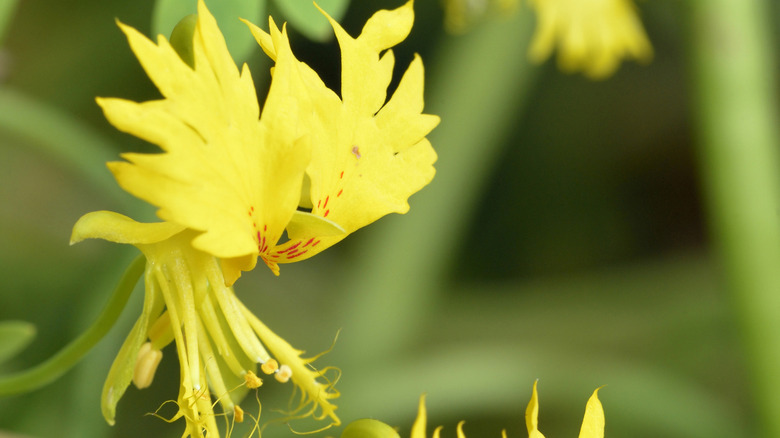
In early summer, canary creeper (Tropaeolum peregrinum) produces bright yellow, frilled flowers that look like canaries in flight — hence the name. Train these flowering vines over a fence or let them amble on the ground. They're especially well-suited to dry, sunny, and sandy areas because they tolerate drought. Either sow the seeds directly into the soil when temperatures rise to about 65 degrees Fahrenheit or start them indoors four to six weeks ahead of the last frost. Flowers usually take at least 55 days to make their first appearance.
Evening-scented stock
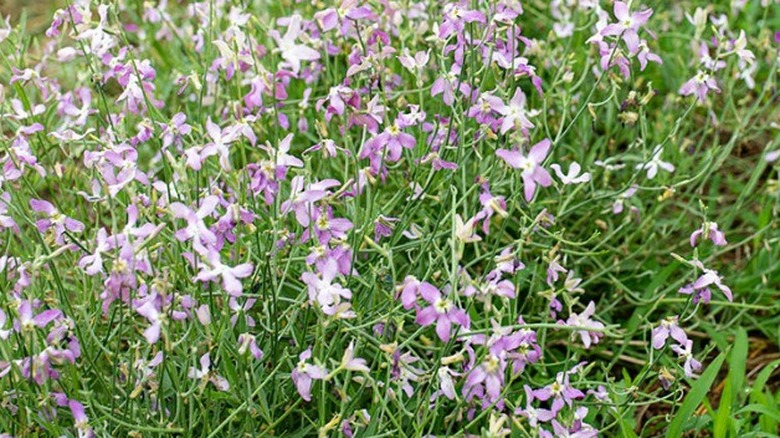
Evening-scented stock (Matthiola longipetala subsp. bicornis) comes into its own after dusk, when its dainty, white-lilac petals finally unfurl and release a sweet fragrance. Because it has a boring daytime appearance — for which it was once monikered a melancholy gillyflower — gardeners usually pair it with sweet alyssum, another fast-growing flower. Evening-scented stock is best sown directly into the soil, rather than started indoors. Surface sow the seeds about a month before the expected last frost. Seeded plants take about eight weeks to flower. Successively plant them every three weeks for an extended display.
Sweet alyssum
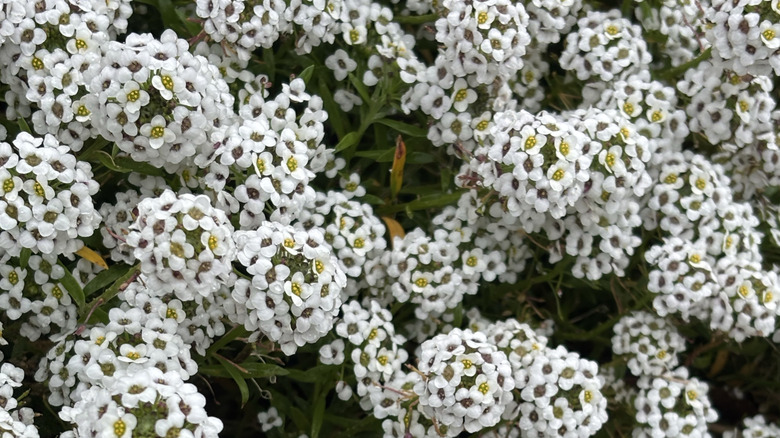
If you're into fragrant flowers, you might like sweet alyssum (Lobularia maritima). Four-petaled, white blooms emanate a sweet, honey-like aroma, which pollinators and beneficial insects alike are drawn to. Since the seeds require light to germinate, lightly sprinkle them in a sunny, well-draining site after the last frost. You'll find pretty white or pink flowers smothering their foliage in about six to eight weeks. Although sweet alyssum self-seeds in the garden, ensuring a reliable comeback year after year, in cold climates it's best to start afresh with new transplants or get a head start with indoor sowing.
'Jelly Beans' California poppy
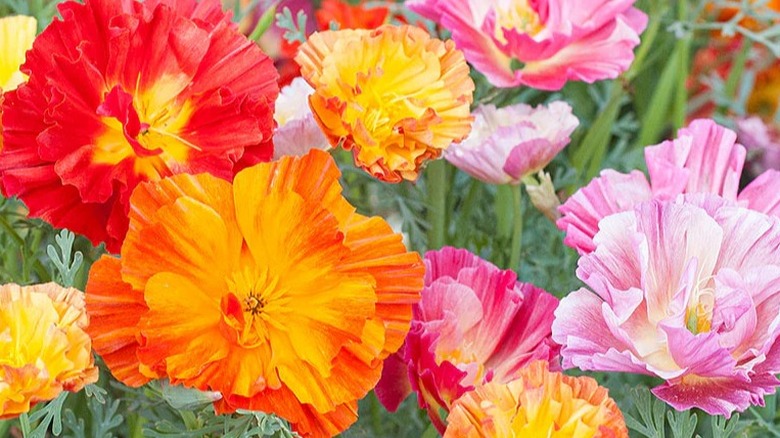
Need to plant a dry creek bed or gravelly area swiftly? Just scatter the seeds of 'Jelly Beans' California poppy (Eschscholzia californica 'Jelly Beans') in that spot after the spring frost (or late winter in USDA Hardiness Zones 8 and warmer) and water well. You'll be blessed with lovely waves of silken, cupped petals in summery shades of coral, yellow, and salmon about eight to 10 weeks afterwards, and this display will last you through frost. 'Jelly Beans' can tolerate dry spells, though watering them does improve flowering. Make sure to remove spent blooms to encourage new flower flushes.
'Million Suns' creeping zinnia
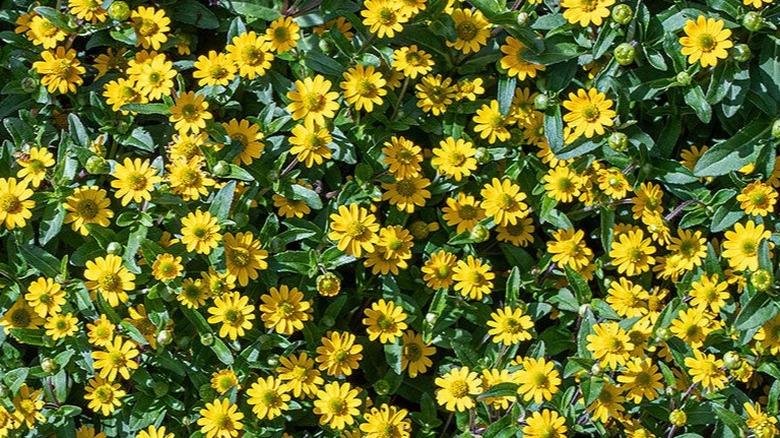
Consider carpeting your ground with 'Million Suns' creeping zinnia (Sanvitalia speciosa 'Million Suns'), whose dainty yellow, pinwheel flowers shine vividly in the summer just like the sun. They're easy to grow, with seed-started plants ready to flower in under 10 weeks. You can scatter the seeds directly on compost-amended soil after the last frost. Alternatively, you can raise transplants by starting seeds on heat mats set to 75 degrees Fahrenheit around six weeks ahead of the frost. 'Million Suns' prefer full sun exposure and slightly acidic, moist soils.
Blue woodruff
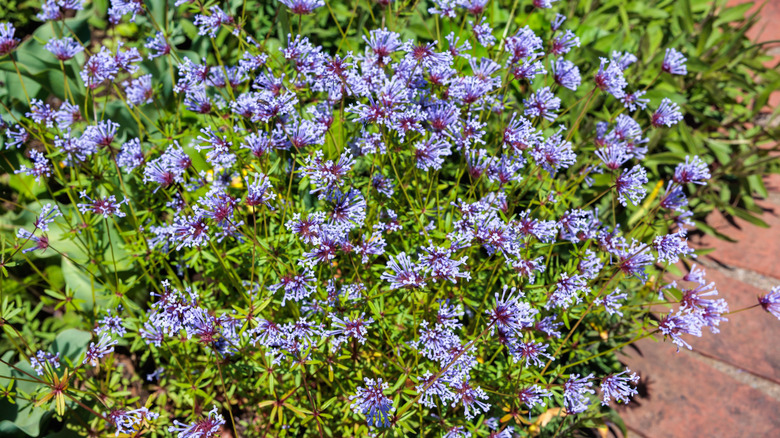
In areas that receive filtered shade, such as beneath tree canopies, consider planting shade-loving blue woodruff (Asperula orientalis). In about 10 weeks, sprays of lilac petals can cloak the ground, drawing bees, butterflies, and hummingbirds. Plant the seeds when the soil is still cool, as they can tolerate light spring frosts. To encourage a second flush in the fall, cut back the foliage midsummer. Blue woodruff can self-sow, so plant it where you wouldn't mind having new plants.
'Incredible! Swirl' coreopsis
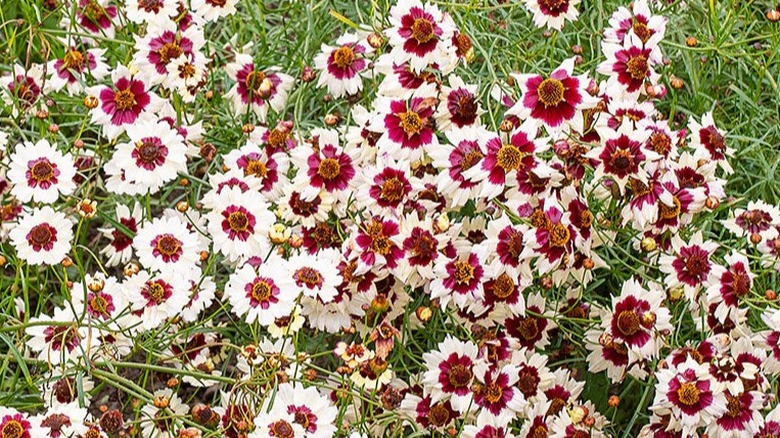
If you keep a meadow, cottage, or rock garden, or want to naturalize a space, plant 'Incredible! Swirl' coreopsis (Coreopsis 'Incredible! Swirl'). With wiry stems topped in red-centered white blooms, it'll add an airy feel to your garden. The best part, of course, is the fast growth. Seeds lightly pressed into the soil sprout in as little as five days, with sprays of blooms appearing in about six to eight weeks. If desired, you can lengthen their show by sowing seeds through mid-spring (fall for mild climes). Being nativars, they're popular with pollinators too.
Mignonette 'Machet'
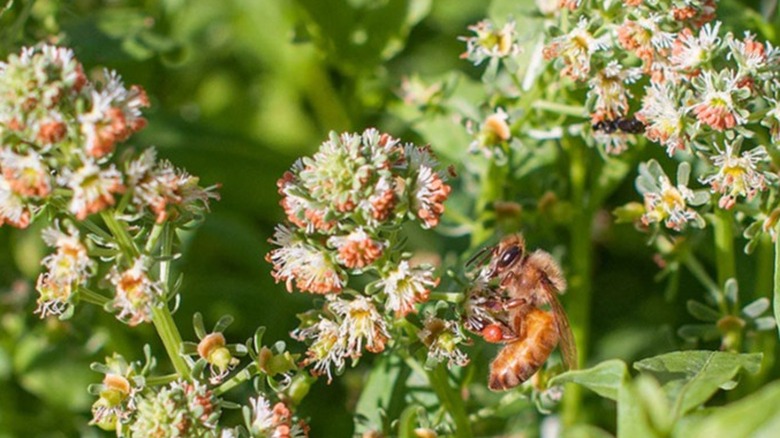
At first glance, Mignonette 'Machet' (Reseda odorata 'Machet') might not appeal to many gardeners because of its straggly, weedy appearance. However, it brings an old-world charm and lots of honeybees, thanks to spikes of white and salmon-colored flowers that infuse the air with a pleasant aroma carrying notes of violet and raspberry. In cold climates, you can pepper its seeds on neutral or alkaline soils enriched with compost starting in early spring. They should flower in about eight to 12 weeks. For a fuller look, pinch their stem tips when the seedlings are about 6 inches tall.
'Covent Garden' baby's breath
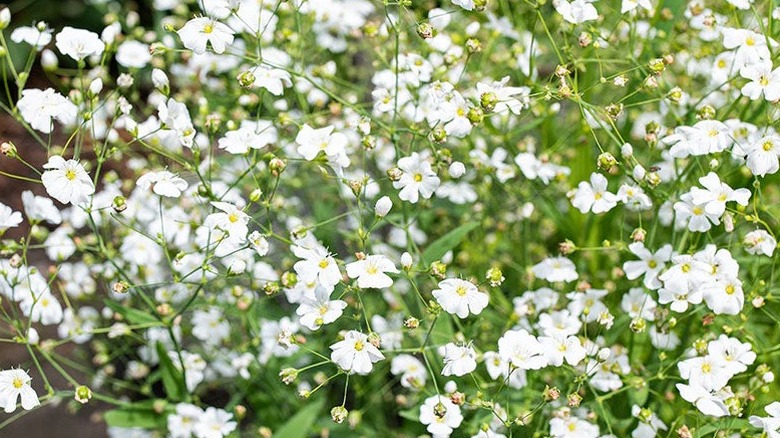
Love to create your own floral arrangements? Consider planting 'Covent Garden' baby's breath (Gypsophila elegans 'Covent Garden'). Although it doesn't have the traditional double-flowered form, it's still a charmer with its posies of yellow-disced, white florets. While you may start it indoors, directly sowing the seeds in a well-draining, alkaline soil in a sunny site after the last spring frost is generally recommended. To enjoy the blooms throughout the growing season, continue planting new seeds every three weeks. They may take more than eight weeks to bloom.
'Fairy Bouquet' linaria
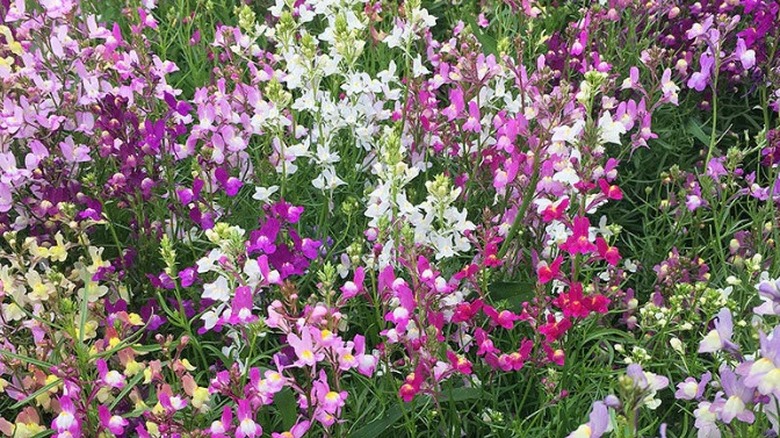
To encapsulate 'Fairy Bouquet' linarias (Linaria maroccana 'Fairy Bouquet'), think snapdragons, but smaller, that bloom in a multitude of colors, including violet and pink. This heirloom variety can flower in as little as 50 days when directly seeded in the garden. In northern areas, sow the seeds on the surface before the last frost, with another round in mid-summer. Gardeners in the South can sow it in the fall for a winter-spring display, as it prefers cool nights. Mass plant it in a pollinator garden to feed the bees. It requires consistently moist, rich soil.
Blue thimble flower
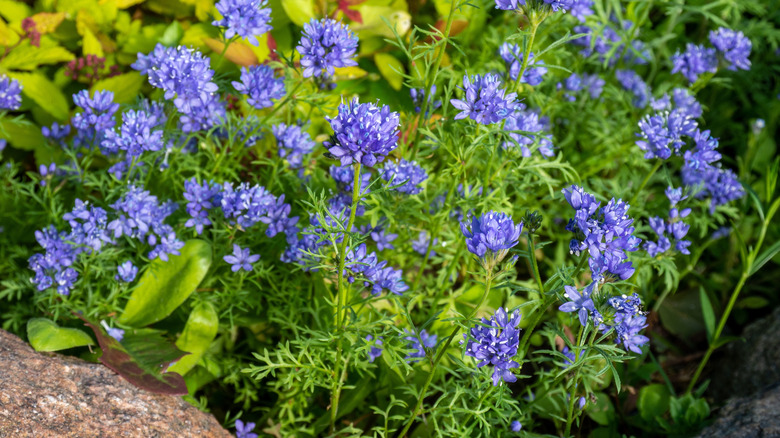
Also called blue field gilia, blue thimble flower (Gilia capitata) is a fast-growing annual native to the Western United States. From late spring to mid-summer, it features sprigs of pincushion-shaped blue flowers against fern-like foliage. As the blooms are rich in nectar, they get plenty of attention from native bees and butterflies. To propagate them, lightly press the seeds into the ground and keep the soil moist until establishment. Spring planting is ideal in cooler areas, while fall planting is better in the South. Blue thimble is drought-tolerant and will benefit from staking if planted in rich soils.
Annual phlox
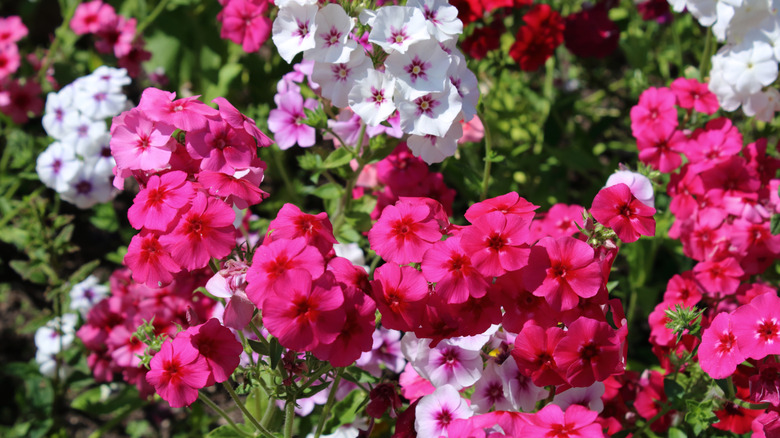
Annual phlox (Phlox drummondii) is one of the fastest-growing flowers to plant in spring to attract colorful hummingbirds and butterflies. Pollinators are drawn to drifts of pink and purple petals as they unfurl from April to June. If conditions are right and the growing season is long enough, you can experience a second flush in the fall. Annual phlox doesn't handle transplantation shock well. For this reason, it's best to sow the seeds directly in the ground when the soil is workable, typically from late February into March. Remember to cover them with soil, as the seeds germinate in the dark.
Marigold
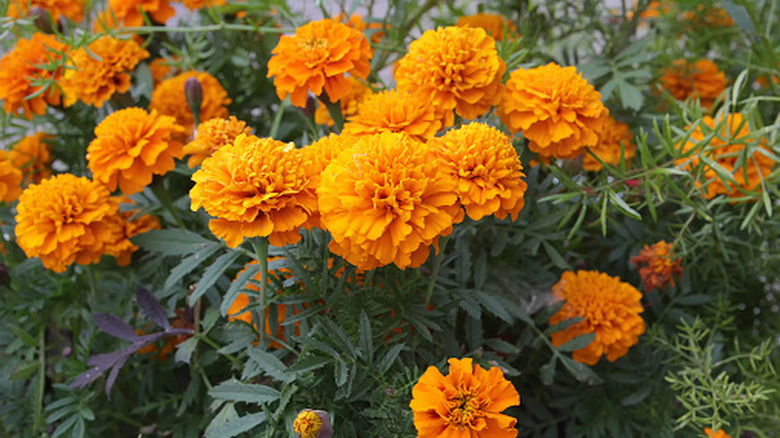
Marigolds (Tagetes spp.) are rewarding plants that brighten summer and fall beds with their pollinator-friendly brass and gold blooms. Better still, they grow easily from seeds. Just pop them in an organically rich, well-draining soil in early spring, and they will set flowers in about eight weeks. However, if you're growing tall African marigolds, consider starting early by sowing the seeds indoors at least four weeks ahead of the last frost. That's because they take longer to grow and produce blooms.
Flax
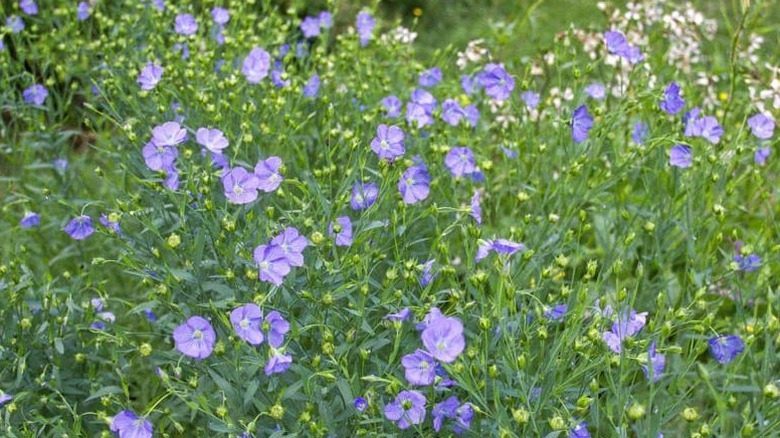
You may recognize flax (Linum usitatissimum) for its healthy seeds or linseed oil. But it's also a beautiful wildflower that rewards you with blue blooms and beneficial insects. Although seeds can take up to 25 days to germinate, plants usually flower within 60 days, making them fast growers. To plant them, simply scatter the seeds in warm, raked soil after the last frost and after they've developed true leaves, thin them out about 6 inches to avoid overcrowding. Cut back the foliage in midsummer to encourage reblooming, or sow seeds every three weeks for continuous flowers.
Borage
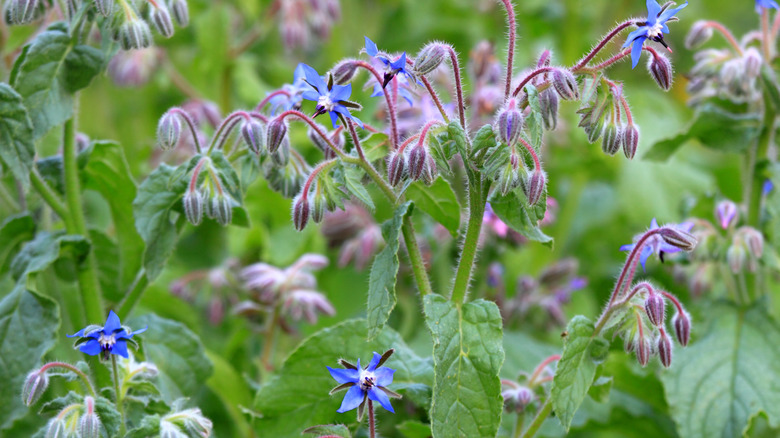
Borage (Borago officinalis) is a stunning addition to most gardens, especially if you grow vegetables or fruits, as it attracts lots of bees and beneficial insects. It grows vigorously and readily self-sows if allowed to go to seed. As it produces a taproot, avoid starting it indoors and instead sow the seeds directly. In a sunny or lightly shaded site, place the seeds about ½ inch deep and coat them lightly with soil. They should start producing blooms in eight weeks. Borage doesn't tolerate extreme heat, so it's sown in the fall for winter-spring flowers in the South and in early spring in colder climates.
Calendula
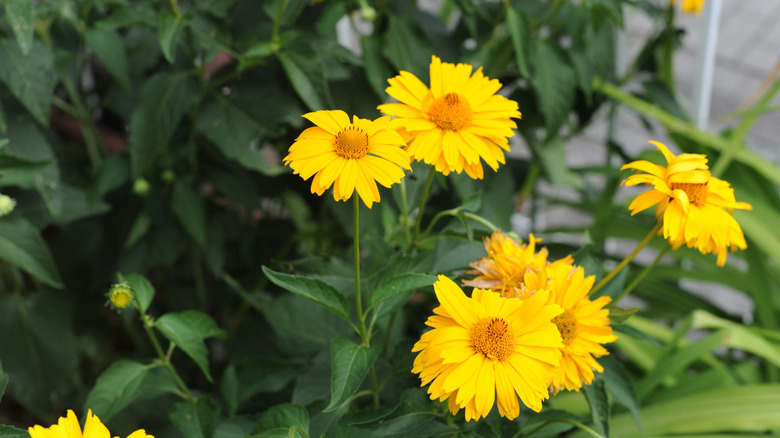
Calendula or pot marigold (Calendula officinalis) is another fast-growing herb you can plant for a steady display of colorful blooms until frost. Seeds can germinate in as little as five days, with the yellow flowers making an appearance six weeks later. As the seeds require darkness to germinate, be certain to sow them at least ¼ inch deep. Alternatively, raise them as seedlings indoors at least six weeks before the last frost and transplant them outside when temperatures reach about 60 degrees Fahrenheit. Pinch the stem tips for a fuller look and remove the spent blooms to prolong the flower bonanza.
Love-in-a-Mist
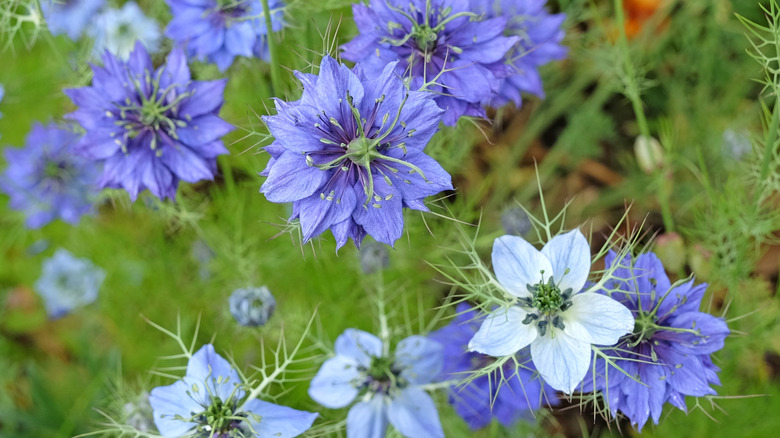
Named for the fennel-like leaves that fan around the blue flowers like a mist, Love-in-a-Mist (Nigella damascena) is another fast-growing flower that reaches maturity in about 65 days. Since it develops a long taproot, making transplantation complicated, consider directly sowing the seeds in the garden, rather than starting them indoors. Scatter the seeds when soil temperatures reach about 65 degrees Fahrenheit and cover them lightly with soil. Seedlings should come up within one to three weeks. To make up for the short blooming season, continue sowing new seeds every three weeks.