

How To Propagate Pencil Cactus For A Yard Full Of Thriving, Unique Cacti
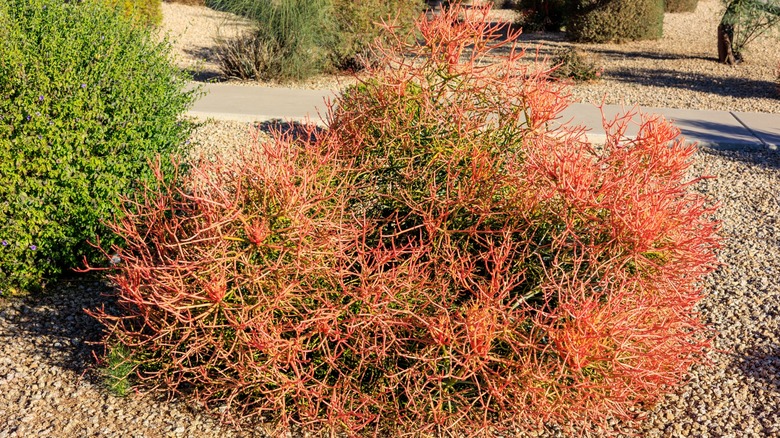
Transforming a single pencil cactus (Euphorbia tirucalli) into a yard full of eye-catching greenery is a rewarding weekend project. These fast-growing succulent plants are fun thanks to their pencil-thick branches and striking, skeletal shape. But before you grab your garden shears and start snipping cuttings, you'll need to grab some safety gear to handle this plant's unique defense mechanism.
The pencil cactus contains a milky white sap that's actually toxic; this sap can cause skin irritation and is dangerous if it's ingested or touches your eyes. To stay safe, always wear thick gardening gloves, long sleeves, and protective eyewear. And, of course, keep pets and children away from this area while you work since the sap is equally harmful to them if ingested or touched, too.
Once you're all suited up, look for a healthy green branch on your donor plant. Use sharp pruning shears, or a sterilized knife to take a cutting that's roughly six inches long. A clean cut is vital because jagged edges can lead to infection or even rot. Rinse any sap off your cuttings' ends, and place your new cuttings on a dry paper towel in a shaded, well-ventilated spot. You can pat dry the main plant's wound, too, to help stop any sap that's leaking out.
Now comes the most important step for a thriving cactus: patience. Let them sit for at least two to three days until the cut end forms a hard, dry callus. This protective layer acts as a barrier against bacteria or fungal infections, and planting fresh wet cuttings directly into the soil can lead to root rot.
Helping pencil cactus cuttings to thrive in your backyard
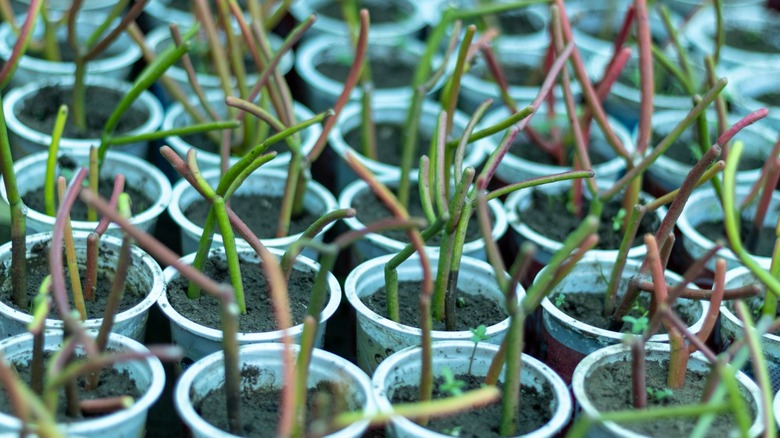
Once the ends are calloused over, they're finally ready to begin their journey toward becoming a beautiful part of your backyard garden. First, choose a small pot with excellent drainage holes and fill it with a dedicated cactus or succulent potting mix. These plants hate sitting in consistently wet soil, so skip using regular old garden soil since it holds more moisture. Then, insert the calloused end approximately an inch into the soil and firmly push it down. Place the pot in a spot with indirect but bright sun rather than harsh, direct afternoon sun.
As the cutting is establishing its own roots, you'll only need to occasionally mist the soil, nothing more; give it a little water every two to three weeks. You'll know your propagation is a success when you see tiny new green nubs popping up at the tips.
Once your new pencil cacti have established strong root systems, you can move them out to your yard to create that magazine-worthy visual impact. It thrives in USDA hardiness zones 11 to 12. In places with warm climates, these plants can grow quite large, reaching heights of 30 feet. For cooler areas, keep them in large decorative pots that you can move indoors during the winter. They'll look great in your garden with other succulents, like a prickly pear or aloe. Euphorbia tirucalli is super drought-tolerant, making it a terrific choice for a low-maintenance, water-wise landscape. Caring for a pencil cactus is easy, and once your first batch of propagated plants matures, you can easily create new cuttings and expand the dreamy succulent areas within your backyard.