

Can You Support The Beneficial Earthworms In Your Garden With Teabags? Here's What To Know
We may receive a commission on purchases made from links.
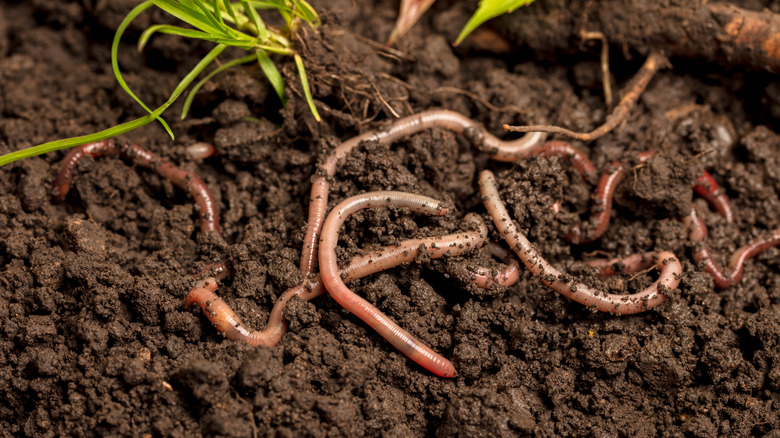
A lot of good can come from planting a pollinator garden to support local birds and insects and encourage the development of a complete local ecosystem. But when you're growing a garden, it's just as important to focus on soil health. One indicator of good soil health is the presence of earthworms. As earthworms move through the ground, they cycle nutrients, facilitate drainage, and improve soil structure by cementing dirt and rebuilding topsoil. Taken together, these functions can make a garden more productive. If you want to boost earthworm numbers, you can add moisture and organic matter (that is, worm food) to make the soil more habitable. Tea bags fall under the latter category, but they may also pose potential health risks, particularly if the bags are made of plastic.
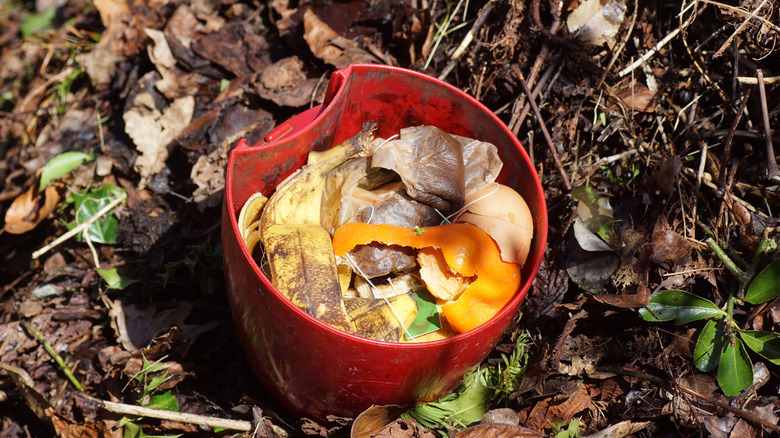
The types of food scraps you can use as earthworm-supporting organic matter are similar to what you might use to start a compost bin as a beginner gardener: fruit and vegetable peels, ground eggshells, plain cereals and breads, coffee grounds, and, importantly for this article, tea bags. However, you need to remove any non-organic materials from the food, like the staples, strings and ties often attached to tea bags. Plus, not all tea bags are created equal as far as earthworm food is concerned. Acidic foods — think citrus fruit — may be toxic to worms, so avoid dumping spent tea made with lemon or orange zest in the garden. In fact, earthworms tend to avoid strongly acidic soil (below about pH 4.5). If a Soil pH Paper Test Kit reveals heavily acidic soil, consider incorporating liming materials like calcium carbonate or dolomitic lime into the soil to adjust the pH.
Using the wrong kind of tea bags can hurt earthworms
Just before using tea bags in your compost or burying them in garden soil for the earthworms, check what the bag is made of. Paper-based tea bags are typically compostable, but those made of plastic mesh are usually not biodegradable. In fact, a 2024 study in Science of the Total Environment found that red wiggler worms (Eisenia fetida) produced fewer egg cocoons when exposed to bags made entirely from polylactic acid (PLA), a supposedly biodegradable plastic polymer. Likewise, a 2022 Frontiers of Bioengineering and Biotechnology paper found that PLA tea bags did not degrade at all when left in open ground for a year. Plant-based tea bags fared far better.
Of course, gardeners will likely find a few different earthworm species in their plant beds and wider backyards. Good versus bad worms can help or harm your garden, depending on which are more abundant in the soil. If you find yourself with an invasive species, like introduced jumping worms (Amynthas agrestis), you may want to use soil deterrents. Tea seed meal shows promise as a treatment for these pests. The seeds contain some of the same compounds as the leaves in your tea bags, only more concentrated. If your garden is devoid of earthworms, you could transplant worm-filled cut pasture sod into your garden and give them a health boost with a range of organic matter, including plant-based, citrus-free tea bags.