

10 Clear Signs You Have Groundhogs Living In Your Yard

For one day a year, we wait with bated breath for Punxsutawney Phil's annual prediction of an early spring. But for the other 364 days of the year, groundhogs are considered pests, especially when they've decided your lawn is going to be their new home. While there's no denying that groundhogs are super cute, they aren't always painted in the most positive light. That's because they can be destructive little rodents, ruining your landscaping with holes, piles of dirt, soft spots, tracks, and droppings. They nibble plants, attract predators, and dig up garden beds.
Most groundhogs are about the size of a cat and look like they could've been the inspiration for the Rodents of Unusual Size (R.O.U.S.) in the "Princess Bride." But unlike those weird-looking creatures that attacked Wesley and Buttercup, groundhogs only weigh around 11 pounds. Despite their small size, these chubby, short-legged mammals are excellent diggers, which isn't always conducive to homeowners who want attractive and healthy yards.
What's making your yard so enticing to groundhogs? If your outdoor space has a fence, hedges, outdoor structures, or trees, these features provide shelter that make your backyard more attractive than more exposed areas. While they can definitely have moments of being total nuisances, groundhogs aren't all that bad. In fact, they help tame any weeds in your yard. There's actually no difference between groundhogs and woodchucks (they're different names for the same species), so the telltale signs that a critter is taking up residence in your yard are the same.
Holes in your lawn
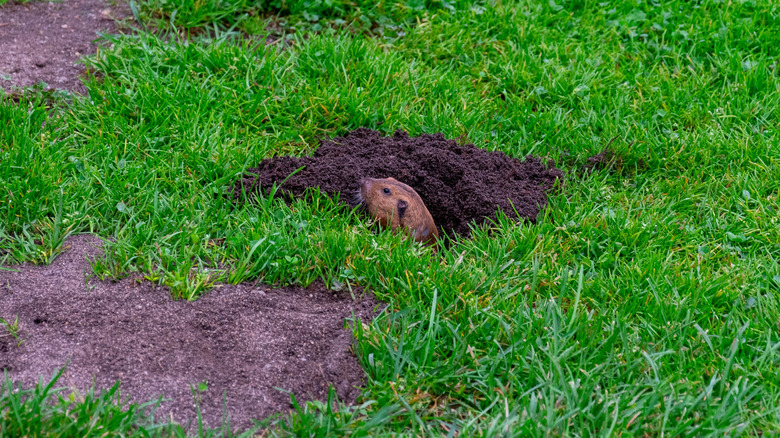
One of the biggest indicators that groundhogs may be in your backyard is the presence of burrows. These holes range from 10 to 12 inches in diameter, and if you can see one, your lawn is likely dotted with lots more. Groundhogs dig underground tunnels that span from one hole to another, and the average number of entrances to these burrow systems is five. If one of those holes is near a structure, it can weaken the foundation, leading to a slew of new problems.
A groundhog in your yard
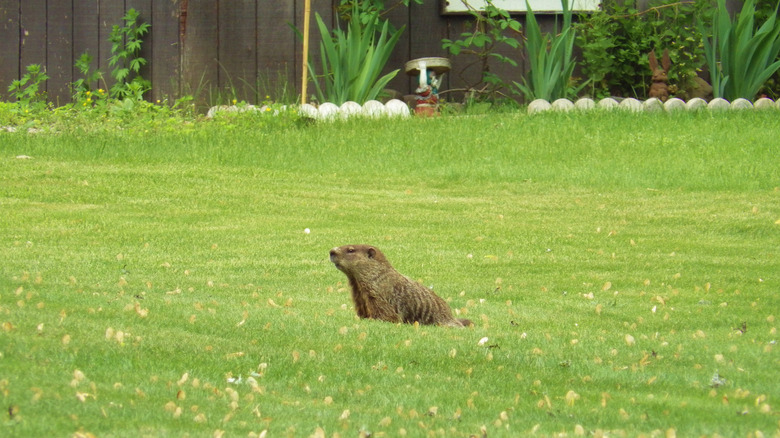
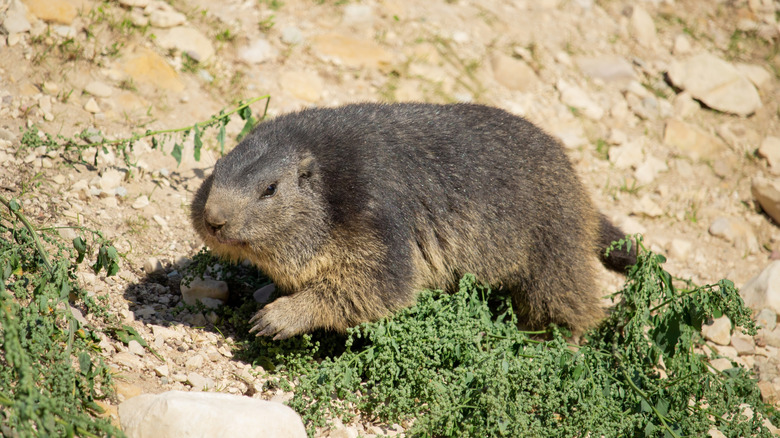
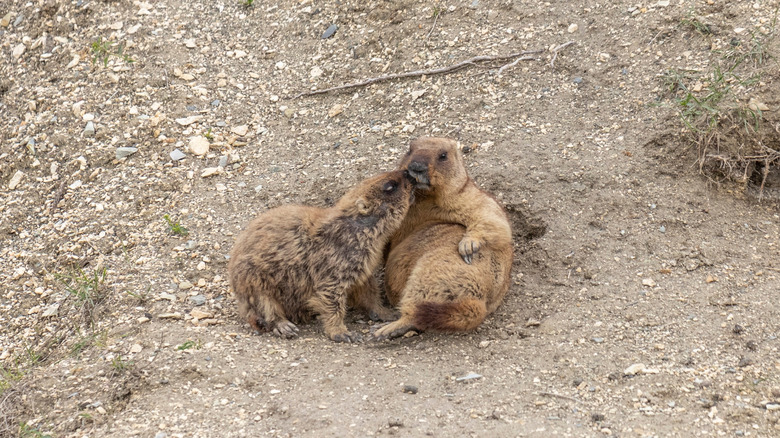
Unlike other types of diggers — like moles — groundhogs are known to venture out of their underground burrows during the day. It wouldn't be uncommon to catch one hanging out in your yard in bright sunlight, typically from spring to fall. They may be scoping out everything your lawn has to offer or just enjoying the warmth. Try to pay attention to where they waddle off to so you can hopefully locate a burrow entrance.
A pile of dirt by a hole
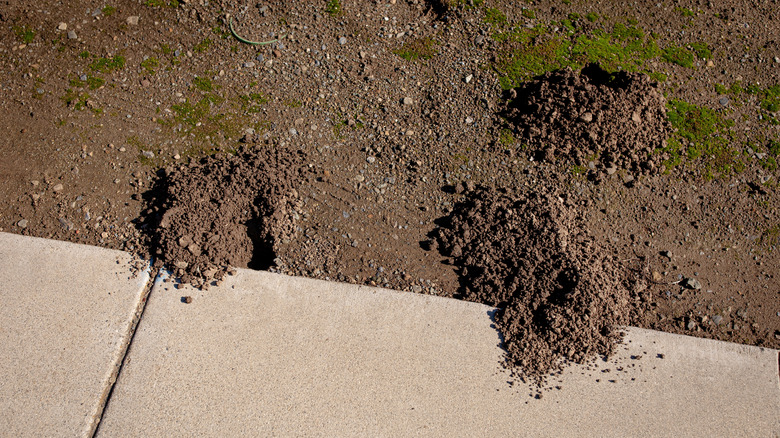
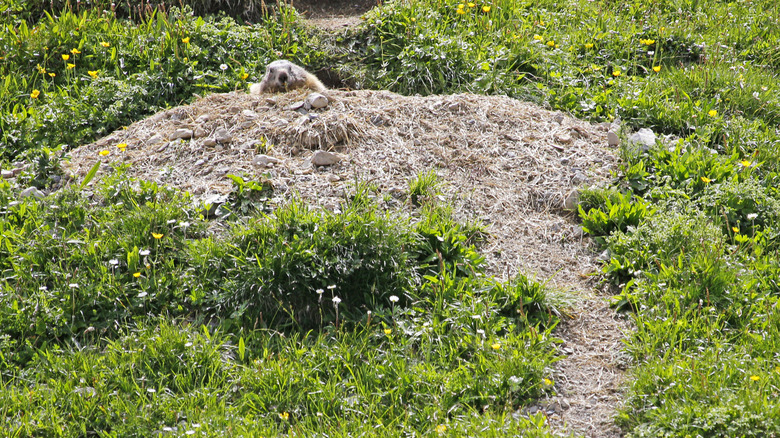
While the burrows that groundhogs dig certainly aren't funny, the dirt in front of a hole has a pretty cute name — it's called a porch. The pile is also, unfortunately, a clear sign that a groundhog is nearby and possibly expanding their tunnels in preparation for hibernation. Typically, only one hole has loose dirt around it, while the other burrows are dug from the ground up. Here's an interesting fact: Groundhogs actually have a separate tunnel that they use as a bathroom.
Soft spots in your yard
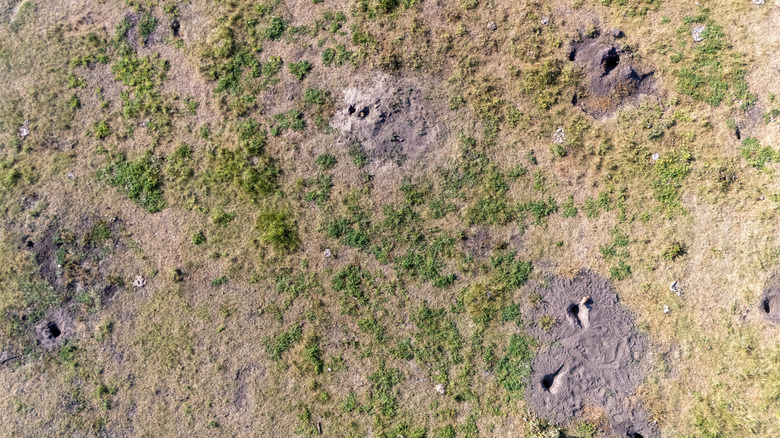
When groundhogs are hard at work on their intricate system of underground tunnels, it can take an obvious toll on your lawn. Their tunnels have several chambers that can make the lawn above the hollowed ground feel spongy and uneven. As their burrow expands, the soil above it starts to lose structure and sink when you walk across it. If the lawn feels squishy near a hole, you can definitely chalk it up to groundhog activity.
Paw print tracks
If you notice little trails of paw prints that have four clawed toes on the front paws and five on the back, you probably have a groundhog. This is especially true if the tracks are near holes, gardens, or along fence lines. The tiny imprints of groundhogs are about 4 to 12 inches apart, and if they're deep enough, the curvy claws of the animal will sometimes be highlighted. These claws come in handy when groundhogs are digging their burrows.
Damage to your garden
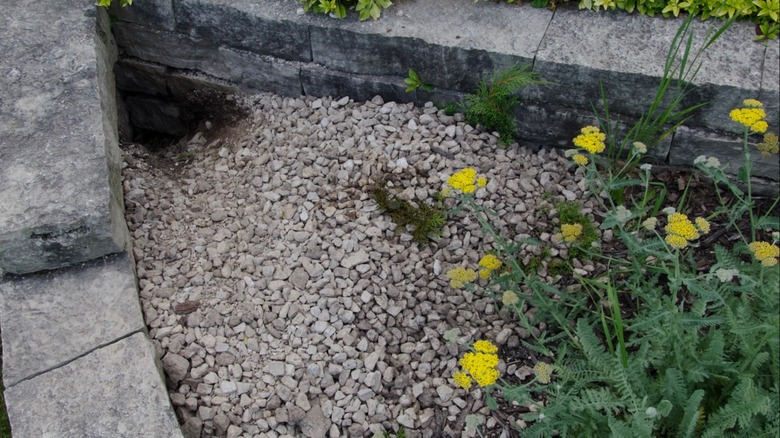
Groundhogs have never met a leafy green plant they wouldn't chomp down on. If you notice your plants stripped bare or dug up, there's at least one woodchuck using your garden as a buffet restaurant. A pretty perennial is thriving one day; then overnight, it's disappeared. You'll also notice entrance holes in or near your beds. While the holes make the trip shorter and less treacherous for groundhogs, they also make a big mess of your garden.
A worn trail through your grass
Do you have a section of lawn that looks anything but green and lush? What's more, the discoloration seems to follow a clear path. There's likely a groundhog following a route across your yard regularly. Groundhogs tend to move along the same path between their burrow entrances and food sources. If this is ringing alarm bells in your head, you might need to stock up on some essential lawn tools for healthy green grass after getting rid of the groundhogs, of course.
Bite marks on plants, fruit, or vegetables

Groundhogs are attracted to veggies, fruit trees, and grasses, so growing these in your yard may inadvertently invite them to visit. When they're hungry, groundhogs have no problem helping themselves to your carefully grown garden. You'll notice bite marks on foliage, partially eaten plants, or even missing vegetables. There's likely a burrow nearby where the well-fed rodents may be hiding. Don't worry, there are ways to keep groundhogs out of your garden, like motion-sensor sprinklers, spreading hair clippings, and more.
An increase in predators
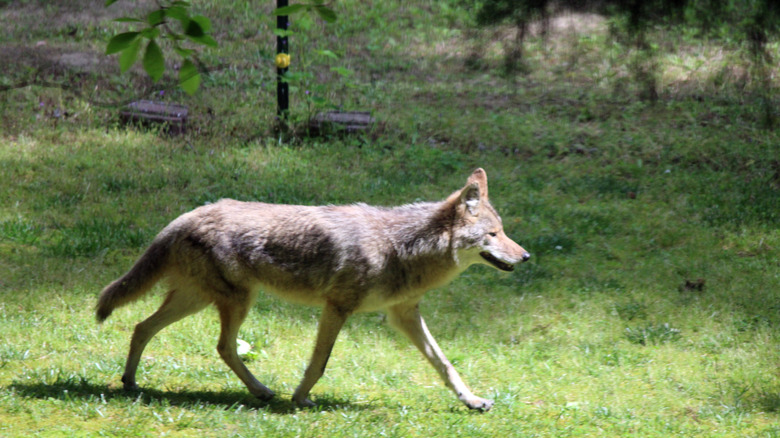
If you suddenly notice more groundhog predators, such as coyotes, hawks, snakes, or bobcats, hanging around your yard or along fence lines, they may be detecting something you can't see: large burrowing rodents. These natural predators are drawn to yards that groundhogs have decided to make their home in. To confirm their presence, listen for the shrill whistle groundhogs make when they feel threatened. Side note: They use their teeth to fight off predators.
Piles of droppings
Like pretty much every critter, groundhogs leave their mark everywhere they go — and whenever they need to go. If you find droppings, also known as scat, in the vicinity of a food source, it might be from one or several groundhogs. Groundhog scat is oval-shaped and under 1 inch long. This gross but important sign will usually be a pile of droppings in one area.