

The Best Soil For Thriving Hanging Baskets To Prevent Root Rot
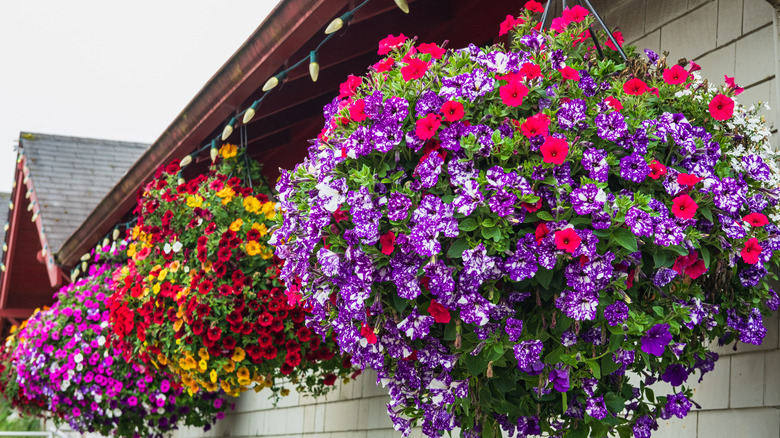
Suspended in mid-air and stripped of the ground's natural drainage, a hanging basket can be a high-stakes growing environment where one wrong move can lead to a watery grave. Hanging baskets bring great joy in the warmer seasons, but the risk of root rot in the ecosystem of these suspended planters is real. The right soil plays a key role in preventing roots from rotting. Garden soil is not the right choice for hanging baskets; it's too heavy, may contain pathogens and root-rot fungi, and it is deficient in moisture-retention qualities. It's also too dense and subject to compaction.
Instead, to thrive with lush growth, hanging baskets need soil that is lightweight, yet able to retain moisture. Soil that provides aeration is critical and goes hand-in-hand with well-draining soil. The aerating elements in soil ensure roots have the oxygen they need to avoid rotting, while soil with good drainage keeps roots from becoming waterlogged. Hanging baskets also require a medium that promotes nutrient availability. Let's look at the soil components that meet those requirements.
Prevent root rot with lightweight, well-draining, aerated soil
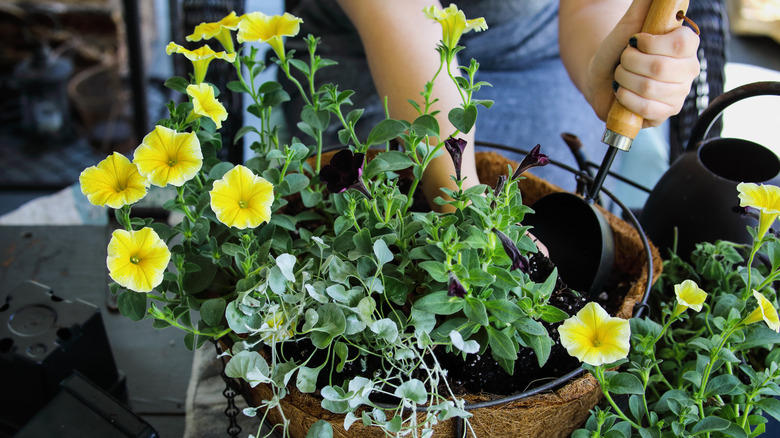
Cautions abound when it comes to preventing root rot. For example, you don't want to overwater hanging baskets — but finding the right soil is just as important. You can purchase a commercial lightweight, soilless potting mix containing peat moss, vermiculite, and perlite. Look for mixes with organic ingredients that provide nutrients, along with inorganic ingredients that promote aeration and drainage. Purchased mixes may also contain built-in fertilizer. An advantage of a commercial mix is that it is free of weed seeds, pests, and diseases. Avoid mixes with polyacrylamide hydrogels, which are polymer crystals that hold water in the soil. The hydrogels will lose their polymerized form within a few years and release the lethal neurotoxin acrylamide as they decompose.
Another option is to create an easy DIY soil mix that helps plants thrive without waterlogging. Start with the same ingredients — peat moss, vermiculite, and perlite — then consider adding components such as bark mulch for drainage and soil structure, coir fiber for aeration and moisture retention, and compost or worm castings for microorganism support and nutrients.
Additions like compost and bark mulch are also considered soil conditioners. Thankfully, you won't have to choose between soil conditioner and fertilizer; you can use both in your hanging baskets. In fact, essential tips to ensure your flowers thrive in a DIY hanging basket include adding fertilizer to the soil to encourage flowers to bloom.