

The Perfect Flower To Plant Near A Bird Bath
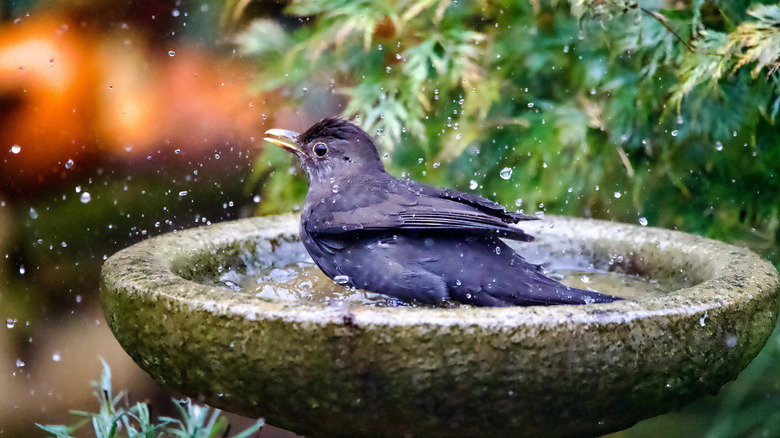
There's nothing sweeter than watching a group of little birds flocking to a full bird bath, fluttering their wings and splashing gaily around in the water. Bird baths aren't just great for feathered creatures; they serve as an excellent landscaping feature to design your garden around. If you're looking for a colorful addition to your bird bath-scaping that will not only attract birds but help sustain them, try the coneflower (Echinacea sp.), often found in its vibrant purple variety, Echinacea purpurea.
Fragrant coneflower blooms are known to attract pollinators in the spring and summer and provide food for seed-eating birds after the blooms have faded in the late fall and winter. Pair these food sources with a water source — your lovely bird bath — and you're looking at an ideal bird ecosystem, right in your own yard. Of course, if you are stumped on where to start in your bird bath journey, there are some tips and tricks to attract more birds, including how to select a bird bath and choosing where to install it in your garden.
Why you should plant coneflowers near your bird bath
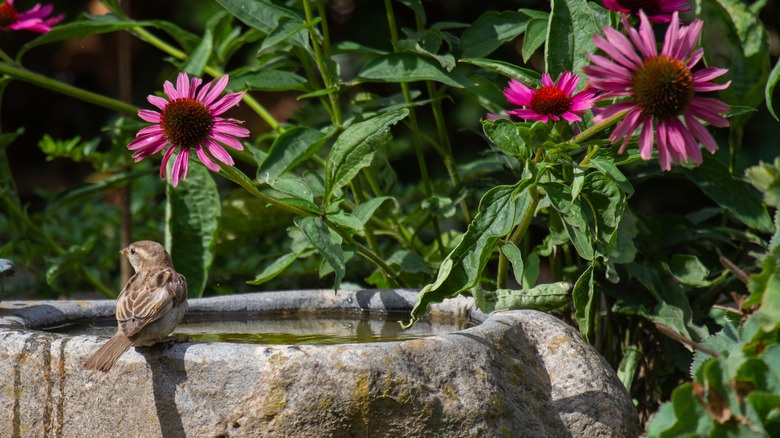
Birds, like humans, need food and water to survive. Thus, you are one step closer to having birds flock to your yard if you have purchased or DIYed a bird bath that will last you years. And while installing a traditional bird feeder near a bird bath may seem like an easier, lower-maintenance way to attract birds to your garden, studies have shown that bird feeders don't increase the number or variety of birds that visit gardens. Instead, research says, an "it" factor for birds is the diversity of plants available in home gardens. This means that planting coneflowers near your bird bath provides the easiest access to both nutrition and hydration.
Coneflowers are known to be especially attractive to goldfinches and chickadees, among other small bird species. Take care to pay attention to which variety of coneflower you choose to plant near your bird bath; while double-flower coneflowers are no doubt showier in terms of color and bloom size, they tend to attract fewer pollinators.
Caring for coneflowers
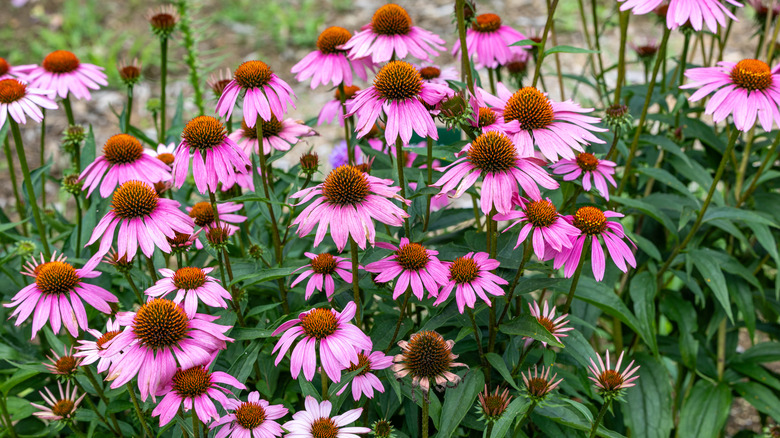
A perennial plant native to the prairies of the Midwest United States, the purple coneflower requires full to partial sun. With this condition, it can grow up to about 2 feet high, while hardy in USDA Hardiness Zones 5, 6, and 7. Be careful not to plant your coneflowers too close to your birdbath lest you risk drowning the plant. Conversely, you could under-fill the birdbath to cut down on splashing or overflow from rainfall. Another benefit of the humble yet beautiful coneflower is its deer resistance, which can benefit your garden in a multitude of ways.
After the coneflower has finished blooming for the season, you may be tempted to cut off the dead blooms to tidy up the look of your garden — consider leaving them intact to provide seeds for birds to feast on. Leaving dead blooms intact is actually a burgeoning trend among gardeners that supports your garden's ecosystem.