

11 Low-Maintenance Perennials That Grow Best In Pots
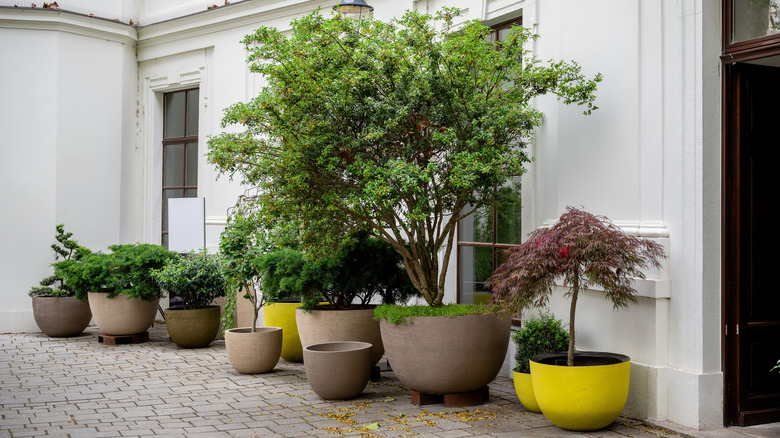
For people who have extremely poor soil or no garden space, pots are a real lifesaver. They let them grow plants where they otherwise cannot. The best part? Container plants also let you move things around. If you get bored with the old design or the weather outside gets too harsh for your delicate plants, it's no issue at all. All you have to do is move the pots to a new location. Honestly, this kind of flexibility is hard to beat. And with this arrangement, if you can find low-maintenance perennials to grow in your pots, that is just a cherry on top. Such plants won't fuss much, and you won't need to regrow new plants every year. And luckily, there are many good options. A few good examples include lavender, rosemary, daylily, black-eyed Susan, boxwood, and dwarf Alberta spruce.
Just make sure that when making a pick for your low-maintenance pot-grown perennial, you choose something that matches your USDA hardiness zones. This is especially important if you cannot take the pots inside during winter. Plus, keep in mind that no matter how low-maintenance a certain plant is, it still has a few basic needs. So, make sure to learn about the sunlight, fertilizing, and watering needs of the plant you are planning to bring home before you make the purchase. Otherwise, your plans of creating a thriving container garden might fail.
Lavender
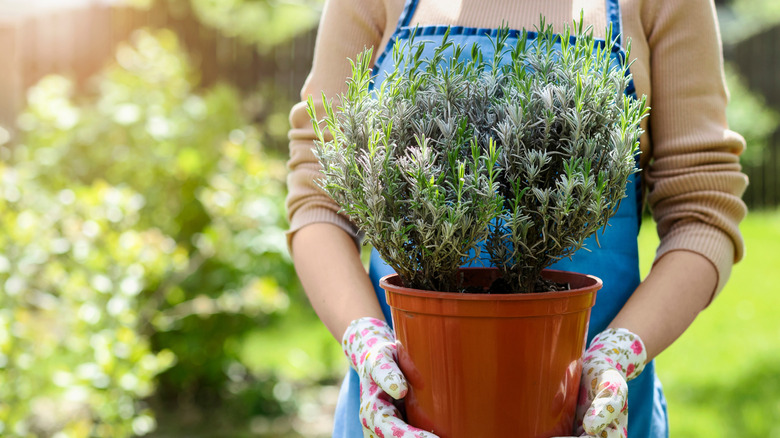
Thanks to its pretty scent, beautiful colors, and a ton of uses, lavender (Lavandula) has been a popular herb for centuries. Plus, it is easy to grow and is really low maintenance as well. As for growing lavender, it performs well in pots, and most varieties can be grown as far north as USDA zone 5. All you have to do is make sure that you use a pot that drains well and put it in a spot that preferably receives at least 8 hours of sunlight daily.
Thyme
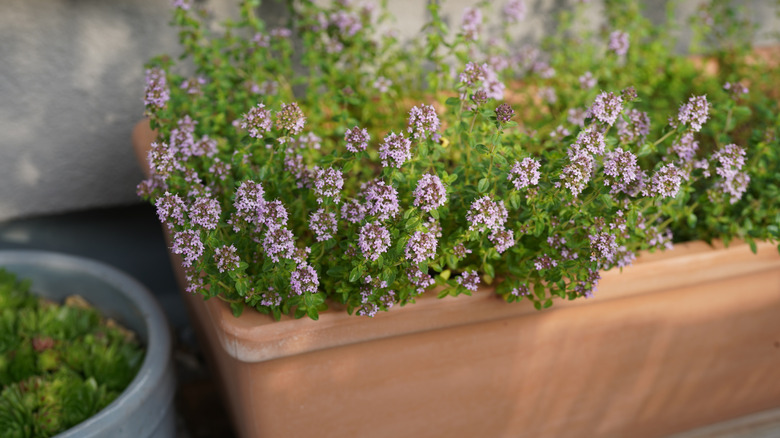
Are you low on space? Well, consider growing thyme (Thymus vulgaris) in pots in USDA Zones 5 to 9. This evergreen perennial herb, once established, requires very little care. You just need to ensure you prune it a bit once it flowers, so it stays compact. As for growing it indoors, try to use a clay planter so that it can fully dry out between waterings. That is not to say you cannot grow it in other types of pots. You definitely can, as long as it has good drainage.
Chives
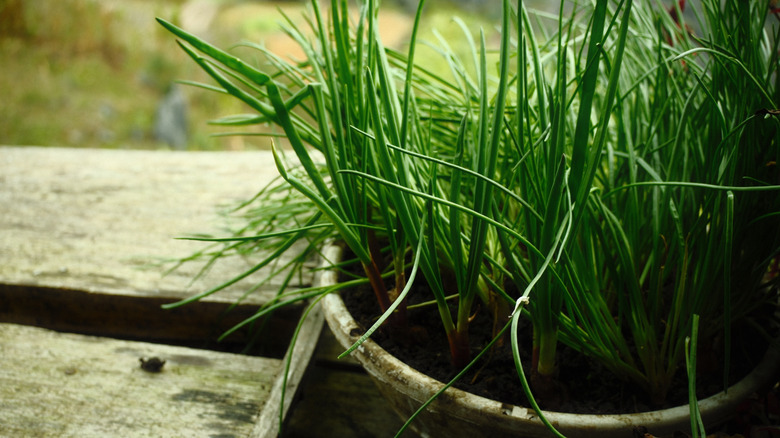
Looking for a perennial, low-maintenance, and easy-to-care-for herb that you can plant indoors or out? Meet, chives (Allium schoenoprasum). Also known as the flowering onion, chives are more than just culinary herbs. They are highly ornamental and tolerant of drought, and they can survive for several days, or potentially even weeks, without much water. Besides this, chives can be easily grown in pots and are hardy in zones 4 to 8 (though they may need a little extra protection in cold winters). Make sure you divide them every 3 to 4 years, or they will get clumpy.
Daylily
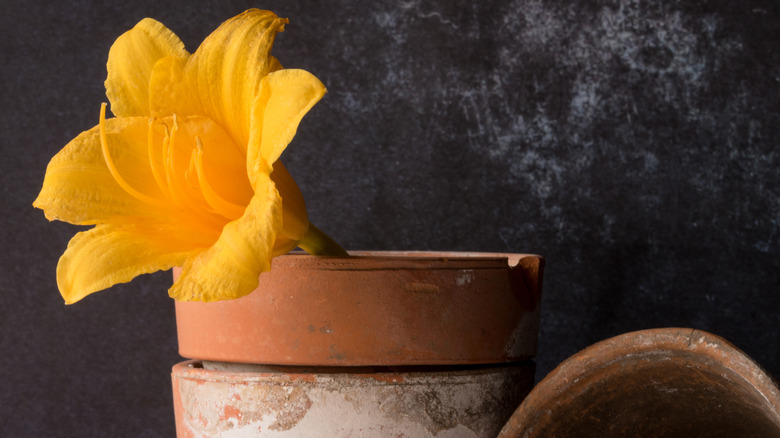
It is not just perennial herbs that grow well in pots and are low-maintenance. Some perennial flowers do, too. Take, for instance, daylilies (Hemerocallis). They are one of the most popular garden flowers and have well over 100,000 cultivars. Put simply, if you want a flowering perennial and live in zones 3 to 9, you must consider planting daylilies. These flowers are considered invasive in many parts of the US, so be cautious where you keep them, as they can seed in the ground even when grown in pots. Daylilies are also highly toxic and potentially fatal to cats, so keep them away from feline friends.
Black-Eyed Susan
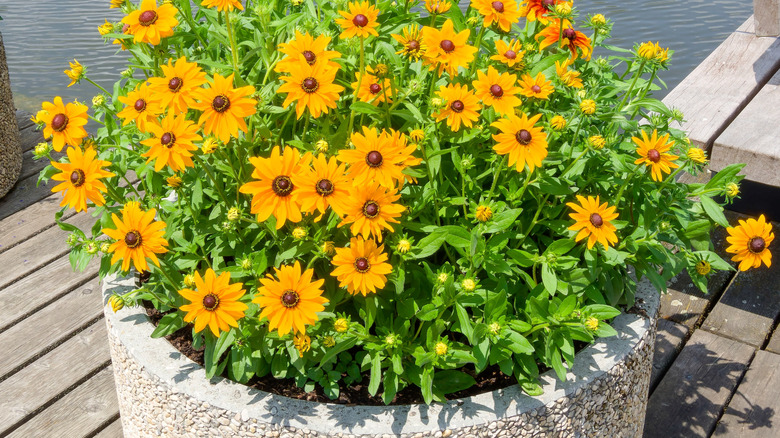
If you love both birds and colorful blooms, you will definitely love black-eyed Susan (Rudbeckia hirta). The flowers of black-eyed Susans are not just pretty, but their seeds provide a crucial food source for birds over the winter. And, yes, they are low-maintenance and can be grown in containers as well. Just make sure to use large containers, as they have deep root systems. As for cold hardiness, they can be grown reliably in zones 3 to 8 as long as they get full sun and regular watering.
Coneflower
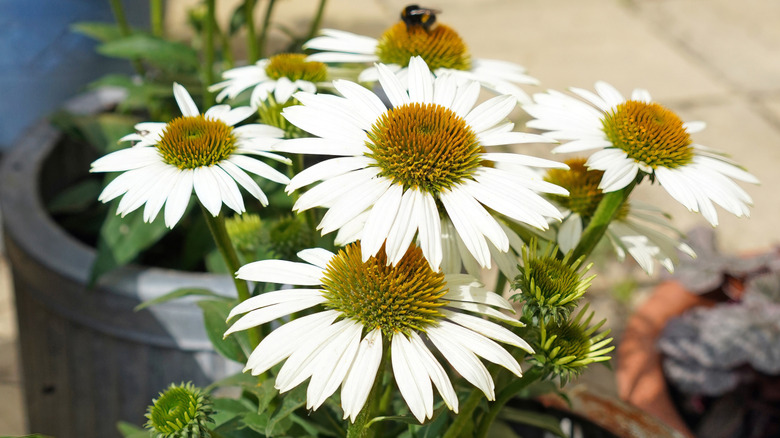
Coneflower (Echinacea) is another really beautiful flower that also helps pollinators. It grows reliably as north as USDA hardiness zone 4 and will thrive even without much attention. However, just like with black-eyed Susan, you need to use a large container to grow coneflowers. It helps the plants grow properly and produce big blooms. The only problem is that it is a bit fussy about moist soils and needs to be kept dry. As long as you care for it properly, you can even make your coneflowers last literally decades in your garden.
Boxwood
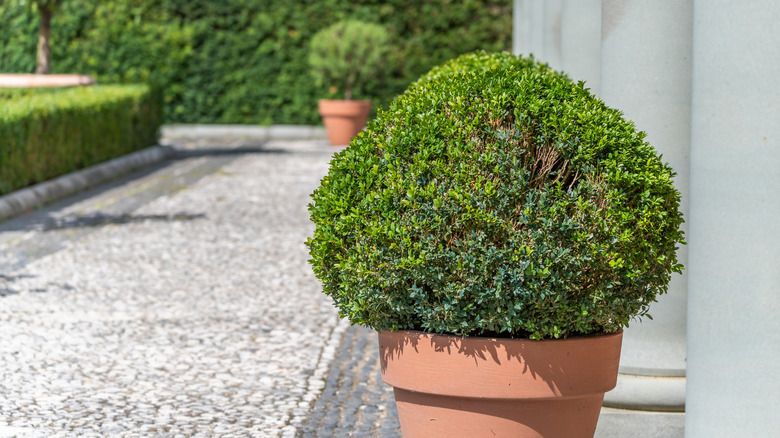
Besides herbs and flowers, some perennial shrubs make perfect plants for pots, too. Take, for instance, boxwood (Buxus). Hardy across USDA zones 5 to 9 (although some hybrid cultivars can even grow in zone 4), boxwood is an evergreen perennial that is often used for foundation plantings. However, you can grow it in pretty much any container as well. Even better? It does not ask for much, and is even deer- and rabbit-resistant. Just keep in mind that it is susceptible to many diseases, especially boxwood dieback in the southern US.
Hydrangea
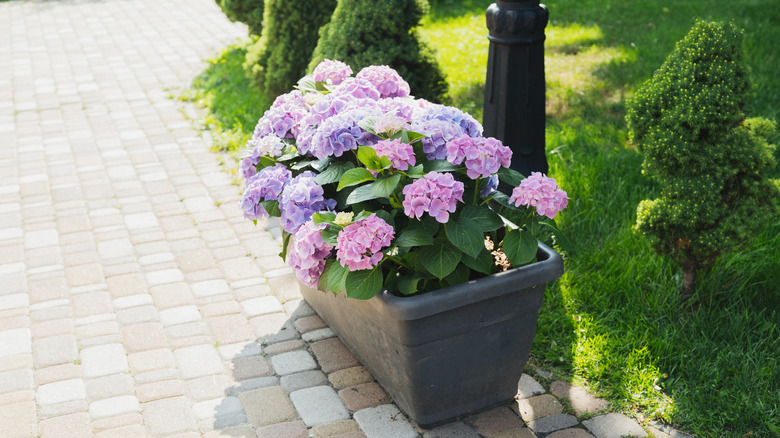
If boxwood is just too plain and green for your taste, you will definitely like hydrangea (Hydrangea). It is a perennial flowering shrub that is hardy in USDA zones 3 to 9 and can be grown in containers. Its flowers are large and come in bright colors and shades of white, blue, purple, and pink. You can even change the color of your hydrangeas yourself! All you need to do is change the soil pH, for instance, with wood ash, and your once-blue hydrangeas will turn stunning purple and pink.
Spirea
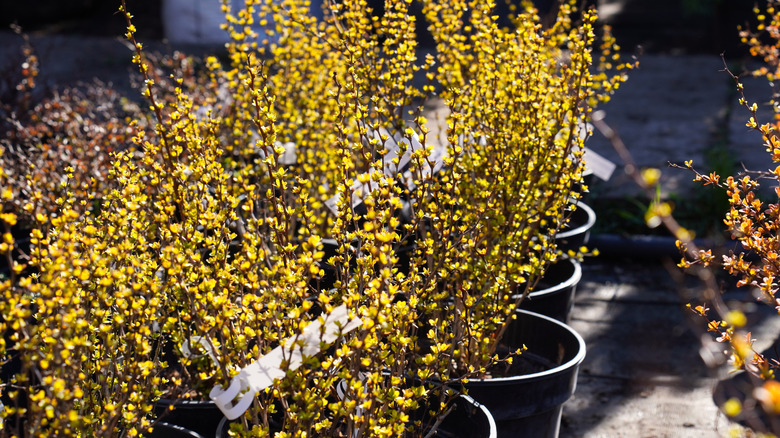
Besides hydrangeas, spirea (Spirea spp.) is another flowering plant on the list. It is hardy from zone 4 to 8, although some hardy cultivars can even thrive in zone 3. But, what makes the spirea really special is that it is really easy to grow. Plus, once established, it does not require much maintenance at all. And yes, you can grow it in containers and pots as well. Just make sure that you prune your spirea on time, do not let the container soil get soggy, and place the pot in a sunny spot.
Dwarf Alberta Spruce
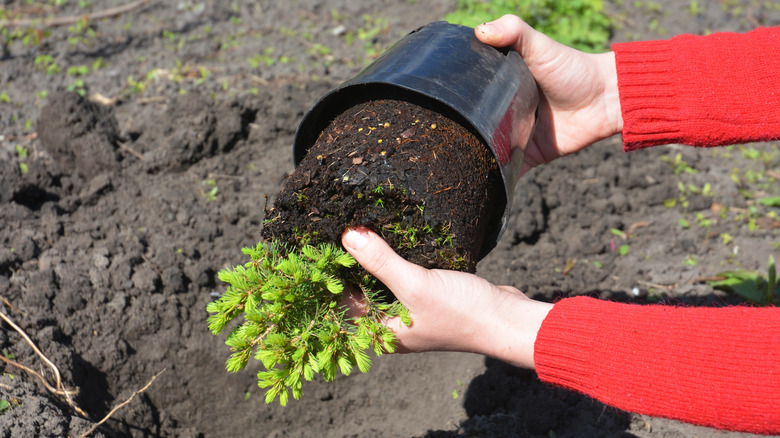
Besides flowers, herbs, and shrubs, some dwarf trees, like dwarf Alberta spruce (Picea glauca 'Conica'), can also be grown in pots. The tree grows only to about 4 feet tall and one and a half feet wide in the first 10 years. You won't have to worry about getting it too big for your container garden anytime soon. And even when fully grown, it reaches a max height of 13 feet. It is pretty low-maintenance. Plus, you don't even need to prune it much to maintain its natural conical form.
Dwarf Mugo Pine
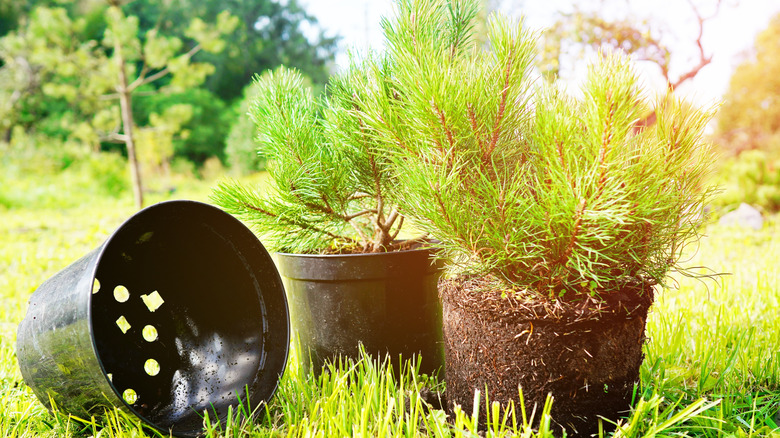
The dwarf Mugo pine (Pinus mugo var. pumilio), just like the dwarf Alberta spruce, grows really slowly, reaching a height of only 4 feet in 10 years. It makes a great container plant and grows happily in zones 2 to 8. Plus, once established, it will pretty much take care of itself. All you need to do is fertilize it once a year in spring, make sure it gets enough water, and place it in full sun.