

The FBI Says These Smart Home Devices Are Unsafe, And Here's Why
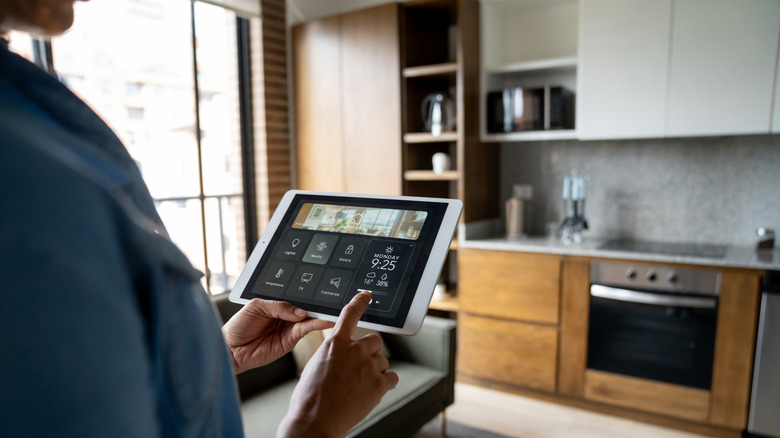
Smart home devices are supposed to make residences more efficient, ideally creating peace of mind from nefarious activities that could otherwise go undetected without round-the-clock surveillance. However, the thing with smart home devices is that they can work both ways and put your privacy at risk, considering some models are not impenetrable to hackers and bad actors. Even smart locks are not safe when the burglars targeting your property know how to navigate and manipulate the system.
The FBI is well aware of this issue, so the government agency has issued warnings to homeowners who are reliant on smart home devices to control different features of their modern homes. In one PSA, the FBI warned of the dangers of connected devices with cameras and voice capabilities.
"To gain access to the smart devices, offenders are likely taking advantage of customers who re-use their email passwords for their smart device. The offenders use stolen email passwords to log into the smart device and hijack features, including the live-stream camera and device speakers," the FBI announced in an online statement. By gaining remote access to a device, people can use its features to their advantage.
Aside from manipulating smart locks, hackers can disrupt the functionality of the devices, use them to stalk homeowners, and collect private information from them for use in fraud, identity theft, and more. The FBI has also singled out the possibility of falling victim to swatting, or the use of these devices to make fake emergency calls to authorities.
How hackers gain access to home security devices
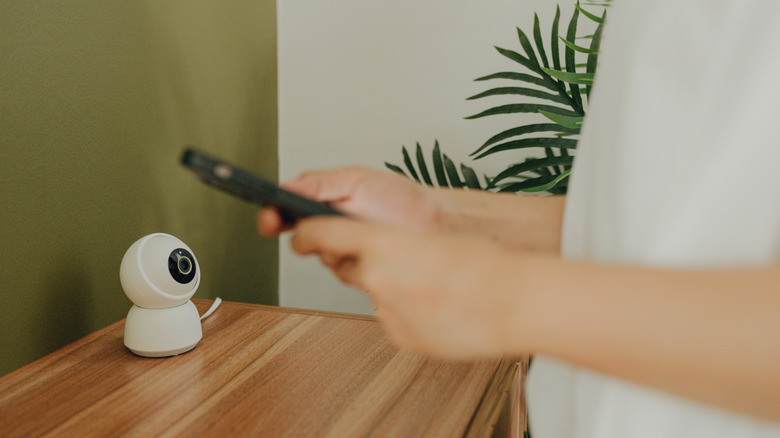
Aside from using stolen email passwords, which the FBI mentioned in its warning about the vulnerabilities of smart home devices, there are other ways for criminals to gain access to security video and audio remotely. The lack of a strong password is one. In addition to simple and easy-to-crack codes with eight characters or fewer, most Americans have the habit of using the same password for multiple accounts. This makes it easy for hackers to bypass any or all of those accounts, including the ones linked to smart home devices.
Many people also do not enable two-factor authentication, so unauthorized access to their accounts becomes easy for hackers, since there's no need for mobile device codes or biometric authentication on top of the first code. Data breaches and a lack of encryption also make it easy for criminals to gain entry to home security systems.
Another reason why hackers easily gain access to home security devices is the devices themselves. Apparently, even top-rated home security cameras can be exploited by hackers with the right set of tools and know-how. "Basically, anywhere there's a camera, now there's a risk of that live real-time feed being collected by someone as close as a meter or so through walls," Kevin Fu, an electrical and computer engineering professor at Northeastern University, told the school's online publication. Speaking anonymously with the BBC, a hacker confirmed that this is doable even from thousands of miles away.
How to protect your smart home devices from hackers
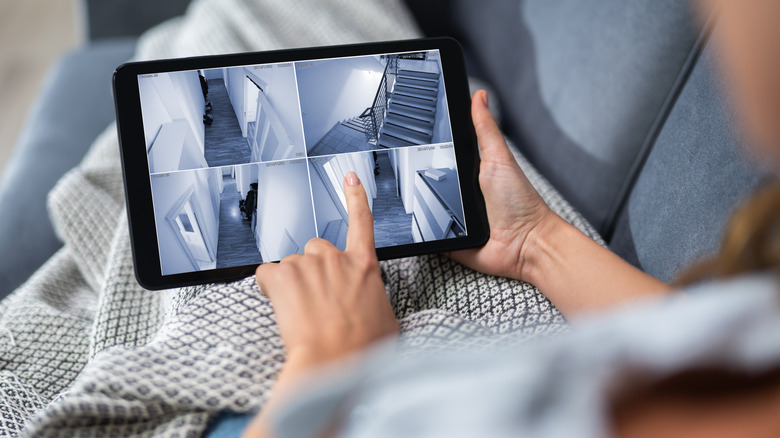
Independent research by cybersecurity firm Bitsight found that in June 2025, over 40,000 security cameras were at risk of remote hacking or spying. Of the figure, over 14,000 are in the U.S., with the highest concentrations of exposed cameras located in California and Texas. As threat actors are always on the lookout for vulnerable surveillance cameras, it's only a matter of time before they can find and take advantage of these devices.
To fight back or at least lower the risk of your smart home devices getting exploited, the FBI has suggested simple steps to bolster security access, such as assigning more complex passwords and adopting two-factor authentication. The agency also encourages anyone who may have already fallen victim to surveillance footage hacking and cyber-enabled crimes to report their case to the Internet Crime Complaint Center (IC3).
Additionally, you can protect your smart home devices by employing other measures, such as ensuring that the app used by your security system has end-to-end encryption. Installing antivirus software on all your connected devices is also helpful, so you can receive alerts about potential threats.
Updating the firmware of your devices to the latest versions is also handy, as companies roll out bug fixes for vulnerabilities and new safety features with each software release. Lastly, if you are still using old routers from the 2010s, it's time to replace them. Old models with obsolete security protocols are no longer effective against modern-day threats and cyberattacks. The FBI even mentions specific routers to avoid, mainly old Linksys models such as the WRT320N (2009), the M10 (2010), the E1200 (2011), the E2500 (2011), and the E4200 (2011).