

Collectors Are Always Hunting For This Vintage Pottery Brand At The Thrift Store
We may receive a commission on purchases made from links.
Art pottery tends to sell fast at thrift stores, not only because it's valuable, but because one-of-a-kind pieces have a charm and personality that you can't get from pottery that's mass produced. The Art Pottery movement, with Ohio Art Pottery at its center, made major contributions to the Arts and Crafts styles of the era. It flourished from the 1880s through World War I, with individual artisans founding companies like Rookwood, Roseville, and McCoy. All are collectible, but only one, Samuel A. Weller, is credited with creating the first fancy glazed ware. Early Weller pottery features intense glazes and subtle colors, but over time the pottery company enlarged and moved toward production work. Vintage Weller Pottery is a brand to be on the lookout for at thrift stores.
Zanesville, Ohio, became the center of the Art Pottery movement because it had good clay, natural gas to fire the kilns, and a transportation system to distribute the finished product. Samuel Weller moved the company he'd founded in 1872 to Zanesville ten years later, and by 1894 employed 175 potters. By 1915, Weller Pottery had become the largest art pottery factory in the world. Behind the scenes, Weller's artisans created new designs and glazes. At the same time, the public-facing part of the company produced popular lines that sold well. The company ceased production in 1948. The most valuable Weller Pottery is the least common, as with most collectibles. Pieces that command top dollar include those with the early, special glazes, hand-decorated pottery featuring animals, birds, or human figures, large pieces, and pottery with the glaze called Coppertone.
Collecting and identifying Weller Pottery
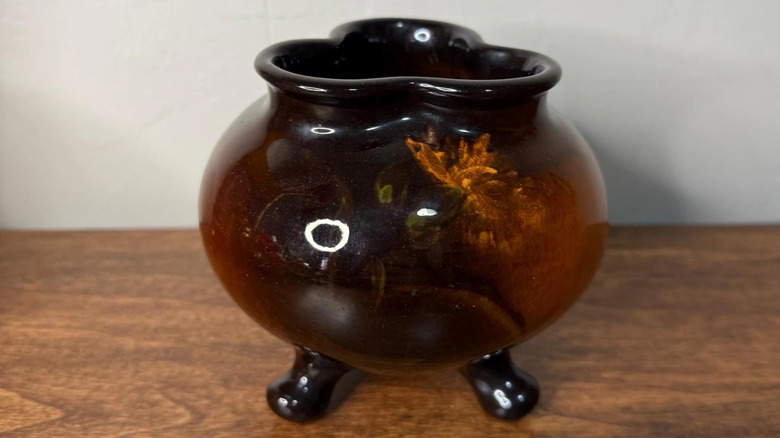
There is no one, single identifying maker's mark used across all of the Weller Pottery lines. The earliest are the artists' hand-drawn mark in the clay. Late in the 1800s, the company moved to using die-stamped logos, then marks in the mold, until finally using paper labels in the years before the pottery closed. There are variations within these methods, so determining a precise date for your piece requires some research or a trip to a pottery dealer for an appraisal. Early pieces made before the company started production work are generally more valuable. If you're considering becoming a Weller Pottery collector, arm yourself with a copy of a price guide like "Warman's Weller Pottery: Identification and Price Guide" to help you identify vintage pottery at the thrift store.
What if the lovely piece of pottery you've put in your thrift store basket doesn't have a maker's mark? You could be lucky — it might be an early, one-of-a-kind piece. Or you could have a counterfeit or knockoff. If you're unsure, and the item has flaws like chips or cracks, put it back on the shelf. Damage decreases the value considerably, but none of this should deter you from buying a piece of unique vintage decor simply because you like it.
A vase with the elegant, iridescent glaze that Jacques Sicard created for Weller sold at auction for $13,860.00 in 2024. And a vase with a whimsical fish and bubbles pattern created by Rudolph Lorber for Weller is listed for sale at $1,695.00. Not all Weller Pottery is high priced, however. Sellers on eBay have sold candlesticks and vases for just a few dollars.