

The 'Upside-Down' Method Can Get Your Kitchen Organized And Clutter-Free With Barely Any Effort
Most people own too many things — most people also know that they have too much and would love to get rid of some of their possessions. It can, however, be incredibly difficult to know how to go about decluttering various spaces of your home. While decluttering methods abound — from the trend of micro-decluttering to transform your home, to numerous other strategies that work best for decluttering — sometimes, the effort you have to invest is just too great. If you're a busy individual whose kitchen has become cluttered and difficult to work in, you need straightforward action; that's where the upside-down method comes in.
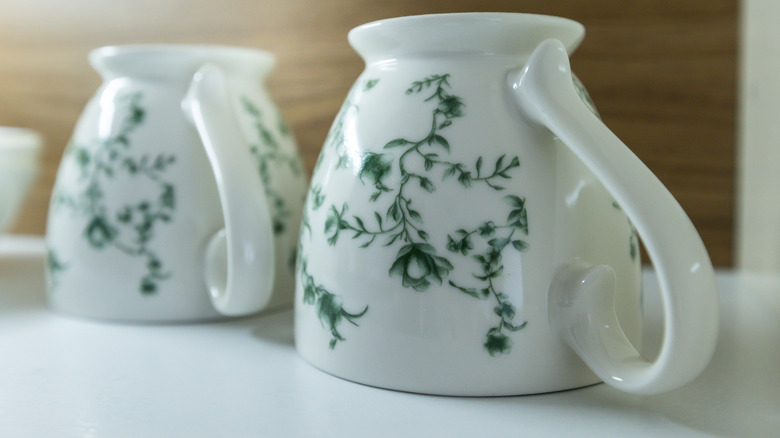
The upside-down method of decluttering doesn't involve you standing on your head; the only things that are going upside down are your kitchen possessions. The concept is that if you flip all of your items over in your cabinets, then it will be easier to see what is being used regularly versus what hasn't been touched.
At the beginning of the experiment, set an amount of time — don't go too long or too short — preferably around a month, so you have a chance to use less-commonly utilized appliances (blender, waffle maker, etc). Once the month comes to an end, you'll know that anything in your cabinets that is still upside down has not been used, and it's a great time to donate these items from your kitchen.
Tips to help the upside-down method work for you
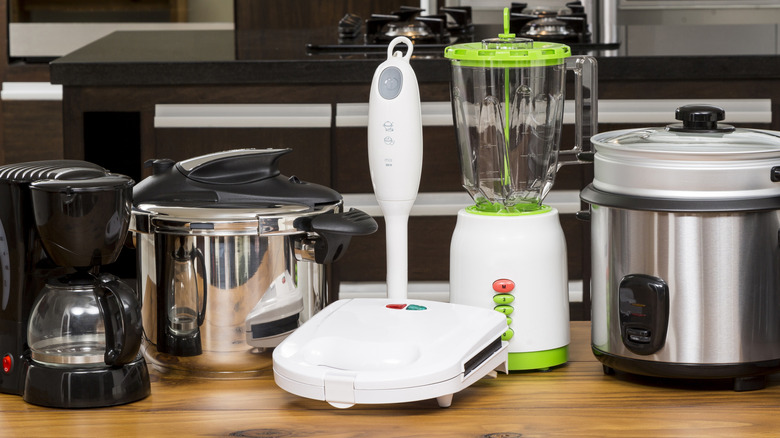
You may have a few questions about this unconventional decluttering method, such as "What about items that cannot be turned upside down?" Awkwardly shaped items like food processors truly can't be placed upside down without potentially falling over, so in that case, you'll adopt the spirit of the principle: if you usually keep the handle of an appliance facing towards you when you open the cabinet, rotate the appliance so that it is oriented backwards in the cabinet. You'll still easily be able to notice whether you used it or not at the end of your experiment. The same goes for utensils that are not usually stored vertically, as well as skillets that you might store horizontally — simply point the handles away from you in order to make this approach applicable.
Another question people sometimes have about decluttering systems is whether or not you must part with whatever you didn't use when the time period ends. The answer is no, not if you don't want to. Decluttering methods really do provide vital data to individuals who might be overwhelmed about how much they have, but just because you didn't use your sous vide machine or your panini press in the span of 30 days doesn't dictate that you must get rid of it. However, it will teach you important information about yourself, like your tendency to purchase niche kitchen tools that rarely get used. Chances are that after you've tried the upside-down method, you'll be left with at least a small pile of items that you can part with — guilt-free.