

Ditch The Winter Birdbath, There's A Better Way To Attract Cardinals
We may receive a commission on purchases made from links.
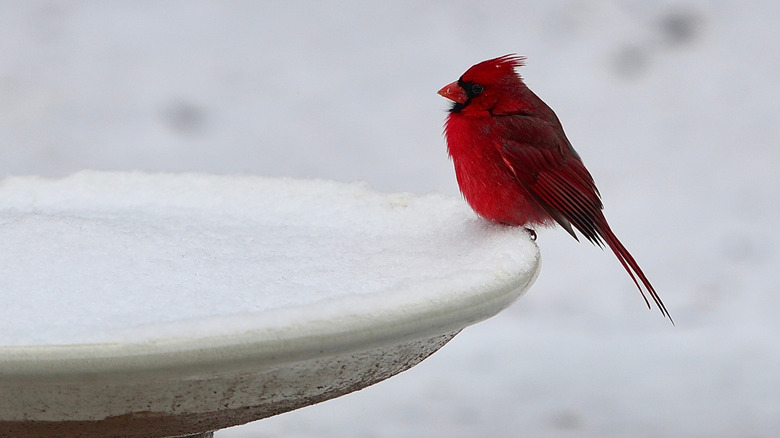
The sight of a vibrant red cardinal against a backdrop of snow and pine trees is the ultimate reward for a winter gardener. One of the items you'll need if you want to encourage cardinals to nest in your yard is the right water source to keep these backyard favorites hydrated year-round, especially during a freeze. Most people think a traditional birdbath would do the trick, but in winter that puts you and the birds in a losing battle against the elements. A birdbath's shallow basin quickly turns into a solid block of ice when temperatures drop, requiring you to frequently spend time outside trying to clear the surface to keep the water accessible. This turns what was supposed to be a relaxing hobby into a constant chore. So, what's the alternative here? Switching to a gravity-fed waterer.
Beyond the maintenance headaches birdbaths create, they can actually be a health hazard for cardinals. Birdbaths attract multiple species and can collect droppings, feathers, seeds, insects, and debris, all of which become a bacterial soup that will still hang out even when it's freezing. Plus, the wide-open design makes it easy for a bird to get its feathers too wet while bathing in sub-zero temperatures, which can cause hypothermia since damp feathers will temporarily lose their insulating abilities. Not switching to a waterer is just one of many mistakes to avoid if you want more cardinals in your yard. This simple change keeps the birds safer and keeps you from having to regularly clean a messy, frozen birdbath.
Why a bird waterer is the pro's choice for cardinals
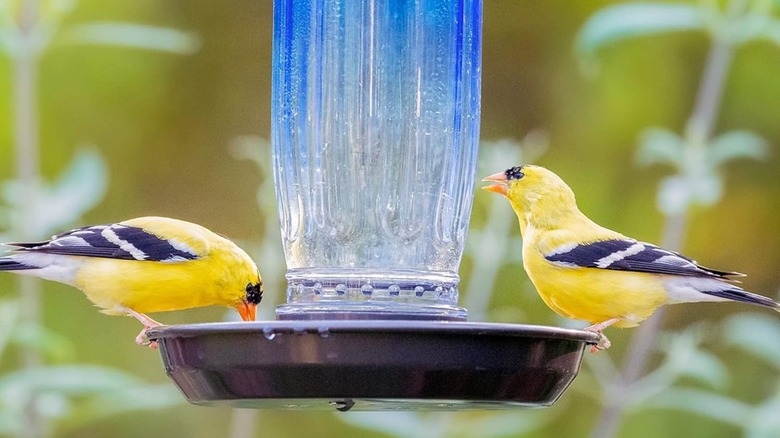
A more reliable solution for your winter landscape is a gravity-fed bird waterer. Unlike an open bowl, a waterer stores water upright in a protected reservoir that shields the main water supply from snow, wind, and debris. As the birds drink from the small tray at the bottom, fresh water automatically refills the space from the reservoir. While a waterer's enclosed design provides a little more insulation than an open bowl, the water will still freeze in below-freezing temperatures. To maintain a truly all-weather sanctuary, you could place your waterer on a low-wattage heated base (like those used for poultry waterers); this gentle, rising heat keeps the water liquid and accessible even during cold snaps. You could also use a wraparound heat tape to help insulate it, or even cover the reservoir with a sock or small scarf. Alternatively, you can opt to simply bring in your waterer each night when it's super cold out.
While the reservoir stays clean, you should wipe down the drinking tray weekly to stop ice and grime buildup. To keep the water pristine, place it a good distance away from any seed feeders to stop any falling hulls and dusty debris from contaminating the tray and ruining the birds' fresh supply. For the best results, place the waterer near evergreen shrubs or dense cover, so birds have a quick escape route from predators. Go with a heavy-duty waterer for winter endurance, or opt to DIY one from a jar, and enjoy watching winter's loveliest guests stay refreshed.