

Put Down The Kitchen Towel Before You Undo Your Hard Work Washing Dishes
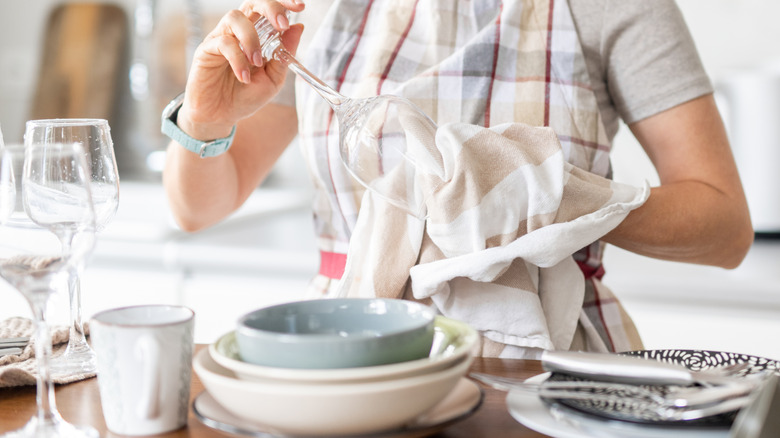
If you're not one of those homeowners fortunate enough to have a dishwasher, then you're probably no stranger to scrubbing pots and pans. Maybe you're someone who likes to hand wash dishes simply to be more eco-friendly. If either applies to you, and you've spent 30 minutes washing and rinsing dishes only to dry them with the kitchen towel hanging on your oven door, you may be undoing your hard work. The reason you should never clean a kitchen counter with a used dish towel is the same reason you shouldn't dry your clean dishes with it — bacteria.
It actually isn't an exaggeration to say that the kitchen is in stiff competition with the bathroom for the dirtiest room in your home. Because it is generally considered the most utilized room in the house, and you prepare food in it, the chances of bacterial contamination are high. That's why it's so important for your health and your family's health to practice safe food handling and to know how to properly hand wash dishes. Damp towels you've used to dry your hands and dishes repeatedly can harbor harmful bacteria. Not to mention, a towel stored on your oven door or refrigerator handle is also at risk of exposure to food spills or overspray, adding further contamination risk. The best option for drying your dishes and keeping them as sanitary as possible is to air-dry them on a drying rack.
How to dry dishes without contaminating them
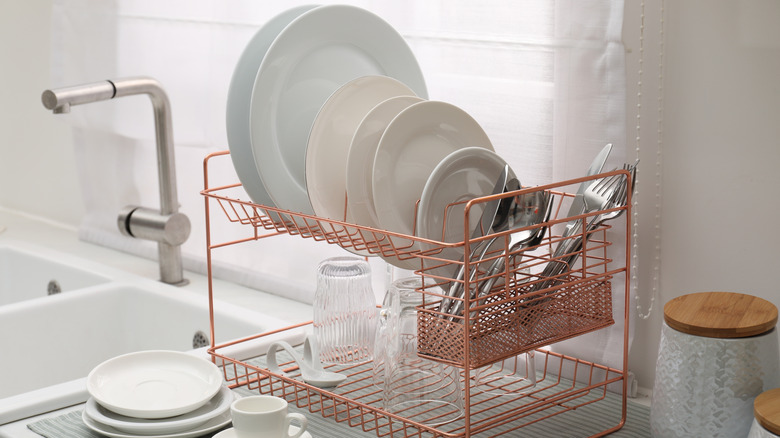
You might be asking what you can do to safely dry your clean dishes. The simple answer is to use a drying rack, preferably one that has a way to drain the water away from the dishes. If you're worried about water spots, use a clean towel made from an absorbent material such as microfiber. A clean microfiber towel works well to dry your dishes and prevent spots. Ultimately, the best way to ensure your dishes are going to dry in the most sanitary way possible is to air-dry them. It's also important to remember that to prevent bacteria or mold growth, you should always make sure your dishes are completely dry before putting them in the cupboard.
If you still prefer to use a dish towel, take precautions. Just like you wouldn't use a wet sponge that has been sitting out for days, you don't want to use a damp towel that's been used over multiple days and for multiple purposes. The key to a healthier kitchen and cleaner dishes is to frequently disinfect your dish sponge as well as use a fresh dish towel every day. You can also designate one towel specifically for drying dishes to further reduce the risk of contamination. Every night after you're finished doing the dishes, just toss your dish towel in the washing machine and grab a fresh one for the next day.