

The Simple Bird Feeder That'll Attract More Orioles To Your Yard
We may receive a commission on purchases made from links.
Many gardeners are keen on the idea of turning their yard into a haven filled with beautiful plants and local birds. There are a multitude of ways to make your backyard more appealing to your feathered friends. You can attract colorful birds with a water source, places to seek shelter, and, of course, bird feeders. But not all bird-attracting features are equal — different birds will gravitate toward different food sources. If you specifically want to draw in orioles, you should consider incorporating a simple custom feeder that includes foods they like, such as oranges.
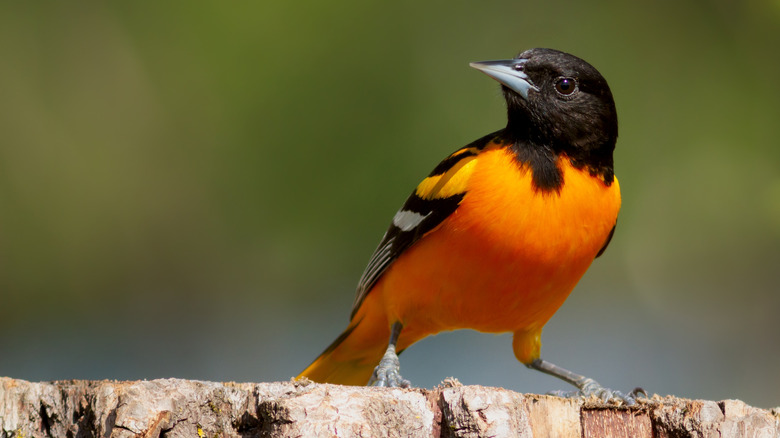
Orioles are prevalent throughout central and eastern North America during their mating season and head south to warmer climates around late summer. They're pretty easy to identify: Adult males feature a vibrant orange underside with a black head and wings, while the females are a muted yellow-orange with greyish-brown wings. Both have long, slender legs and a pointed beak. Orioles tend to idle and feed high up in the trees, but they are known to swoop down for certain foods they like.
Orioles have a diverse diet, including insects, nectar, and ripe fruit. They gravitate toward fruits like oranges, raspberries, and crab apples. You can also draw them in with homemade nectar and jelly. If you want to foster the highest chance of drawing orioles to your backyard, create a feeder combining all of their favorite foods.
How to create the perfect oriole feeder
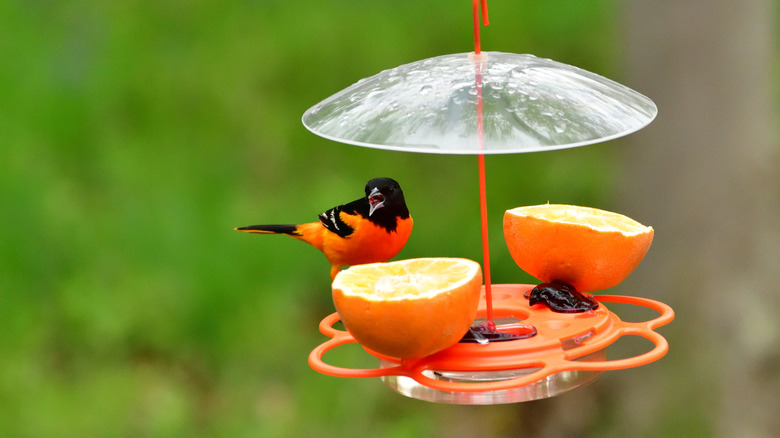
There are quite a few specialty bird feeders made specifically to draw in orioles by setting out all their favorite foods neatly. Options such as the Nature's Way All-In-One Oriole Buffet Bird Feeder or the Kettle Moraine Super Oriole Recycled Feeder allow you to lay out nectar, jelly, and fresh fruit in one convenient package. Orioles are particularly fond of the color orange, so whatever option you go for, be sure it's predominantly orange.
Once you bring home a feeder, it's time to optimize it for your feathered guests. Start by making homemade nectar by combining one part granulated white sugar with four parts non-distilled drinking water. Fill the bottom basin with this solution. Next, fill the jelly dishes. These birds are partial to grape jelly since it's a similar color to the dark berries they eat in the wild. Be sure to use jelly made without artificial colors, sweeteners, or flavors. Finally, split an orange in half and attach it securely onto the feeder prongs. Since there are so many perishable foods featured on this feeder, clean it with soap and water at least twice a week, and remove any foods that show signs of mold.
Beyond just your feeder, consider growing food sources for orioles such as bee balm, foxglove beardtongue, or lowbush blueberries, but check to make sure these can grow in your particular USDA hardiness zone before planting. You can also provide orioles with nesting materials by planting milkweed, but keep it out of reach of pets and children since the plant's sap is toxic in large quantities. With a specialty feeder and these additional birdscaping tips, you can turn your garden into a haven for orioles.