

The Low-Maintenance Herb To Plant With Rosemary To Attract Pollinators
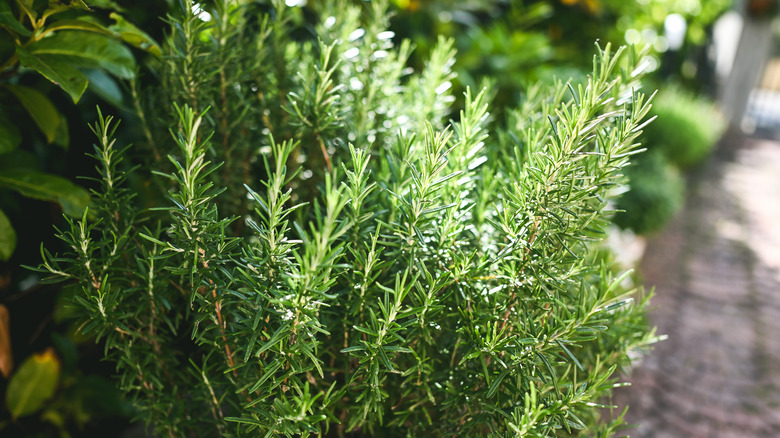
Pollinators are more than the pretty birds, bees, and butterflies we invite into the garden because they're fun to watch. About 80% of the native and flowering plants we prize for their beauty and the food they produce require pollinators for survival. These plants provide beneficial insects and animals with both food and shelter. The evergreen perennial rosemary (Salvia rosmarinus) blooms in the spring and summer, drawing bees, butterflies, and hummingbirds to the garden with its tiny flowers. Pair it with low-maintenance marjoram (Origanum majorana), a perennial herb with very small, tubular flowers that bloom in late summer to attract bumblebees and butterflies for a summer-long garden filled with pollinators.
Rosemary, hardy in zones 8a to 10b, and marjoram, hardy in zones 9a to 10b, share similar growing conditions. They both need well-drained soil in full sun and both are drought-tolerant. While rosemary prefers slightly acidic soil and marjoram slightly alkaline, both can grow successfully in neutral soil and can thrive together. Since neither plant can survive harsh winter conditions but will overwinter indoors, consider growing rosemary and marjoram together in a container if you live in a cold climate. You can move the container inside and back outside as the seasons change. Indoors or outdoors, both rosemary and marjoram are appropriate for a culinary herb garden. Rosemary is a staple of Mediterranean food, and marjoram, with a mild, oregano flavor, is featured in French and Middle Eastern dishes.
Creating an herb garden for pollinators
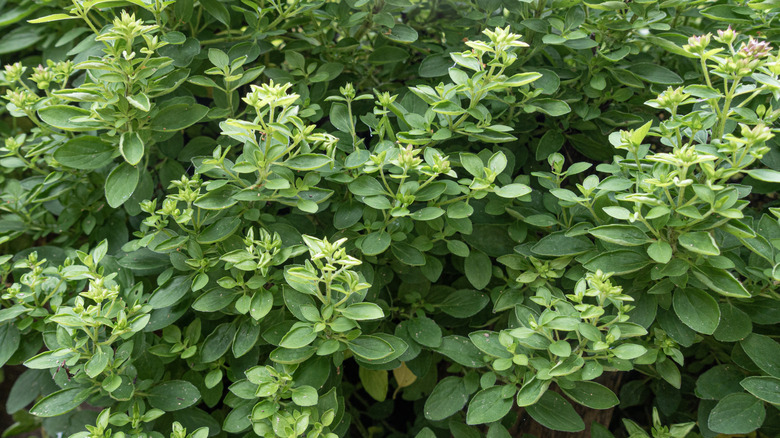
Because of its drought tolerance and resistance to most pests, marjoram is considered a low-maintenance plant. The same is true of rosemary, though both are susceptible to aphids and spider mites. Rosemary needs some pruning, about once a year to keep it from becoming leggy and developing bare patches around the base. To keep marjoram plants bushy, prune the stems before the flowers appear. If you're creating an herb or container garden with mixed plants, consider combining rosemary and marjoram with other bushy herbs such as scarlet sage (Salvia coccinea), hyssop (Hyssopus officinalis), and thyme (Thymus vulgaris) for a display of pollinator-attracting flowers throughout the summer season. Note that marjoram is mildly toxic to dogs and cats and can cause vomiting and diarrhea if ingested.
If you have grown your rosemary and marjoram together in containers because you have cold winters, find a spot inside where the plants will get the equivalent of eight hours of full sun each day and bring the container in at the first sign of frost. This could be a bright, south-facing window, or you may need to use grow lights. Increase the humidity around the plants by setting the container on a shallow tray filled with water. Overwatering is problematic for rosemary. Only water the plant when the soil in the container is dry, about once every one or two weeks. Since marjoram is drought-tolerant, it should adapt to rosemary's less-frequent watering schedule. Neither plant needs regular fertilization.