

The Beautiful DIY That Turns Thrifted Coffee Mugs & Plates Into A Herb Garden
An indoor herb garden is a luxury that most home chefs appreciate. Being able to snip a few sprigs of oregano and add them directly to a pot of simmering stew is the epitome of farm-to-table cooking, even if you live in a tiny apartment miles from the nearest field. But kitchen herb gardens are often a messy jumble of plastic pots perched on a windowsill. If you have space for a wall-mounted, DIY herb garden, this colorful mosaic creation uses thrifted coffee mugs and plates to keep all your herbs in one tidy kitchen garden spot. It's practical, but it's also a charming addition to your kitchen decor.
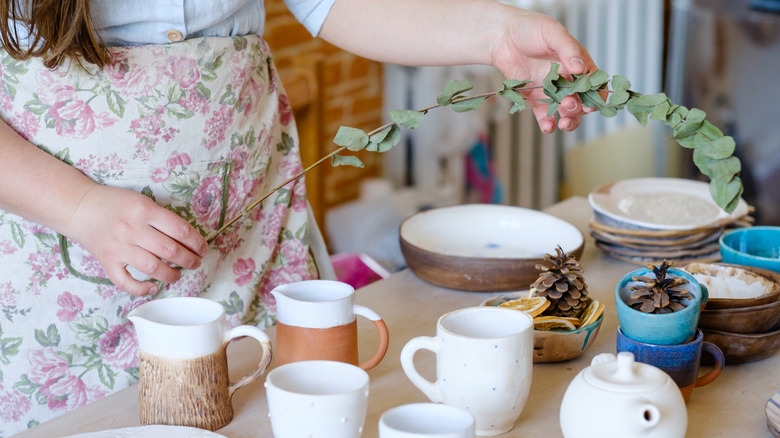
If you spend any time in thrift stores, you know that there's that one shelf with mismatched mugs, plates, and glassware for sale. With this project, your imagination is your guide as you collect the pieces you'll need. Pick a design theme for your project. You may want all the pieces to be a certain color or pattern, or you may want to take a mix and match approach. Start collecting plates and mugs that fit your design theme and set them aside until you have enough to begin your kitchen herb garden DIY.
How will you know when you've collected enough? A piece of plywood mosaic backer board cut to fit the space in your kitchen where you plan to install your herb garden is your guide. You'll need to make a rough estimate of how many plates it will take to cover the surface. The mugs become the herb containers; how many you need is determined by how many you want to grow. Note that plywood can only be used indoors, so while this is great for the kitchen, it won't work well in an exterior application.
Constructing a unique kitchen herb garden
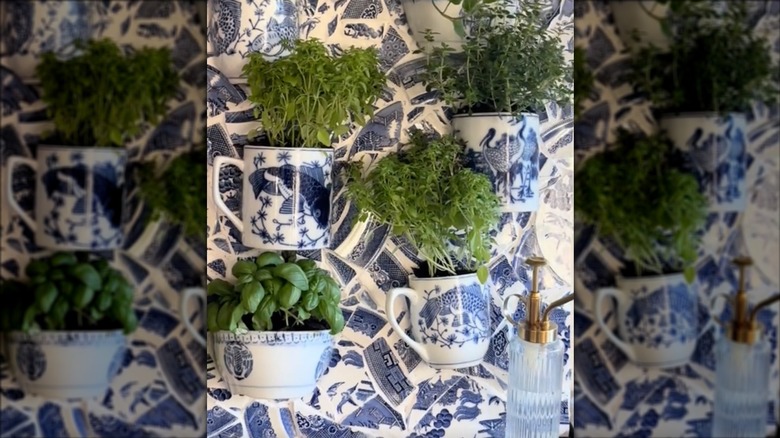
The plates become a mosaic background for your project, so you'll need to break them into smaller pieces. Put the plates in a paper sack or under a towel, and gently break them with a hammer. Tile nippers help if you want to make more precise cuts pieces. Lay the pieces out on the plywood, and once you've arranged them to your liking, glue them into place. Fill the gaps between the pieces with grout. Once that's dried, cut the mugs in half and glue each half to the mosaic. These are the pots for your herbs. Since this will be hanging on the wall subject to the forces of gravity, don't skimp on the glue. Epoxy is the best choice for gluing ceramics.
Once your DIY herb garden is complete and hung in a sunny spot on the wall, add herbs like basil, a plant that will also keep kitchen flies away. You can either start them from seed or buy seedlings at the garden store. Use a good soilless growing media containing vermiculite, peat moss, and perlite. If you use a commercial product, you shouldn't need to add fertilizer. There's one big drawback to this DIY herb garden, though. The mugs you're using for pots don't have drainage holes, and herbs need good drainage to thrive. You'll need to learn how to gauge when they need water and avoid overwatering, one of the biggest mistakes you can make with an herb garden.