

The Stunning Light Fixture With Vintage Vibes That Aretha Franklin Chose For Her Home

When a room calls for elegance and just a touch of drama, few design choices deliver quite like a crystal chandelier. Inside Detroit's historic Rose Estate, the great hall boasts nearly 30-foot-tall ceilings, and anchoring all that vertical space is a Maria Theresa crystal chandelier chosen by music icon Aretha Franklin with help from interior designer Barbara Kopitz. Built in 1927, Franklin bought the Tudor Revival home in 1993, using it as a second home and a space for entertaining. To this day, the chandelier remains one of its greatest standout features.
Rather than blending into the background, Maria Theresa chandeliers are designed to grab attention. These iconic chandeliers date back to 18th-century Europe and are named after Empress Maria Theresa of the Habsburg Empire. In history, these extravagant crystal chandeliers were used in the imperial courts and grand residences to signal status, access to fine craftsmanship, and, of course, add a bit of architectural drama.
In a space like the Rose Estate's great hall, the purpose of the fixture goes beyond hinting at extravagance, but actually works to visually balance the extreme height and symmetry of the room. In many cases, large formal rooms rely on statement lighting ideas to brighten up the room and draw the eye upward, helping to reinforce the architecture itself. Decades after Franklin selected it, the chandelier still anchors the room, proving how a historically rooted lighting choice can shape the identity of an interior long after trends change.
Maria Theresa chandeliers put attention into every detail
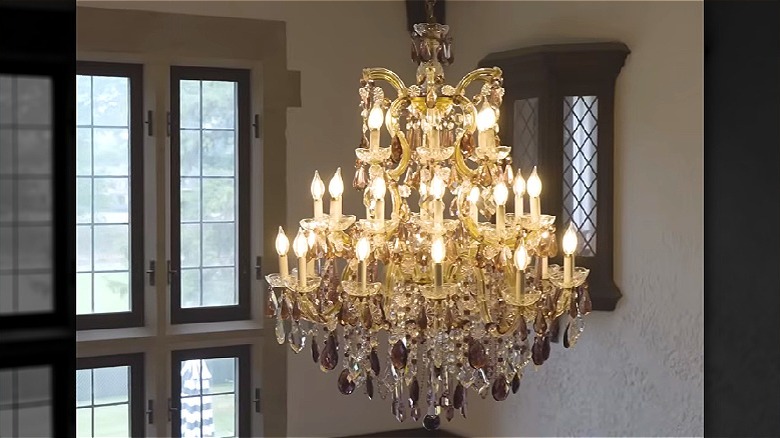
Maria Theresa chandeliers are recognizable from their layered crystal construction and ethereal glow. Most models feature a brass frame with sweeping arms that hold candle-style bulbs, an intentional nod back to when chandeliers were lit by flame. Draped crystal strands, faceted drops, and pendants catch the light and scatter it in multiple directions with a shimmering effect that helps when lighting a room with tall ceilings. As glassmaking techniques improved, the increased reflectiveness of cut crystals allowed light to bounce across walls in more intricate patterns and designs.
In early years, many variations of the classic design emerged for different purposes. While clear lead-glass crystals always remained the most common, many fixtures incorporated colored accents that shifted the mood without making adjustments to form. Aretha Franklin herself embraced the flexibility of the Maria Theresa design by customizing her chandelier to include crystal details and purple accents that enhanced its luminosity. Today, you can also find these chandeliers decked in all-over amber or black crystals. While the crystals are really what make the chandelier, the metal framework was never overlooked either. Maria Theresa chandeliers were traditionally crafted with brass, bronze, or iron arms that featured floral motifs and scrollwork. More modern Maria Theresa chandeliers offer more simplistic details or use polished nickel or matte finishes on the arms.
Maria Theresa chandeliers in timeless modern design
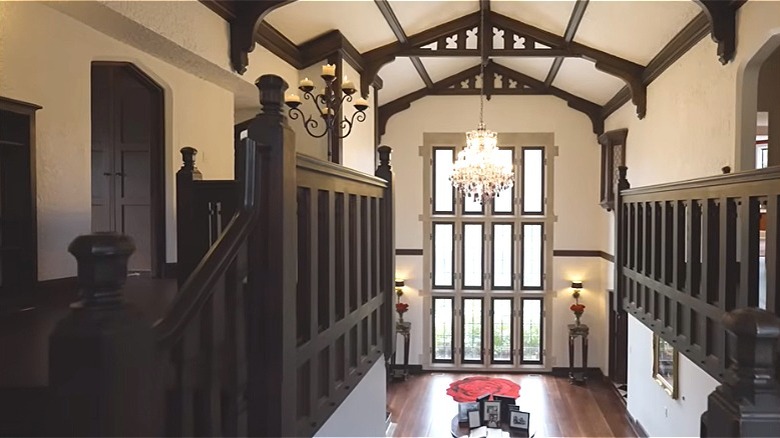
Though rooted in 18th-century European court design, Maria Theresa chandeliers still appear in historic restorations and traditional homes to this day. In the case of properties like the Rose Estate, preserving the period-appropriate fixture is essential to maintaining authenticity of the building. In restoration work, lighting can be considered part of a home's historical integrity rather than just decor. Because the Detroit mansion features Tudor Revival architecture and a formal great hall, the chandelier reinforces the symmetry, scale, and ceremonial atmosphere the space was originally designed to convey.
However, Maria Theresa chandeliers can certainly live outside of restorations and historic properties like the Rose Estate. You can purchase your own Maria Theresa chandelier through specialty lighting retailers and European manufacturers, but they can be shockingly expensive. Antique originals and hand-made reproductions can range anywhere from $1,000 to well over $20,000 depending on size, craftsmanship, and crystal quality. The weight and complexity of these chandeliers usually calls for a professional installation, especially in rooms with high ceilings or older wiring.
Today, these chandeliers are most often seen in formal dining rooms, ballrooms, and hotel entrances, but smaller versions can add a warm vintage touch to bedrooms and living rooms. In modern interiors, they can serve as a counterpoint to minimalist architecture, adding a bit of sparkle and movement. For those who love the elegance of Maria Theresa but want a different approach, fixtures like Venetian chandeliers, empire chandeliers, or crystal basket chandeliers can deliver a similar look and feel. If an authentic Maria Theresa just isn't in the budget, you might achieve a similar look for less with the best chandeliers under $200.