

Fill Your Garden With Pollinators By Growing These Plants Alongside Coneflowers
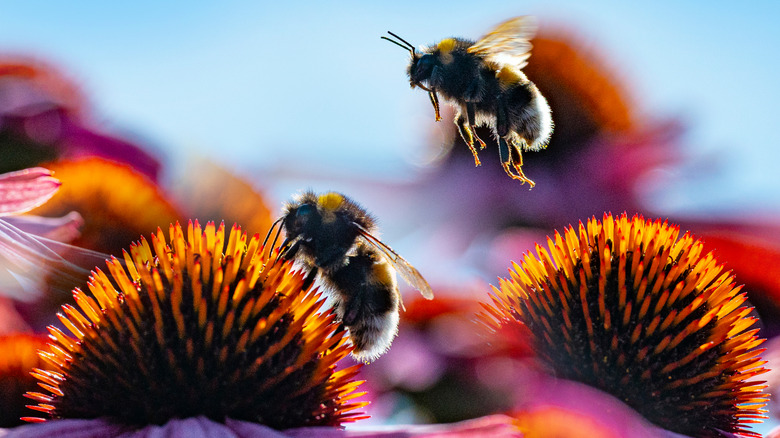
Coneflowers (Echinacea spp.) are stunning plants that bring butterflies flocking to your yard, as well as hummingbirds, bees, and other beneficial critters. In fact, these native perennial wildflowers — which are well-known stars of pollinator gardens — have a widespread presence in ecosystems across the U.S. They are considered keystone species, being among the most important flowers for specialist bees. To increase the impact of your Echinacea patch and attract even more bees, butterflies, and hummingbirds, grow them with other wildlife-friendly plants such as bee balm (Monarda spp.), black-eyed Susans (Rudbeckia spp.), and milkweed (Asclepias spp.).
Many colorful coneflower varieties attract pollinators as well as seed-eating birds. The most popular one that gardeners grow is purple coneflower (Echinacea purpurea), a species that thrives in USDA Hardiness Zones 3 to 8. It grows best in full sun to partial shade and tolerates both moist and moderately dry soils. The following companion plants thrive in similar conditions, though some prefer full sun or specific soil moisture levels. So choose a selection that matches your growing conditions. You'll also want to be aware of the mature sizes when laying out your landscaping plans — Echinacea purpurea can reach up to 4 feet tall, so put taller plants to the north and shorter ones to the south of your coneflowers.
Bee balm
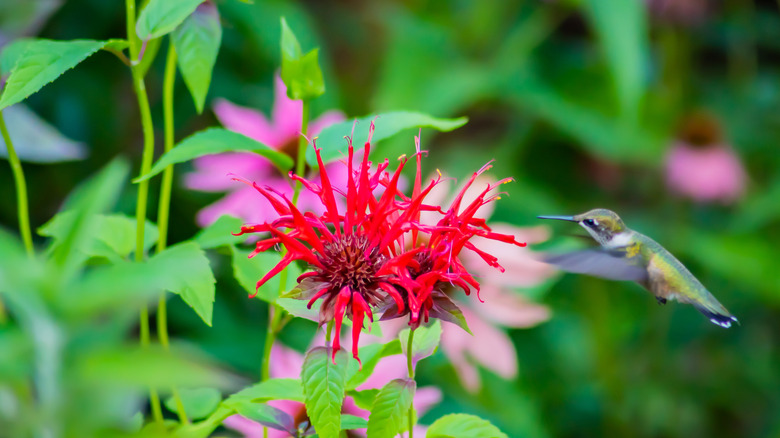
With its clusters of tubular red, pink, or purple flowers, bee balm (Monarda spp.) attracts bees and hummingbirds, so it makes a wonderful companion for coneflowers in a pollinator garden. After the flowers bloom in summer and fall, the spent stems of these attractive perennials — which can reach up to 4 feet tall — make excellent nesting sites for small bees. Scarlet bee balm (Monarda didyma) can grow in USDA Hardiness Zones 4 to 8 in full sun, situated in well-draining, moist soils that are rich in organic matter.
Bee plant
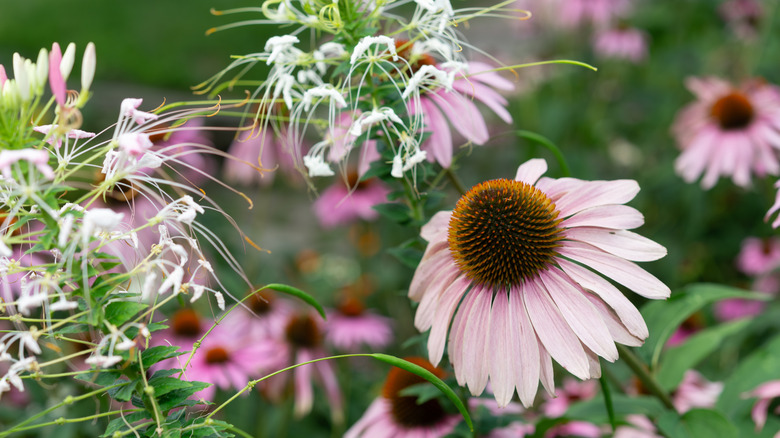
If you're in search of an annual to pair with the coneflowers in your garden, consider bee plant (Cleome spp.). These pollinator-friendly flowers have yellow, pink, purple, or white blooms with long stamens that give them a wispy appearance and inspire one of their other common names — spider flower. Depending on the type, these summer and fall bloomers can reach up to 6 feet tall, so plan your landscaping accordingly. You can grow bee plant as a companion for Echinacea in full sun and well-draining soil with average to slightly dry moisture levels.
Black-eyed Susan
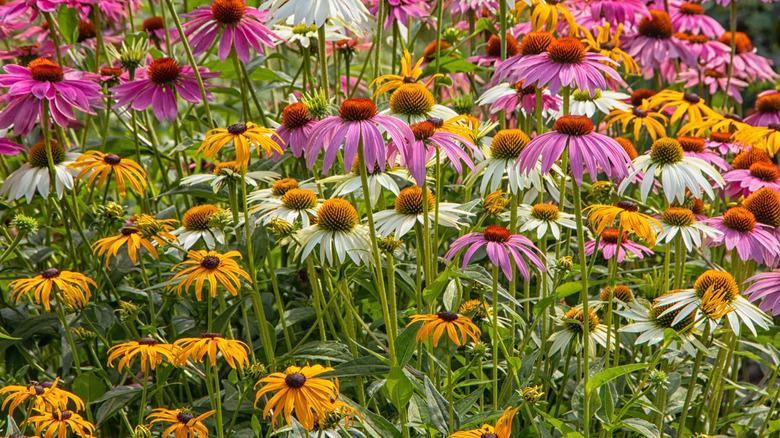
Black-eyed Susans (Rudbeckia spp.) make beautiful companions for Echinaceas in pollinator gardens. Like purple coneflower, the species Rudbeckia hirta grows in USDA Hardiness Zones 3 to 8, and thrives in full sun or part shade, located in well-draining, moist or occasionally dry soil. These spring- and summer-flowering plants — which reach 4 feet tall — are considered keystone species in the eastern U.S., providing an important source of food for beneficial insects with their daisy-like, yellow and brown blooms. In addition to offering food to adult butterflies, they also serve as larval hosts for two types of caterpillars.
Blazing star
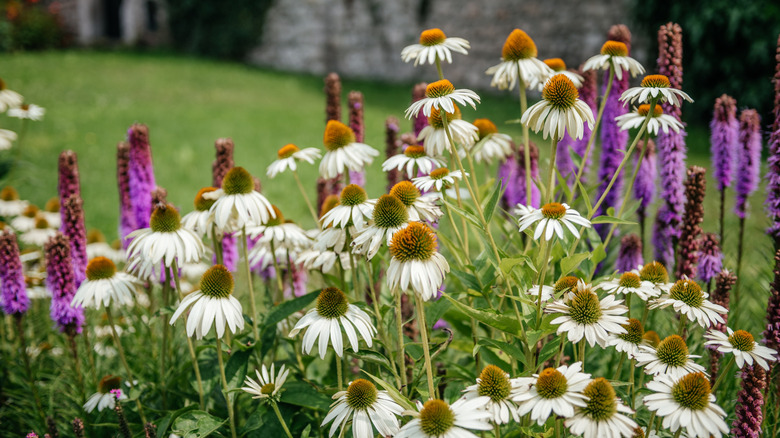
Liatris species, more commonly known as blazing star, are also excellent choices for pollinator garden companions. These summer-blooming wildflowers have tall flower spikes that form a nice visual contrast to the daisy-like blooms of coneflowers. Liatris plants grow as clumps of grass-like leaves and showy flower spikes that reach up to 6 feet tall, depending on the species. Blazing star's fluffy-looking inflorescences attract hummingbirds, bees, and butterflies, and its vegetation serves as a larval host for moths. Plus, native bees build their nests in the faded stems of these perennials.
Butterfly weed
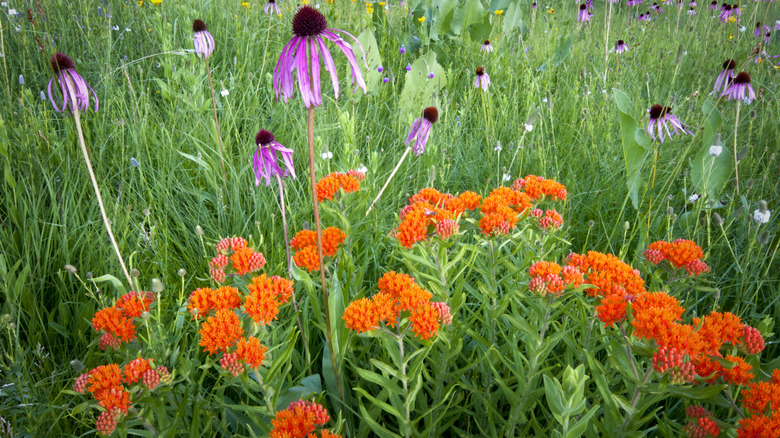
If you're hoping to cultivate a bright color palette in your garden while attracting pollinators, you'll want to add butterfly weed (Asclepias tuberosa) to your "must grow" list. This spring- and summer-flowering milkweed species is a larval host for monarch butterflies, as well as a few other types of lepidoptera. Its clusters of orange, yellow, or red blooms, balancing atop 2-foot-tall plants, feed a multitude of beneficials, such as native bees, hummingbirds, and butterflies. It thrives in the same conditions and zones as coneflowers, so you can grow them together as companions.
Coreopsis
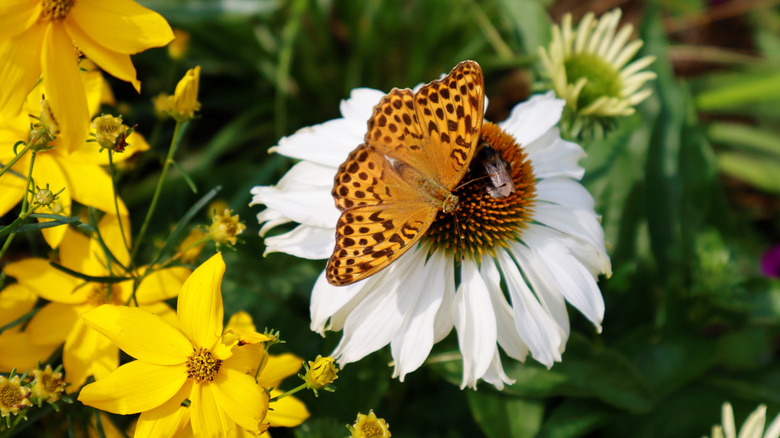
If you'd like to help increase biodiversity in your yard, add some annual or perennial coreopsis (Coreopsis spp.) plants near your Echinacea patch. These U.S. native wildflowers — also known as tickseed — attract numerous types of native bees as well as butterflies. Some types, such as lance-leaved coreopsis (Coreopsis lanceolata), are quick growers that reach 3 feet tall and can help you establish your pollinator garden in USDA Hardiness Zones 4 to 8. This spring- and summer-blooming tickseed has showy yellow or orange blooms and thrives in the same conditions as purple coneflower.
Giant hyssop
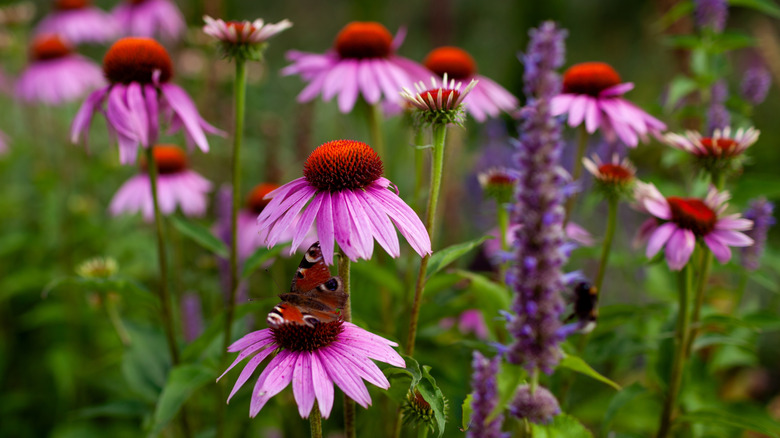
Giant hyssop (Agastache spp.), also known as hummingbird mint, is one of the herbs you can plant with coneflowers to fill your garden with pollinators. There are many types of Agastache to choose from for attracting bees, butterflies, and hummingbirds to your yard. Anise hyssop (Agastache foeniculum) is a type that can reach up to 5 feet tall, so don't let it shade out your Echinacea. This summer-flowering species thrives in Zones 4 to 8, in the same conditions as purple coneflower, so you can easily grow them side by side.
Golden Alexanders
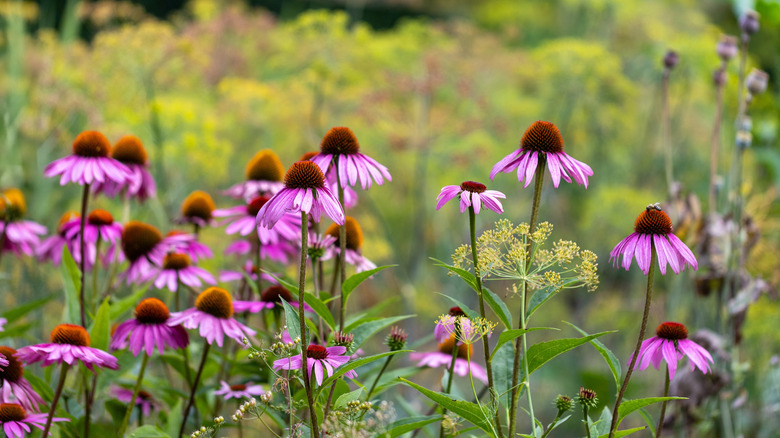
When you grow golden Alexanders (Zizia spp.) in your wildlife-friendly garden, the nectar of their yellow flower clusters will feed bees and flies as well as other beneficial insects like soldier beetles. Pollinators don't just like these 3-foot-tall, U.S. native wildflowers for their nectar — these perennials are also larval hosts for black swallowtail butterflies. Zizia aurea is a species of golden Alexanders that bears blooms in spring and summer and makes an excellent companion plant for purple coneflower since the two thrive in the same USDA Hardiness Zones and conditions.
Goldenrod
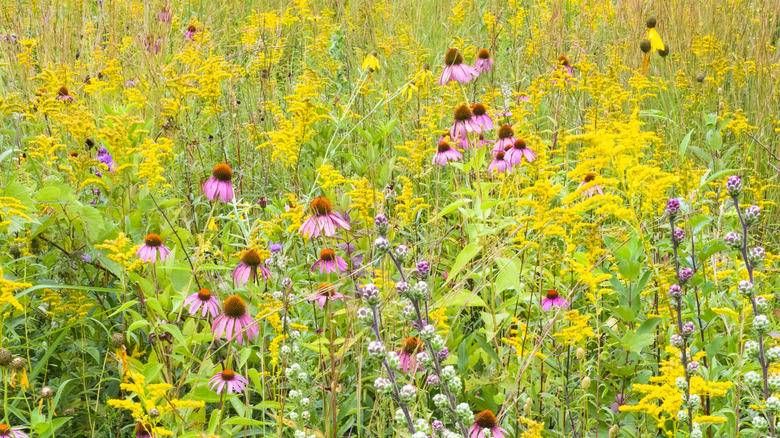
With their sprays of yellow flowers, goldenrods (Solidago spp.) are pollinator favorites that'll add a gorgeous glow to your garden. There are numerous Solidago species to choose from among these summer and fall bloomers, so you can find the best one for your location. Common goldenrod (Solidago canadensis) is one you can cultivate as a companion to Echinacea purpurea in zones 5 to 8, in moist spots that have full sun exposure. Because this goldenrod can grow up to 8 feet tall, plant it to the north of your coneflowers.
Joe Pye weed
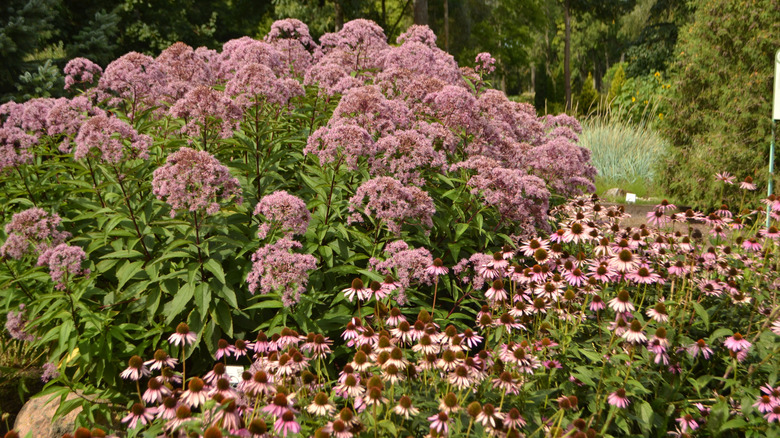
If your coneflower patch is in a moist location, you can grow Joe Pye weed (Eutrochium maculatum) next to it to attract even more pollinators. This perennial produces showy clusters of fragrant pink or purple flowers that draw in both butterflies and bees throughout summer and fall. The stems of Joe Pye weed can reach up to 7 feet tall, so don't let it shade out your Echinacea or any other smaller plants. This species thrives in many different ecoregions and is considered a keystone species, making it an excellent choice for a wildlife-friendly garden.
Lavender
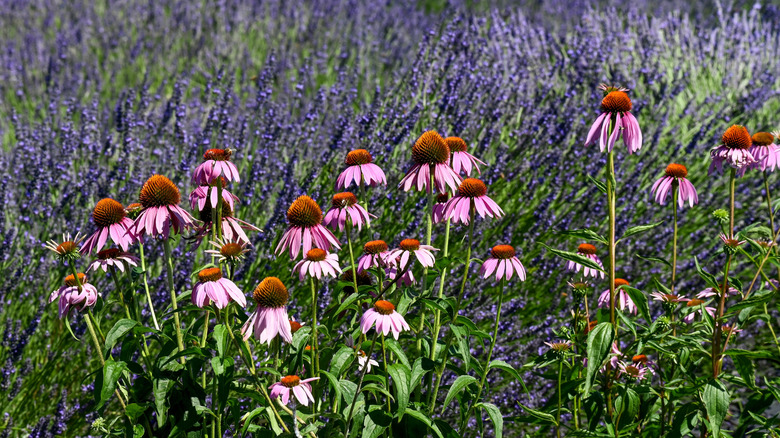
Lavender (Lavandula spp.) is a wonderfully scented herb that gardeners love to cultivate for its fragrant flower stalks. If you've always wanted to add this summer-blooming plant to your yard, you should consider growing it next to the coneflowers in your garden — provided you have a spot in USDA Hardiness Zones 5 to 8 with sandy soil and dryish conditions where the two can flourish together. In your pollinator patch, lavender will attract bees and butterflies with its spikes of white, purple, or blue blooms.
Obediant plant
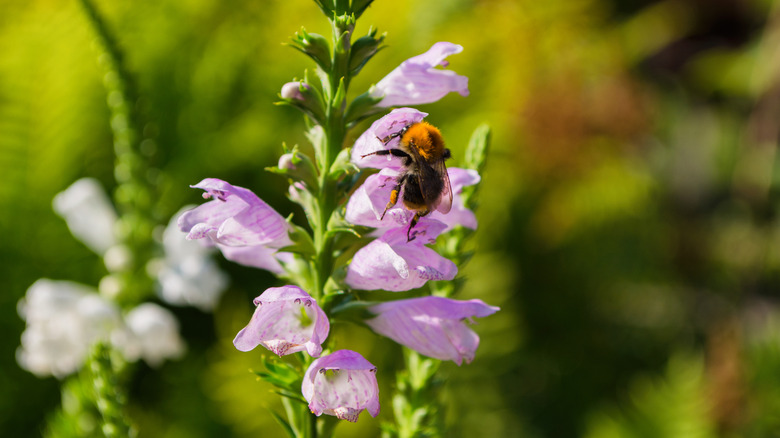
Do you have coneflowers located in your rain garden? Obedient plant (Physostegia virginiana) would make an excellent companion there. These perennials bear spikes of tubular, lipped flowers in summer and fall that add color and movement to a pollinator garden. Obedient plant attract bees, butterflies, and even hummingbirds flocking to their white, pink, or purple blooms. And they reach a similar height as Echinacea purpurea, so you can grow these U.S. natives side by side.
Oregano
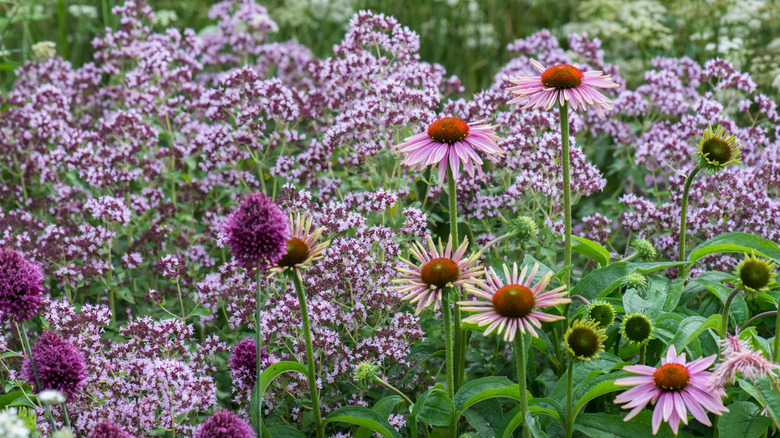
If you're looking for perennials that will feed pollinators while offering you edible benefits, you might want to add the herb oregano (Origanum vulgare) as a coneflower companion plant. The pink or white flowers of oregano attract bees, butterflies and other beneficial insects to your yard or garden. You can grow these two species in USDA Hardiness Zones 4 to 8, where there's full sun and soil that is well-drained and has a dry to average moisture level. Because oregano reaches about 3 feet tall, avoid planting this summer- and fall-blooming herb south of your Echinacea.
Salvia
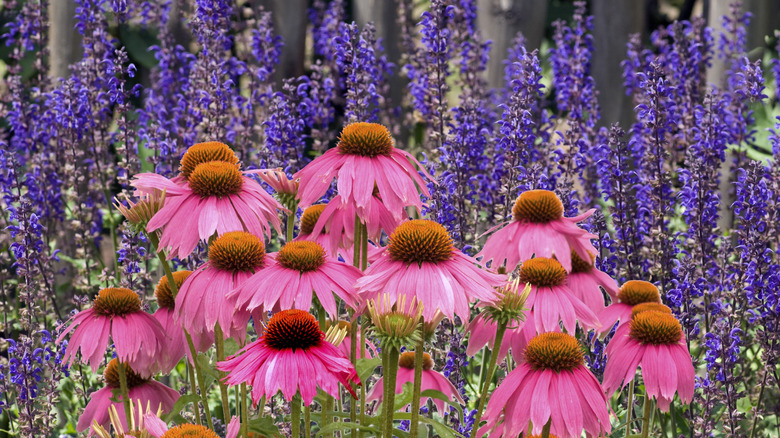
It's a no-brainer to plant stunning coneflowers next to salvia species in your garden. There are many different species and varieties of salvia that will draw pollinators to your yard with their spikes of tubular, lipped flowers. Woodland sage (Salvia nemorosa) is a lovely pink- or lavender-hued, summer- and fall-blooming selection for Zones 4 to 8 that will grow nicely near Echinacea. This plant can reach up to 3 feet tall and is a favorite of bees, butterflies, and hummingbirds.
Tall phlox
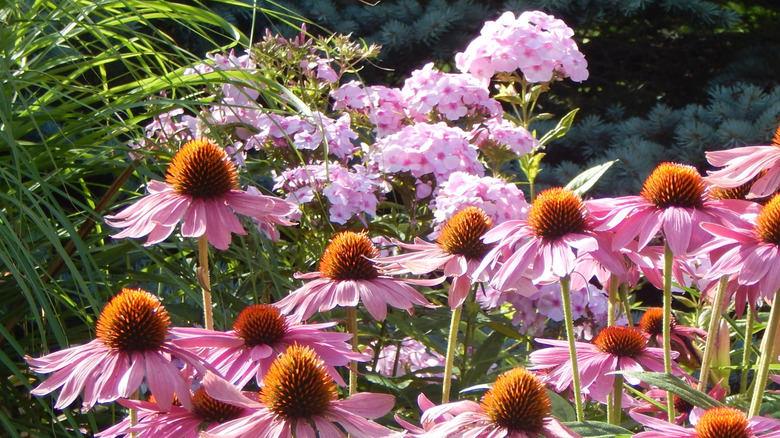
For a moist spot in your USDA Hardiness Zones 4 to 8 garden, tall phlox (Phlox paniculata) makes a strong coneflower companion plant. This U.S. native attracts hummingbirds and pollinators such as bees and butterflies with its fragrant, tubular flowers throughout summer. There are many colorful varieties of tall phlox you can grow, with blooms in shades of pink, purple, red, blue, and white. Expect these upright, clumping perennials to reach up to 4 feet tall.
White gaura
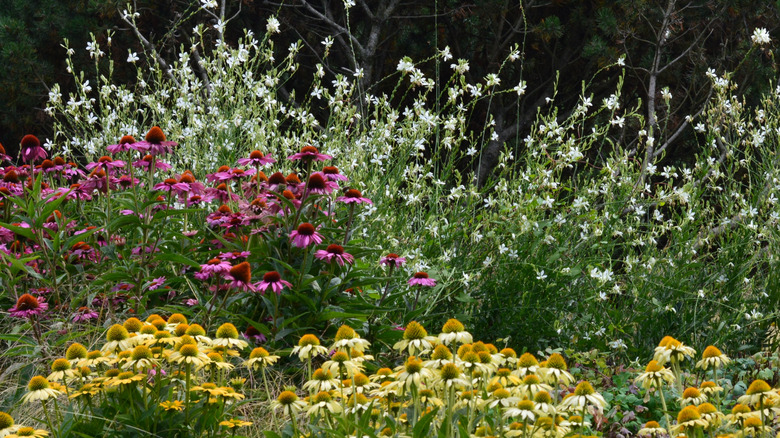
If you're looking for a tall plant to grow behind your coneflowers in a pollinator garden, white gaura (Oenothera lindheimeri) will do the trick. This 5-foot-tall, wispy perennial attracts beneficial insects with its showy white to pink blooms that appear throughout summer and fall. In addition to attracting bees and butterflies for its nectar and pollen, it also serves as a larval host. This native to the south-central U.S. makes a great Echinacea companion in Zones 5 to 8 with full sun and well-drained, moist soil.
Yarrow
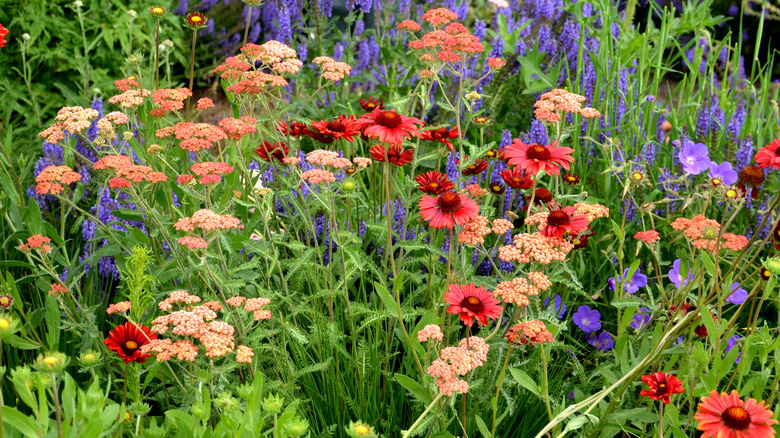
Yarrow (Achillea millefolium) is one of the favorite plants of pollinator gardeners. This beginner-friendly perennial grows quickly while supporting wildlife with its umbrella-shaped flower heads. There are many different colorful types of yarrow, and you can pair them with coneflowers in USDA Hardiness Zones 3 to 8 in well-drained soil that gets full sun exposure. This dynamic duo looks attractive while drawing beneficial insects such as ladybugs and wasps. Yarrow is also a larval host plant, and this summer bloomer can reach up to 3 feet tall.