

Gardener Mystified By Rare Rose Bloom: Never Seen One Like This
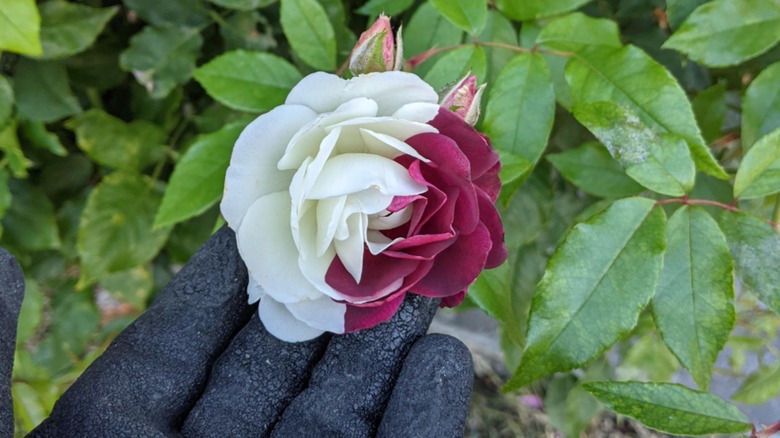
Roses are consistently one of the most popular flowers to have in a flower garden. And if you're a flower gardener, you know that nature sometimes has an interesting sense of humor as well as a knack for showing off. One gardener on Reddit discovered a lovely example of how nature finds a way when they discovered one of their roses had two distinct colors split down the middle. One side was white and the other red. It looked as though someone had gone out to their garden and painted it. What this gardener didn't know was that they were witnessing an interesting result of a spontaneous mutation called sectorial chimerism. While there are many uniquely colored roses you can grow in your garden, sadly, this is one you can't go out and buy.
Many flower gardeners' biggest concern is perfecting their soil for thriving roses, while other gardeners are over here growing mutant flowers. Not to worry, these types of mutations aren't going to cause your roses to all of a sudden start demanding you feed them in a goofy voice. It's a simple mutation, similar to sectorial heterochromia in humans, when the iris of one eye is two distinct colors — it's perfectly harmless. The sectorial chimerism is caused by a mutation that happens in a single cell at the growth tip of the bud and is repeated as it grows, creating a split-color bloom. While it is harmless to the flower, it isn't a stable mutation like the fixed genetic traits growers rely on for creating hybrids, and is unlikely to happen again in the same plant.
Can sectorial chimerism happen to your roses?
Can you expect to walk out into your rose garden and find a bi-color rose like this? The short answer is yes — but don't hold your breath. Some flowers are more likely to have this mutation happen in a bud than others, like chrysanthemums, dahlias, and roses. Sadly, it's not something you can breed into your roses by learning how to propagate either. Because this mutation effect isn't stable, it's unlikely to be carried over into your new plants. It's even unlikely that the original plant will repeat the beautiful mutation. While there is some evidence that extreme temperature changes and some chemical treatments have been known to induce sectorial chimerism, there really is no predicting when it will happen. It's truly one of nature's great mysteries.
The good news is, if you have a rose garden, there is a possibility it can happen to you. Your best bet is to just keep an eye on your flowers and pay attention — which most dedicated rose gardeners already do. If you happen to spot a bi-color chimera rose in your garden, be sure to get plenty of pictures. The best thing you can do is enjoy this little miracle while it lasts and, like the Reddit gardener, share it with others who might appreciate its unique beauty. Gardening can be extremely rewarding, and little things like finding unique flowers among your roses can make it all worthwhile.