

The Beautiful Spring Perennial Staple You Should Fertilize In Late Winter
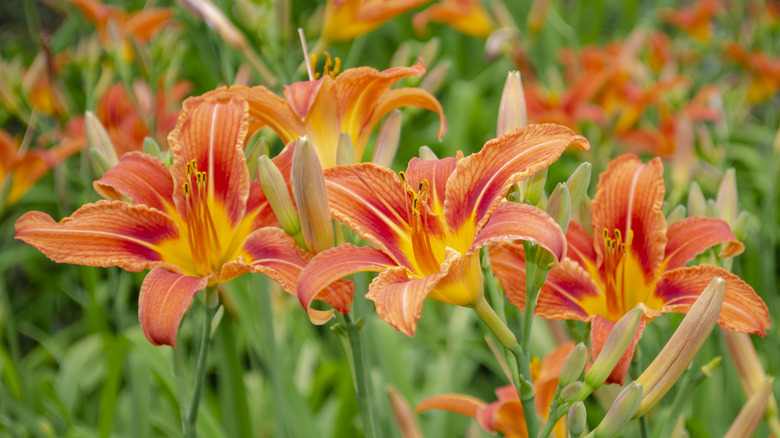
Daylilies (Hemerocallis) are one of the best spring-blooming bulbs to plant for a colorful cottage garden, and for good reason. These gorgeous flowers are incredibly hardy, come in a wide variety of colors, and can thrive in many soils. Most interestingly, they have buds that bloom and die in a single day, hence their name. However, home gardeners sometimes make the mistake of waiting until the first green shoots pop through the dirt before they ever think about how to really care for daylilies. To get those massive, eye-catching blooms, the real work needs to start when the ground is just starting to wake up. Fertilizing daylilies in late winter or early spring (late February through early March) is the secret to helping this spring perennial continue re-blooming and bringing you a spectacular show throughout the season.
By feeding the soil now, you'll give hardworking daylilies a head start; all the nutrients they'll need will be sitting right at the root zone when they break their dormancy. Daylilies are hardy in USDA zones 3 to 9, and they store their energy in thick, tuber-like roots. As the late winter sun begins to warm the earth, these roots get to work long before you see any action above ground. Applying a balanced fertilizer in late winter allows spring rains and melting snow alike to naturally move those nutrients down to where they're most needed. Feeding the roots now helps daylilies build a strong foundation for their scapes (flower stems) later, and gives them a better chance to grow tall and sturdy enough to support tons of buds. It's the easiest way to transform a boring backyard into a lush and colorful cottage garden.
Late winter fertilizing will give daylilies the boost they need
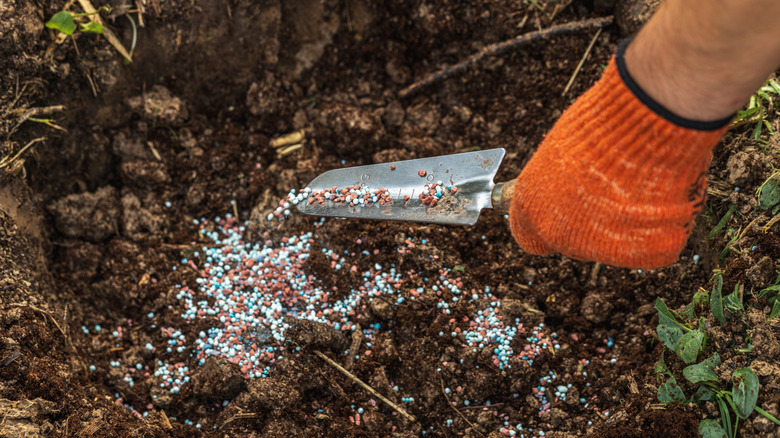
When you head over to the garden center, look for a balanced slow-release fertilizer, like a 10-10-10 formula, which contains equal parts each of nitrogen, phosphorus, and potassium. If you want a more organic approach, composted manure or alfalfa pellets are solid alternatives that'll boost the quality of your soil while still providing some steady nitrogen to your daylilies. The goal is to give them a consistent trickle of energy, not a sudden jolt. Before you spread your fertilizer, you should clear out any mushy dead foliage hanging out from last year. This keeps things looking tidy and ensures all your fertilizer hits the soil directly instead of getting soaked up by old plant material.
To apply the fertilizer, sprinkle it in a circle around the base of the plant, a couple inches away from where the new plant will erupt in the soil. You don't need to dig it in or do anything else; the moisture of the season will push it down and do all the heavy lifting for you – but if you live in a warmer or drier climate, watering in your fertilizer is wise. Taking 10 minutes to knock out this simple chore will help your bulbs produce more blooms per clump, and since those daylilies are the perfect pair for other spring bulbs, it's a task that's hard to say no to. Just remember that a well-fed plant is a happy plant, and your future summer self will thank you for braving the cold today. Now grab your gardening gloves and give your daylilies the head start they deserve!