

The Scarlet Flower That Adds Beauty And Hummingbirds To Your Yard
We may receive a commission on purchases made from links.
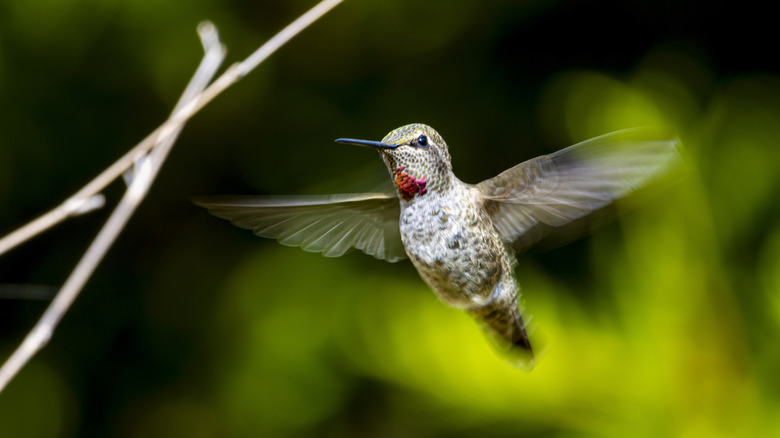
Most of us are happy to see hummingbirds in our backyards. These tiny birds live busy lives; almost everything they do is done quickly. For example, they feed frenetically, hovering from flower to flower and beating their wings up to 53 times per second. Blink, and you could miss them. Such rapidity is important because hummingbirds need to eat at least half their body weight every day to survive. They don't have time to wait on the perfect bloom. You can help them along by planting flowers that will transform your space into a hummingbird heaven. Hummers are drawn to bright red flowers with easy access to nectar, something royal catchfly (Silene virginica) produces in abundance.
Depending on where you live, there are different types of beautiful hummingbirds you might find in your backyard. If you garden in the eastern U.S., you're likely to encounter one of the most commonly observed hummer species, the ruby-throated hummingbird. One preferred food source is the scarlet-flowering royal catchfly, also known as cliff pink or fire pink. This clump-forming native perennial is sadly rare in the wild due to habitat loss, but it does well in home gardens with the right conditions. It doesn't sit quietly in a corner; it demands attention with attractive bright green foliage and abundant trumpet-shaped blooms. Despite its somewhat delicate appearance, royal catchfly isn't a fussy or high-maintenance plant. When you want to hear that special humming sound of wings flapping vigorously throughout your outdoor space, plant royal catchfly in locations where it can thrive.
How to grow royal catchfly blooms to attract hummingbirds
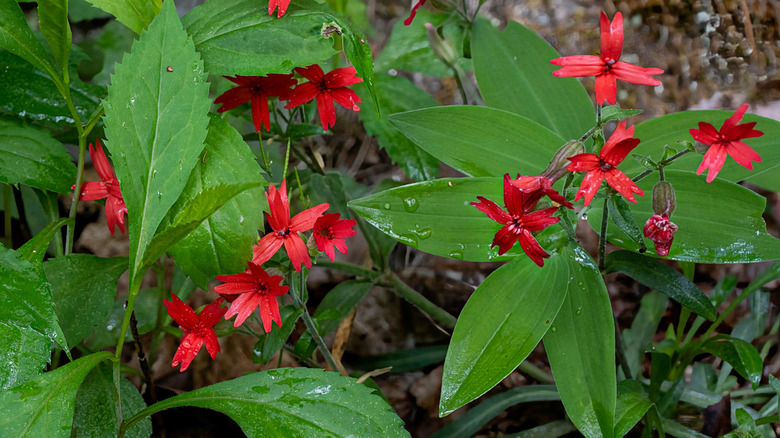
Royal catchfly can grow up to about 5 feet tall, adding verticality and lots of vivid color to a pathway border or garden bed backdrop. It's delicate rather than bulky, so it doesn't overwhelm other plants around it, nor will it create too much shade. These wildflowers bloom for about a month each year, from July to August, making them a dependable, if short-lived perennial pollinator favorite during the summer. Besides hummingbirds, royal catchfly blooms attract bees, wasps, flies, and other pollinating insects. However, these critters often get trapped on the stems' sticky hairs — hence the plant's name.
When you give it the growing conditions it prefers, royal catchfly will reward you with sturdy stems and the vibrant blooms that hummingbirds crave. You can buy a 50-pack of CZ Grain Store Fire Pink Wildflower Seeds for about $16. To make sure your plants thrive, sow seeds in early spring or late fall in sites that receive at least six hours of full sun every day. This is not a species for dark gardens — stick to shade plants that attract hummingbirds and pollinators instead. The plant is drought-hardy and prefers shallow, rocky soils. If you're planting royal catchfly seedlings, ensure 3 to 4 feet of space between plants to give the stems and large taproot room. This species grows best in USDA Hardiness Zones 5 to 8. Plants need a few years of establishment to reach maximum flowering potential.